
Quick Answer: Which Key Action Fits Your Learning Goals?
If you are starting your musical journey and learning on a Yamaha music keyboard, the choice between weighted and semi-weighted keys depends heavily on your long-term musical goals, physical space, and budget. For beginners aiming to master classical piano, build authentic finger strength, and eventually transition to a traditional acoustic piano, fully weighted keys are highly recommended. Conversely, if your focus is on casual playing, exploring synthesizer sounds, enjoying a highly portable setup, or working within a tighter budget, semi-weighted keys offer a practical and accessible entry point.
Before making a purchase, it is crucial to verify if you or your child are enrolled in a specific music curriculum. Some formal music schools or examination boards in the Philippines mandate a minimum key count of 88 keys and a fully weighted action from the very first lesson. Choosing the wrong action could mean needing an upgrade much sooner than expected.
Understanding the Physical Feel: Weighted vs Semi-Weighted
To understand why these two key actions feel so different, we must look at the mechanical design beneath the plastic casing. Fully weighted keys utilize a hammer-action mechanism. Instead of relying solely on springs, these keys incorporate physical weights or miniature metal hammers that mimic the leverage and resistance of an acoustic piano’s action. In high-quality digital pianos, this is often “graded,” meaning the keys on the lower register feel heavier to press than those in the higher register, exactly like a traditional grand piano. When you strike a weighted key, you feel a distinct mechanical resistance followed by a natural rebound as the hammer falls back into place.
Products mentioned in this guide
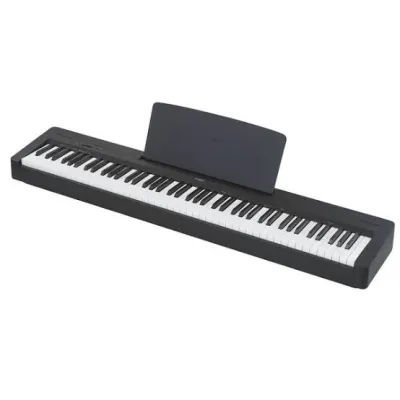
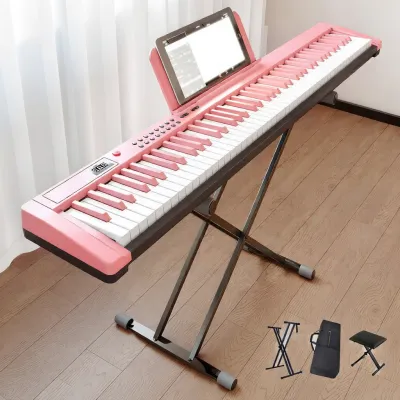
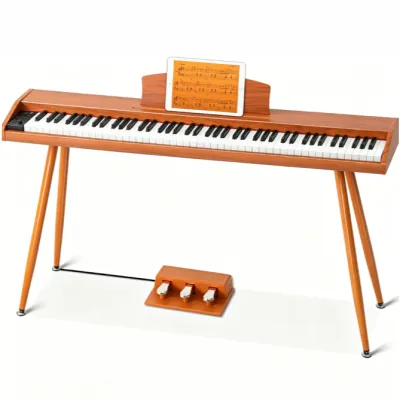
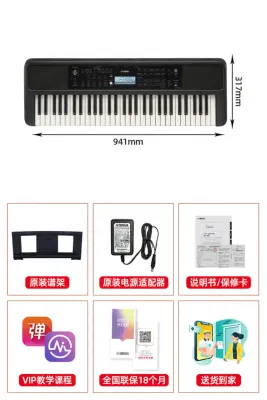
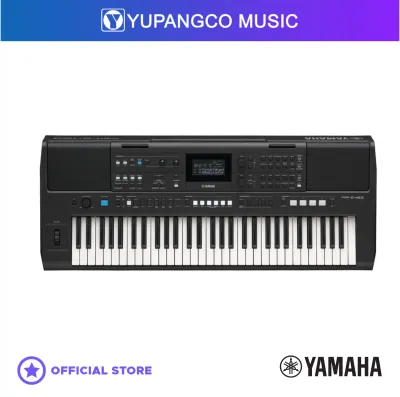
Prices are valid at publication and may change. Please refer to the product page for the latest price.

Semi-weighted keys, on the other hand, rely primarily on spring-loaded mechanisms combined with small weights attached to individual keys. This design provides more resistance than a completely unweighted synthesizer keyboard, but it lacks the complex mechanical inertia of a hammer action. The keys spring back to their resting position much faster, which can feel bouncy or stiff to someone accustomed to an acoustic instrument. This action is common in portable keyboards, arrangers, and entry-level instruments designed for versatile music production.
When visiting a local music store or authorized dealer in the Philippines, you can physically test these differences. Sit at the instrument with proper posture and press a key slowly. On a weighted keyboard, you will feel a smooth, progressive resistance before the key bottoms out, followed by a controlled return. On a semi-weighted keyboard, the resistance is relatively uniform throughout the key press, and the key will snap back quickly against your finger. Pay attention to this rebound speed and the bottom-out feel, as these factors directly impact your playing comfort during long practice sessions.
How Key Action Impacts a Beginner's Skill Development
The physical resistance of your keyboard keys plays a fundamental role in developing proper playing technique. When a beginner practices on fully weighted keys, they are actively building finger independence and hand strength. This resistance is essential for mastering dynamic control—the ability to expressively vary the volume of your notes from a delicate pianissimo (very soft) to a powerful fortissimo (very loud). Because weighted keys respond to the velocity and force of your touch in a manner that closely mirrors an acoustic piano, they teach your muscles exactly how much pressure is required to achieve a specific tone.
Starting on a semi-weighted keyboard can present unique transition challenges if you decide to move to an acoustic or fully weighted instrument later. Because semi-weighted keys require significantly less physical effort to depress, beginners often develop a lighter touch and may struggle with finger collapse (where the knuckles bend inward). When transitioning to a weighted action, these students frequently experience rapid hand fatigue and find it difficult to produce a consistent, clear tone because their fingers have not yet developed the necessary muscular control.
However, semi-weighted keys are not without their merits for early education. If your primary goal is to learn basic music theory, understand chord shapes, practice simple melodies, or compose electronic music, a semi-weighted keyboard is entirely sufficient. It allows you to focus on note reading and rhythm without the physical strain that younger children or older adults with joint sensitivity might experience on heavier keys. For casual hobbyists who do not plan to perform classical repertoire, this action offers a comfortable and highly forgiving learning platform.
Balancing Budget, Portability, and Space Constraints
Choosing between these key actions also involves practical lifestyle decisions, particularly regarding your budget, living space, and mobility. Generally, entry-level semi-weighted portable keyboards are positioned at a much lower price tier than fully weighted digital pianos. When browsing local music retailers, you will find that semi-weighted instruments offer a highly accessible entry point, making them ideal for families testing a child’s long-term interest without committing a significant amount of ₱. Fully weighted digital pianos represent a larger financial investment due to the complex mechanical components required for hammer-action simulation.
Physical weight and footprint are equally critical, especially for those living in compact urban condominiums or apartments where space is at a premium. Semi-weighted keyboards are lightweight and highly portable, often weighing under six kilograms. They can be easily stored in a closet or under a bed when not in use, and they are simple to transport to band practices or community events. Fully weighted digital pianos, even portable slab models, are considerably heavier—often weighing fifteen kilograms or more—and require a dedicated, sturdy stand to prevent wobbling during expressive play.
Furthermore, you must factor in the total setup cost, which includes essential accessories. A proper setup requires a stable keyboard stand, a comfortable bench set to the correct height for healthy playing posture, and a sustain pedal. Many budget-friendly semi-weighted keyboards do not bundle these items, or they may only include a basic plastic footswitch. For a fully weighted digital piano, investing in a high-quality, heavy-duty stand and a progressive damper pedal is highly recommended to fully utilize the instrument’s expressive capabilities. Additionally, in the tropical climate of the Philippines, high humidity can affect electronic contacts and mechanical parts over time; investing in a fitted dust cover is a wise choice to protect your instrument regardless of the key action you choose.
How to Verify Specifications Before You Buy
Before finalizing your purchase, it is essential to look past marketing buzzwords and verify the technical specifications of the specific Yamaha music keyboard you are considering. Manufacturers use precise terminology to describe their key actions, and understanding these terms will prevent costly purchasing mistakes. Look closely at the official specification sheet for terms like “Graded Hammer Standard” (GHS), “Graded Hammer 3” (GH3), or “GrandTouch-S,” which indicate fully weighted, hammer-action keys. If the specifications list “synth-action,” “organ-action,” or simply “semi-weighted,” the keyboard will not provide the resistance of a traditional piano.
You should also verify the total key count and the polyphony limit on the specification sheet. While a standard acoustic piano has 88 keys, many semi-weighted keyboards are configured with 61 or 76 keys. If you plan to learn classical pieces or take formal lessons, an 88-key instrument is highly recommended to ensure you do not run out of range. Polyphony—the number of individual notes the keyboard can sound simultaneously—is another critical spec. Look for a polyphony limit of at least 64 notes (ideally 128 or higher for weighted digital pianos) to ensure that notes do not cut off abruptly when you play complex chords with the sustain pedal pressed.
Finally, nothing replaces the experience of testing the instrument in person. Visit an authorized local dealer or showroom to feel the key action yourself. Press the keys with the power turned off to focus purely on the mechanical noise and physical resistance, then turn the instrument on to hear how the sound responds to your touch. This hands-on evaluation ensures that the physical build quality, key texture, and overall feel align with your expectations and the technical specifications listed on paper.
Frequently Asked Questions (FAQ)
Can I learn proper piano technique on a semi-weighted keyboard?
You can learn foundational music skills on a semi-weighted keyboard, such as reading sheet music, understanding basic rhythm, and mastering chord shapes. However, developing advanced classical piano technique is exceptionally difficult on semi-weighted keys. Without the realistic mechanical resistance of a fully weighted action, you cannot build the finger independence, hand strength, or precise dynamic control required for complex classical repertoire. If your long-term goal is to play traditional piano music with expressive nuance, starting on a weighted keyboard is highly recommended to avoid developing habits that are difficult to correct later.
Do all 88-key Yamaha digital pianos have fully weighted keys?
No, you should not assume that a full 88-key layout automatically guarantees a fully weighted key action. While the vast majority of 88-key Yamaha digital pianos feature weighted hammer actions, some specific stage pianos, synthesizer workstations, or portable keyboards are designed with semi-weighted or synth-action keys to prioritize portability and rapid synth playing. Always check the official manufacturer specification sheet for the exact key action type before purchasing, rather than relying solely on the key count or the physical appearance of the instrument.
Is it worth upgrading from semi-weighted to weighted keys later?
Upgrading to a fully weighted keyboard is highly beneficial once you commit to long-term piano study or find that your current instrument limits your expressive playing. When you make the transition, expect an adjustment period of several weeks as your fingers adapt to the heavier physical resistance. Your hands may tire more quickly at first, but this is a normal part of building the necessary muscular strength. Upgrading is a logical step that will unlock greater dynamic control and allow you to transition seamlessly to any acoustic piano.

Community discussion
Share your experience or ask a question. Comments are reviewed before publication.