
When deciding between a Yamaha PSR and a P series instrument, the choice ultimately depends on whether you prioritize versatile music arrangement or authentic acoustic piano practice. The PSR line functions as a portable arranger keyboard, offering hundreds of instrument voices, auto-accompaniment styles, and lightweight keys for dynamic performances. In contrast, the P series is designed as a digital piano, focusing on realistic weighted keybeds, high-quality piano sampling, and a streamlined interface for traditional piano learning. Before selecting a specific model, evaluate your primary musical goals, required keyboard action, and connectivity needs to ensure the instrument aligns with your long-term playing style.
In tropical environments like the Philippines, where high humidity and dust can affect electronic instruments, choosing the right keyboard also involves practical considerations. Portable instruments are highly convenient for moving between air-conditioned rooms, but they require proper care to maintain their internal components. Whether you are enrolling in local music lessons or setting up a home studio, understanding the structural and functional differences between these two popular Yamaha lines will help you make a smart investment.
Understanding the Core Difference: Arranger vs. Digital Piano
The fundamental design philosophy of each series sets a clear baseline for your comparison. The PSR line consists of portable arranger keyboards designed for versatility, live backing, and diverse sound exploration. These instruments act as a creative workstation, allowing you to trigger full accompaniment tracks with your left hand while playing melodies with your right. They are built for players who want to explore different genres, compose songs, and enjoy a wide variety of instrumental sounds.
Products mentioned in this guide
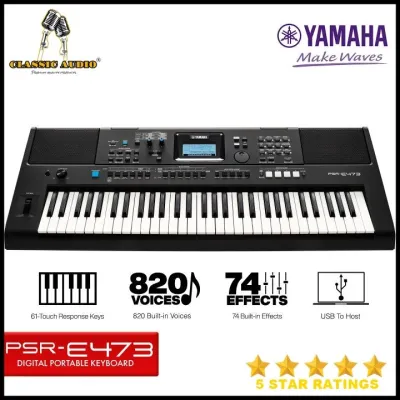
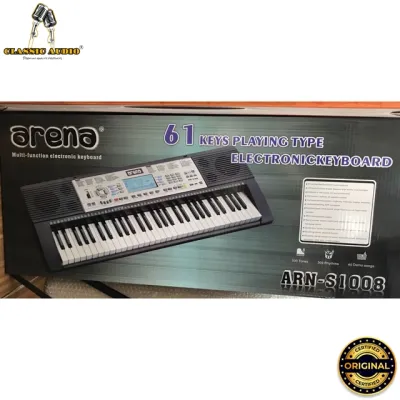
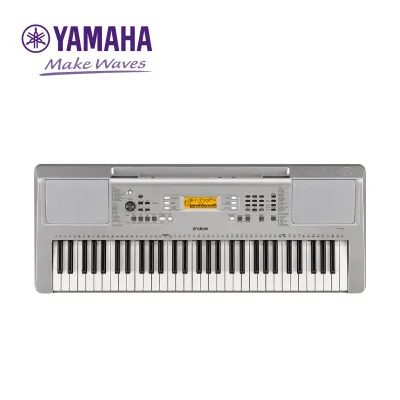
Prices are valid at publication and may change. Please refer to the product page for the latest price.
In contrast, the P series represents portable digital pianos engineered specifically to replicate the acoustic piano experience. The focus of this series is on touch, tone, and simplicity, providing a focused environment for classical, jazz, or pop piano practice. By minimizing buttons and flashing lights, these instruments encourage focused practice sessions that mimic playing on a traditional upright or grand piano.
Understanding how the term “keyboard piano” applies to each line is crucial for setting realistic expectations. If your goal is to develop proper piano technique, a PSR keyboard may feel too light and springy, as it is designed more like an electronic organ. If your goal is to create multi-instrument arrangements, a P series digital piano may feel too limited, as it lacks the extensive auto-accompaniment features of an arranger.
Keyboard Action and Touch Response
Keyboard action is the most critical physical difference between these two product lines, directly affecting your playing technique and finger strength. The P series features weighted or graded hammer actions, such as Yamaha’s Graded Hammer Standard (GHS) or newer keybed designs. These mechanisms use actual physical weights to mimic the feel of acoustic piano hammers, which are heavier in the lower register and lighter in the high notes. This realistic resistance is essential for building the finger strength and control required for classical repertoire.

In contrast, the PSR series utilizes lighter, synth-action or semi-weighted keys. These keys rely on springs rather than weights to return to their original position, offering very little physical resistance. While they are touch-sensitive—meaning they respond to how hard you press them—they do not simulate the mechanical feel of an acoustic piano. This lighter action is optimized for fast synthesizer runs, rapid organ glissandos, and playing non-piano voices like brass or woodwinds, where a heavy weighted key would actually hinder your performance.
Before making a final decision, it is highly recommended to verify the specific model’s action type on the official manufacturer spec sheet. If possible, visit an authorized local music showroom to test the physical keybed yourself. Feeling how the keys rebound under your fingers is the best way to determine which action matches your physical preference and playing style.
Sound Engines, Voices, and Built-in Styles
The sonic capabilities of these two series cater to entirely different creative workflows and performance styles. The P series prioritizes premium acoustic piano samples, often captured from world-class concert grand pianos. The voice selection is intentionally minimal, focusing on high-quality variations of grand pianos, electric pianos, organs, and basic string patches. This distraction-free setup keeps your focus entirely on your playing dynamics and expression.
The PSR series, conversely, is a powerhouse of sonic variety. It features an extensive voice library containing hundreds of realistic instrument sounds, from traditional orchestral instruments to modern electronic synthesizers. Additionally, the PSR line is famous for its auto-accompaniment styles. These styles act as an interactive backing band that follows your chord changes in real-time, covering genres from jazz and pop to traditional regional rhythms.
When comparing models, always check the exact polyphony count, the number of built-in voices, and the speaker wattage on the product specification sheet. A higher polyphony count ensures that notes do not cut off abruptly during complex passages or when using a sustain pedal. Furthermore, consider your home environment; higher speaker wattage is particularly beneficial in spacious, open-layout homes or tropical living rooms where ambient noise from fans or air conditioners might compete with lower-wattage speakers.
Learning Features and Connectivity Options
Both series offer distinct educational tools and hardware connections designed to support your musical journey. The P series often integrates seamlessly with piano-specific learning applications, such as Yamaha’s Smart Pianist app. This integration allows you to control the piano’s settings from a tablet, view digital sheet music, and practice classical pieces with interactive feedback.
The PSR series approaches learning through built-in chord dictionaries, style-based lesson suites, and on-screen guides. These features are excellent for players who want to learn how to read chord charts, understand song structures, and play along with diverse rhythms rather than focusing solely on traditional sheet music.
Connectivity is another vital area to verify on the official spec sheet before purchasing. Look for a USB-to-Host port, which allows you to connect the instrument to a computer or tablet for use as a MIDI controller in a digital audio workstation (DAW). Ensure the model has standard sustain pedal inputs and appropriate audio outputs if you plan to connect to external amplifiers or PA systems.
Additionally, always check what accessories are included in the retail box. Some packages bundle a sustain pedal, music rest, and power adapter, while others require you to purchase these items separately. In humid tropical climates, it is also wise to invest in a fitted dust cover to protect the sensitive electronic contacts and key sensors from moisture and dust accumulation over time.
Decision Framework: Which Series Should You Buy?
To finalize your decision, evaluate your musical goals against this conditional framework.
Choose the PSR series if:
- Your primary goal is to compose music, write songs, or perform as a solo entertainer with full backing tracks.
- You want to explore a vast library of diverse instrument sounds, sound effects, and global rhythms.
- You require a highly portable, lightweight instrument that is easy to transport to gigs, rehearsals, or social gatherings.
Choose the P series if:
- Your main objective is to practice traditional acoustic piano repertoire, learn classical or jazz piano, and build proper finger technique.
- You prefer a minimalist, elegant design that fits seamlessly into a living space without the visual distraction of numerous buttons and screens.
- You prioritize the authentic feel of weighted keys and high-fidelity acoustic piano samples over electronic accompaniment features.
Before completing your purchase, verify the exact dimensions, weight, and current price in ₱ at authorized music retailers in the Philippines. Ensure the instrument fits your physical space, and check the warranty terms provided by the local distributor to protect your investment.
Frequently Asked Questions (FAQ)
Can I use a PSR keyboard to learn classical piano?
While you can learn the basic notes and rhythms of classical pieces on a PSR keyboard, it is not recommended for long-term classical study. Classical repertoire relies heavily on expressive dynamics and touch control, which require the resistance of weighted keys. A non-weighted PSR keyboard can be acceptable for absolute beginners during the first few months of learning, but upgrading to a P series or another weighted digital piano becomes necessary as you progress to intermediate pieces.
Do P series digital pianos have built-in rhythms and styles?
P series digital pianos are designed to focus on the core piano experience and typically lack the extensive auto-accompaniment styles found in the PSR line. Some P series models may include basic metronome rhythms or simple drum patterns to help you keep time, but they do not feature full backing bands. If you require backing tracks while using a P series piano, you can connect the instrument to a computer or tablet via MIDI and use external arranger software or mobile apps.
Which series is better for producing music on a computer?
The better series for music production depends on your specific workflow. The PSR series is highly versatile for general music production, offering a wide array of built-in sounds, pitch bend wheels, and assignable controls that make it an excellent MIDI controller for arranging diverse genres. However, if your music production relies heavily on realistic piano performances, the P series is a highly effective choice because its weighted keys allow you to record highly expressive, natural-sounding MIDI piano tracks into your digital audio workstation (DAW).

Community discussion
Share your experience or ask a question. Comments are reviewed before publication.