
Choosing the right Yamaha keyboard or digital piano in the Philippines requires aligning your musical goals with the specific design philosophy of each product line. If your priority is exploring diverse instrument sounds, creating backing tracks, or carrying a lightweight instrument to rehearsals, the PSR arranger keyboard series is a highly suitable option. If you want to develop proper piano finger technique with weighted keys while retaining the flexibility to transport your instrument, the P-Series portable digital piano line offers a practical balance. For those seeking a permanent, elegant furniture piece for the living room that replicates the acoustic projection and pedal feel of a traditional piano, the YDP Arius console series stands out. By understanding how these series differ in action, sound generation, and physical design, you can make an investment that supports your musical journey for years to come.
Understanding the Core Differences: Arranger vs. Portable vs. Console
To make an informed decision, you must first understand that Yamaha designs each of these series for entirely different types of players. The PSR series consists of arranger keyboards. These instruments are essentially portable production stations and performance tools. They feature hundreds of built-in instrument voices, drum rhythms, and automatic accompaniment styles that follow your left-hand chord changes. A PSR keyboard allows a single player to sound like a full band or orchestra, making it highly popular for solo entertainers, church musicians, and hobbyists who enjoy composing or playing along with backing tracks.
The P-Series, where the “P” stands for portable, focuses on delivering a dedicated piano-playing experience in a mobile format. Unlike arranger keyboards, P-Series models strip away the vast libraries of non-piano sounds and complex accompaniment features to focus on key action and high-fidelity acoustic piano samples. These instruments feature 88 fully weighted keys designed to mimic the resistance of an acoustic piano’s hammers. They are built for students learning classical or contemporary piano, gigging musicians who need a reliable stage instrument, and home players with limited space.
Products mentioned in this guide
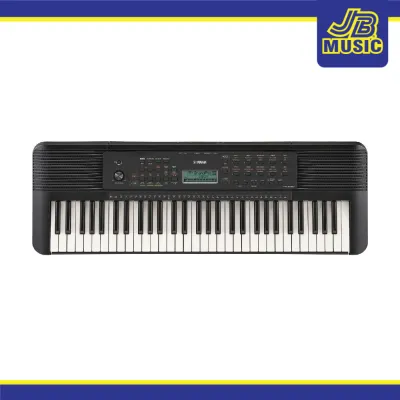
Prices are valid at publication and may change. Please refer to the product page for the latest price.
The YDP Arius series represents the console digital piano category. These are stationary instruments built into wooden cabinetry with integrated stands and a complete three-pedal assembly. The YDP series is designed to live permanently in a home, school, or studio. It prioritizes acoustic realism, utilizing larger built-in speaker systems housed within the wooden cabinet to project sound in a way that mimics a traditional upright piano. If you want an instrument that serves as both a serious practice tool and an elegant piece of home furniture, the YDP series is engineered for this exact purpose.
Key Comparison Dimensions for Your Decision
When comparing these three series, the physical key action is the most critical differentiator. Most PSR keyboards feature synth-action or semi-weighted keys. These keys use light spring tension rather than weights, making them incredibly easy to press. This light action is perfect for playing fast synthesizer leads, organ runs, and brass lines, but it does not build the finger strength or control needed for acoustic piano repertoire. In contrast, both the P-Series and YDP series utilize fully weighted actions, such as Yamaha’s Graded Hammer Standard or Graded Hammer 3 actions. These systems use actual physical weights inside the keyboard to make the lower keys feel heavier and the higher keys feel lighter, precisely replicating the mechanical behavior of an acoustic grand piano.

Sound engine technology and polyphony limits also vary significantly across these lines. Polyphony refers to the number of individual notes or voices the instrument can play simultaneously without cutting off older notes. Entry-level PSR keyboards often feature lower polyphony limits, which is acceptable for basic melodies but can be limiting when layering sounds. The P-Series and YDP series feature advanced sound engines with high polyphony limits and sophisticated resonance modeling. This technology simulates the complex way strings vibrate against each other inside an acoustic piano cabinet, providing a rich, decaying sound that responds dynamically to how hard you strike the keys.
Portability and physical setup are highly practical considerations, especially in Philippine households where space can be at a premium or where high humidity is a constant factor. PSR keyboards and P-Series digital pianos are highly portable, often weighing under 12 kilograms. They can be easily packed into gig bags, stored in closets when not in use, or powered by batteries for outdoor performances. The YDP series, however, is a heavy, stationary console that typically requires two people to assemble and move. The wooden cabinetry of the YDP series also requires careful placement away from direct sunlight, open windows, and air conditioning drafts to prevent humidity-induced wear on the internal electronics and cabinet finish over time.
Connectivity options should be verified based on your specific workflow. While older models relied solely on standard MIDI ports, modern PSR, P-Series, and YDP instruments generally feature USB-to-Host ports. This allows you to connect the instrument directly to a computer, tablet, or smartphone to use as a MIDI controller or to interface with learning apps like Yamaha’s Smart Pianist. Some mid-range and premium models in the P-Series and YDP lines also include built-in Bluetooth audio and MIDI, allowing you to stream backing tracks through the piano’s speakers wirelessly or connect to educational software without cluttering your space with cables.
Matching the Series to Your Skill Level and Playing Goals
For absolute beginners and casual players, the choice depends on your long-term musical path. If you are introducing a very young child to music, starting with an ultra-compact, play-focused instrument like the Yamaha Remie (PSS-E30) is an excellent way to build basic coordination and pitch recognition through quiz modes and kid-friendly sounds. As players grow, transitioning to a standard PSR keyboard provides a vast playground for musical exploration, allowing beginners to learn about different genres, rhythms, and instrument voices. However, if your primary goal is to learn proper piano technique, starting directly on a P-Series portable digital piano is highly recommended. Learning on unweighted keys can lead to poor hand posture and weak finger muscles, making it difficult to transition to an acoustic piano later.
Intermediate to advanced pianists will find the synth-action keys of the PSR series inadequate for expressive classical or jazz performances. To execute delicate pianissimo passages or powerful fortissimo chords, you need the mechanical feedback of a weighted key action found in the P-Series or YDP lines. These instruments allow for subtle variations in dynamics and tone based on the speed and force of your key strike. Advanced players practicing complex pieces will also benefit from the half-damper pedal capabilities available on YDP models and select P-Series pedals, which allow for precise control over sustain and resonance.
Deciding between home and stage use is another clear dividing line. If you are a church musician, a gigging keyboardist, or a student living in a compact condominium in Manila, the P-Series offers the professional sound and touch you need in a form factor that fits on a folding stand and can be transported in a car. If you have a dedicated space in your home and want an instrument that encourages daily practice simply by being visible and ready to play, the YDP series is a highly suitable choice. The physical presence of a console piano creates a dedicated practice environment, and its integrated cabinet speakers project sound downward and outward to fill a room naturally.
Budget and Value Considerations in the Philippines
Navigating the financial aspect of your purchase requires looking at both the initial price tag and the long-term value of the instrument. In the Philippine market, entry-level PSR keyboards represent the most accessible price point, often starting at budget-friendly tiers in ₱ that make them excellent gifts or low-risk trial instruments for beginners. Mid-range PSR models and entry-level P-Series portable pianos occupy a moderate price bracket, offering a step up in sound quality and key action without requiring a massive financial commitment.
The YDP Arius series represents a premium home investment. While the cost is higher than a portable keyboard, this price includes the integrated wooden stand, the three-pedal lyre, and often a matching piano bench. When buying a portable P-Series or PSR keyboard, you must factor in the cost of essential accessories that are not always bundled in the box. To match the functionality of a console piano, you will need to purchase a sturdy double-braced X-stand or a matching wooden stand, a high-quality sustain pedal, a comfortable bench, and a dust cover to protect the keys from the tropical dust and humidity common in local homes.
When calculating your budget, it is also wise to consider power stability. In many areas of the Philippines, power fluctuations and sudden outages can pose a risk to sensitive electronic musical instruments. Investing in a reliable automatic voltage regulator (AVR) or a high-quality surge protector is a small but essential additional cost that can safeguard your keyboard’s internal motherboard and power adapter from electrical damage.
How to Make Your Final Choice
To finalize your decision, ask yourself where you will play, what you want to play, and how much space you have available.
Choose the PSR series if you want to explore a wide variety of instrument sounds, play along with automatic backing bands, compose your own arrangements, or need a highly lightweight keyboard that you can easily carry to different venues or store away in a small room.
Choose the P-Series if your main goal is to learn or perform piano music with an authentic, weighted key feel, but you still require the flexibility to transport the instrument to gigs, church services, or move it between rooms in a compact home.
Choose the YDP series if you want a dedicated, permanent piano for your home that looks like a traditional upright, features a complete built-in pedal system, and provides the rich acoustic projection of a cabinet-housed speaker system.
Before making your purchase, always verify the exact specifications of your chosen model on the manufacturer’s official website. Pay close attention to the specific type of key action, the maximum polyphony count, and the included accessories to ensure the instrument closely matches your expectations and musical needs.
Frequently Asked Questions (FAQ)
Can I use a PSR keyboard to learn classical piano?
While you can learn basic note reading and simple melodies on a PSR keyboard, it is not suitable for serious classical piano training. Classical piano music relies heavily on dynamic expression, finger strength, and subtle pedaling. The unweighted keys of a PSR keyboard do not provide the physical resistance needed to develop these skills, which can make transitioning to an acoustic piano highly difficult.
Do P-Series and YDP models require external amplifiers?
No, both the P-Series and YDP models feature built-in amplifiers and speakers designed for home practice and small room performances. However, if you plan to perform with a P-Series piano in a large venue, a church, or with a loud band, you will need to connect the instrument’s line-out or headphone jacks to an external keyboard amplifier or a PA system to be heard clearly.
Is it possible to upgrade from a P-Series to a YDP later?
Yes, upgrading from a P-Series to a YDP is a very common path for growing students. When you make this transition, you will experience a significant upgrade in physical stability, acoustic projection due to the larger cabinet speakers, and a more realistic pedal feel. Because both series use weighted keys, your finger strength and playing technique will transition seamlessly to the new instrument.

Community discussion
Share your experience or ask a question. Comments are reviewed before publication.