
Choosing your first digital piano is a significant milestone, especially when navigating the diverse options available in the Philippines. The Yamaha P-45 and Roland FP-10 stand out as two of the most popular entry-level instruments for beginners. Both instruments offer weighted keys designed to mimic the feel of an acoustic piano, but they approach the learning experience from different design philosophies. Selecting the right one depends on your personal practice habits, space constraints, and how you prefer to interact with modern learning tools.
In the warm and humid tropical climate of the Philippines, digital pianos offer a distinct advantage over traditional acoustic pianos. Acoustic instruments are highly sensitive to humidity fluctuations, which can warp wooden components, rust strings, and throw the piano out of tune. Digital pianos are far more resilient against these environmental challenges, making them a low-maintenance and reliable choice for local households. By understanding how the Yamaha P-45 and Roland FP-10 compare in key action, sound quality, and features, you can make an informed investment that will support your musical growth for years to come.
Understanding the Core Design Philosophies
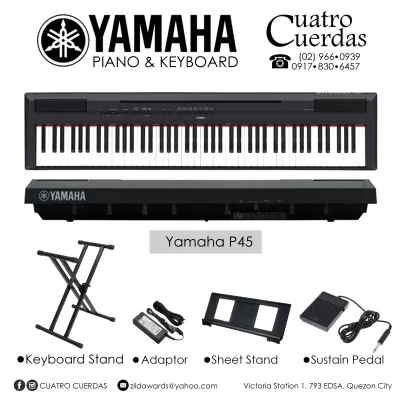
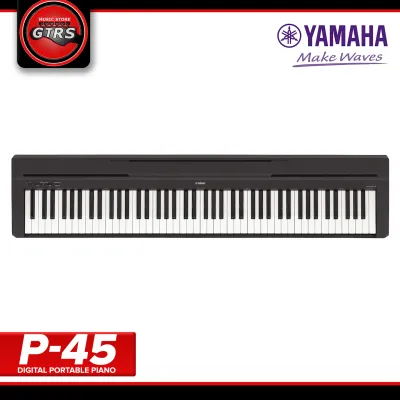
Yamaha has long been a staple in music education, focusing on straightforward acoustic piano emulation. Their instruments prioritize a clean, distraction-free interface that lets you turn on the power and start playing immediately. This traditional approach appeals to students who want to replicate the experience of sitting at an upright piano without digital distractions. Yamaha designs its entry-level models to be intuitive, ensuring that even young children can operate the basic functions without needing to navigate complex menus.
Products mentioned in this guide
Prices are valid at publication and may change. Please refer to the product page for the latest price.
Roland, on the other hand, embraces modern digital integration. The brand frequently incorporates advanced key textures and wireless connectivity into their entry-level models. This philosophy targets tech-savvy beginners who want to use interactive apps, online tutorials, and software synthesizers to guide their learning journey. Roland aims to bridge the gap between traditional piano playing and modern technology, offering a highly customizable experience right out of the box.
While both models target beginners, they prioritize different aspects of the learning experience. Yamaha focuses on simplicity and a time-tested physical interface, while Roland emphasizes tactile feedback and digital connectivity. Understanding these differing priorities will help you identify which instrument aligns better with your personal learning style.
Comparing Key Action and Playability
The physical feel of the keys is the most critical factor for developing proper finger strength and technique. Acoustic pianos use a system of hammers and felt to strike strings, creating a natural resistance that varies across the keyboard. Digital pianos use weighted key mechanisms to simulate this physical momentum, which is essential for students who plan to transition to acoustic instruments in the future.

Yamaha uses its Graded Hammer Standard (GHS) action in the P-45. This system features heavier resistance in the lower register and a lighter touch in the high notes, mirroring the natural gradation of an acoustic grand piano. The key surfaces are smooth, providing a familiar feel for players transitioning to or from traditional acoustic pianos. The GHS action is widely regarded as a reliable and consistent platform for developing fundamental finger technique.
Roland equips the FP-10 with its PHA-4 Standard keyboard. This action includes an escapement simulation, which replicates the subtle “click” felt when gently pressing a grand piano key. Additionally, the keys feature an ivory-feel texture that absorbs moisture from your fingers. In the humid climate of the Philippines, this textured surface can provide a more secure grip during long practice sessions, preventing your fingers from slipping off the keys.
Tactile preference is highly subjective, so visiting an authorized local showroom is highly recommended. Pay close attention to the physical resistance of the keys and the mechanical noise they make when pressed. Some players prefer the smooth, reliable resistance of the Yamaha GHS, while others favor the textured grip and mechanical feedback of the Roland PHA-4. Testing both actions in person will help you determine which feel is more comfortable for your hands.
Evaluating Sound Engines and Audio Output
Sound generation technologies dictate how realistic and expressive your piano will sound. The Yamaha P-45 utilizes AWM (Advanced Wave Memory) stereo sampling, which uses digital recordings of acoustic instruments to recreate the piano tone. The resulting sound is bright and clear, characteristic of Yamaha’s acoustic grand pianos, making it highly suitable for classical and pop pieces alike.
The Roland FP-10 employs the SuperNATURAL Piano sound engine. This technology combines traditional sampling with digital modeling to create a more dynamic, organic tone that responds fluidly to changes in your touch. The sound tends to be warmer and more resonant, offering a different tonal character that some players find more expressive for classical repertoire.
Polyphony is another crucial specification to verify. Polyphony refers to the number of individual notes or voices the piano can produce simultaneously. According to manufacturer specifications, the Yamaha P-45 offers 64-note polyphony, which is generally sufficient for beginner to intermediate classical pieces. The Roland FP-10 provides 96-note polyphony, offering a larger buffer for sustained passages, complex classical compositions, and layered sounds.
Consider the speaker configurations and how they will interact with your living space. Both models feature built-in stereo speakers, but their wattage and physical placement differ. In typical Philippine homes with concrete walls or tiled floors, sound can reflect intensely. Verify the speaker wattage and projection direction to ensure the instrument fills your room comfortably without sounding muddy or overly harsh. If you plan to perform in larger spaces, check if the instrument requires external amplification.
Features, Connectivity, and Daily Usability
Beyond the core piano experience, daily usability depends heavily on built-in tools and connectivity. Both instruments offer essential features like a built-in metronome, transpose functions, and a selection of alternative voices such as electric pianos, organs, and strings. These options allow you to experiment with different musical genres during practice.
For connectivity, the Yamaha P-45 features a USB-to-host port, allowing you to connect to a computer or mobile device using a wired cable. This connection is ideal for using the piano as a MIDI controller in music production software or interactive learning programs. It also includes a standard headphone jack for silent practice, which is essential for late-night sessions in dense residential areas or shared apartments.
The Roland FP-10 expands on these options by including built-in Bluetooth MIDI. This wireless connection allows you to link the piano to compatible smartphones or tablets without cluttering your practice space with cables. Roland’s dedicated companion apps can be used to adjust settings, select voices, and access interactive lessons directly from your device’s screen.
Physical dimensions and weight are also important if you live in a space-constrained condominium or plan to transport the instrument. Both models are relatively compact and portable, but you should verify their exact dimensions and weight to ensure they fit your designated space. Additionally, check the compatibility of local keyboard stands, as a sturdy stand is vital for preventing unwanted wobble while playing.
Making Your Final Decision
Choosing between these two digital pianos comes down to matching their distinct features with your personal learning style and environment.
You should choose the Yamaha P-45 if you prioritize a straightforward, traditional acoustic feel. Its simple, distraction-free interface is perfect for students who want to focus entirely on their playing technique without being tempted by digital menus or app integrations. The GHS action offers a reliable, time-tested platform for developing finger strength.
You should choose the Roland FP-10 if you value advanced key textures, escapement simulation, and modern wireless connectivity. The ivory-feel keys provide excellent grip in humid conditions, and the Bluetooth MIDI integration makes it incredibly easy to use interactive learning apps on your tablet or smartphone.
Before making your purchase, verify the current local availability and warranty terms from authorized distributors in the Philippines. Check the pricing in ₱ and confirm what accessories are included in the bundle, such as a music rest, power adapter, and sustain pedal. Purchasing from authorized local music stores ensures you receive genuine products and reliable after-sales support.
Frequently Asked Questions (FAQ)
Do I need to buy a separate sustain pedal for these models?
Both the Yamaha P-45 and Roland FP-10 typically come bundled with a basic plastic footswitch. While this is sufficient for absolute beginners learning basic note durations, it does not replicate the physical feel or control of an acoustic piano pedal. As you progress, you will likely want to upgrade to a proper damper pedal that supports half-pedaling for more expressive play. Be sure to check the manufacturer specifications for compatible upgrade models, such as the Yamaha FC3A or Roland DP-10, to ensure full compatibility.
Can I connect these pianos to learning apps on my tablet?
Yes, both instruments can connect to external devices, but they use different methods. The Yamaha P-45 requires a wired connection using a USB Type-B to Type-A or Type-C cable, depending on your tablet’s port, and may require an official camera connection kit or OTG adapter. The Roland FP-10 supports both wired USB connections and wireless Bluetooth MIDI, allowing for a cleaner setup. Always verify app compatibility with your specific operating system (iOS or Android) before purchasing any adapters or subscription services.

Community discussion
Share your experience or ask a question. Comments are reviewed before publication.