
Finding the right keyboard stand is just as important as choosing the instrument itself. A poor match can lead to distracting wobbles during a performance, cramped legroom, or even a costly fall. The ideal stand depends entirely on balancing portability, stability, and legroom for your specific playing environment.
If you are a gigging musician who needs to pack up quickly and travel light, a classic X-style stand offers a highly portable solution. For players using heavy digital pianos at home or in a studio who require ample legroom, a Z-style stand provides excellent structural support. If you have a permanent studio setup, use multiple keyboards, or require completely unobstructed space for pedals, a table-style stand is often the most reliable choice.
No single design is universally superior to the others. Your decision relies on matching the stand’s structural traits to your keyboard’s physical weight, depth, and your personal playing style.
Products mentioned in this guide
Prices are valid at publication and may change. Please refer to the product page for the latest price.
Breaking Down the Three Main Keyboard Stand Designs
To make an informed choice, you must first understand how each stand is built and where it excels. Each design handles weight distribution, floor contact, and folding mechanisms differently. These structural variations directly impact how the stand behaves under your hands.
X-Style Keyboard Stands
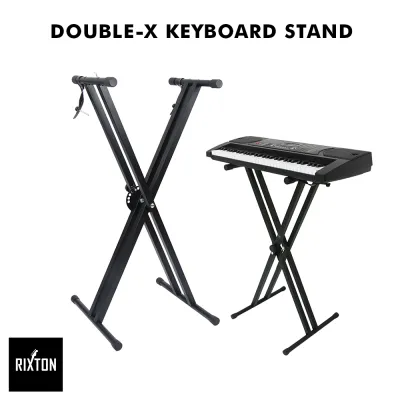
X-style stands feature a cross-braced tubular design that pivots in the center, allowing the frame to fold completely flat. This collapsible nature makes them incredibly easy to store in tight spaces or slide into the back of a vehicle. They are widely available and generally represent the most budget-friendly option in ₱, making them a common entry point for beginners.
However, the cross-braced design introduces a significant trade-off. As you adjust an X-stand higher, the width between the top support arms narrows, which can make wider keyboards less stable. Furthermore, the intersecting metal bars occupy the space directly beneath the keyboard, severely limiting your legroom when playing from a seated position.
Because these stands rely heavily on a central joint, you must regularly inspect the locking mechanisms and rubber end caps for wear. In humid tropical climates, rubber components can degrade or become slippery over time, making routine checks essential for keeping your instrument secure.
Z-Style Keyboard Stands
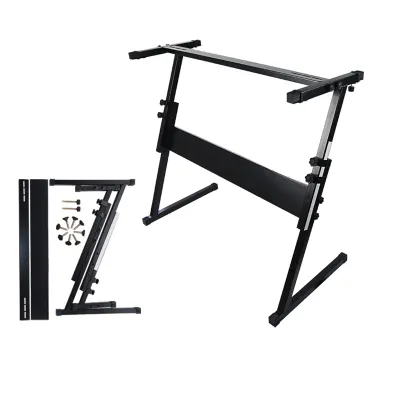
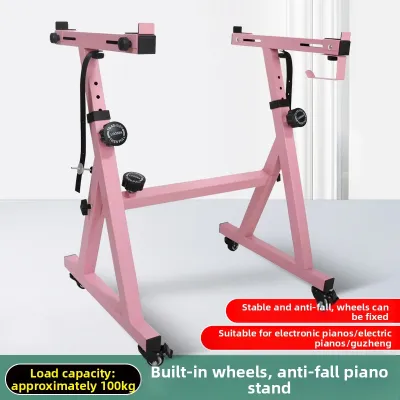
Z-style stands are named for their side profiles, which feature vertical pillars connected to horizontal base and top bars to form a “Z” shape. This frame design distributes weight directly down to the floor through two wide, stable side structures. Because there are no crossing bars in the center, this style offers completely open legroom for seated players.
The open space beneath a Z-stand makes it easy to position sustain, expression, or multi-pedal units exactly where you need them. These stands are generally built from heavier gauge steel, allowing them to support substantial weight without bowing or shaking during energetic playing.
The primary trade-off for this stability is a larger physical footprint and a heavier overall build. While many Z-stands can be disassembled or adjusted, they do not fold flat as quickly or compactly as X-stands, making them less convenient for daily transport.
Table-Style Keyboard Stands
Table-style stands utilize four independent, adjustable legs connected to a flat, rectangular top frame, closely resembling a heavy-duty utility table. This four-legged footprint provides exceptional stability, as the weight of the instrument is distributed evenly across four distinct corners of the floor.
This design offers the maximum amount of pedal clearance and legroom, with absolutely no structural bars blocking your knees or feet. It is highly favored for heavy stage pianos, vintage synthesizers, and complex multi-tier setups where multiple keyboards are stacked vertically.
On the downside, table-style stands tend to have a bulkier storage profile and require a higher initial investment compared to basic X-stands. Setting them up can also take slightly longer, as each of the four legs must be adjusted individually to ensure a level playing surface on uneven floors.
Core Comparison Dimensions to Evaluate
Choosing between these three designs requires looking closely at your physical setup and how you interact with your instrument. Evaluating these core dimensions will help you avoid common purchasing mistakes.

Stability and Weight Distribution
A keyboard stand must do more than just hold an instrument at rest; it must withstand the dynamic forces of your playing. When you strike keys with force, especially at the far ends of an 88-key keyboard, a stand with poor weight distribution will wobble or rock. You should always check the manufacturer’s rated weight capacity on the product label and compare it to your keyboard’s weight. Keep in mind that heavy-action digital pianos require a much stiffer frame than lightweight MIDI controllers.
Legroom and Pedal Access
If you practice for hours at a time, your physical comfort is paramount. Stands that block your knees force you into unnatural sitting postures, which can lead to back strain over time. Additionally, if you use a sustain pedal, you need enough floor space to place the pedal comfortably without it sliding against a metal crossbar. Z-stands and table-style stands excel here, while X-stands are generally better suited for standing performances.
Portability and Storage Footprint
For musicians who frequently travel for gigs, rehearsals, or church services, transportability is a deciding factor. A stand that is difficult to fold or too heavy to carry single-handedly can quickly become a burden. Consider the folded dimensions of the stand and whether it can fit into your vehicle alongside your other gear. If your keyboard stays in one room of your home, prioritizing a heavier, more stable frame over portability is usually the wiser choice.
Expandability and Multi-Tier Options
Your keyboard setup may grow over time as you add synthesizers, laptops, or secondary MIDI controllers. Some stands allow you to attach official second or third-tier arms directly to the main frame. Before buying, check the manufacturer’s specifications to see if the stand supports these add-ons. Z-stands and table-style stands are typically much better suited for multi-tier expansion because their robust frames can handle the off-center weight of additional instruments.
Decision Framework: Matching the Stand to Your Playing Style
To simplify your decision, you can match your primary playing habits and environment to one of the following profiles.
Choose an X-Stand if:
- You prioritize lightweight portability and need a stand that folds flat in seconds.
- You are working with a smaller budget and want a straightforward, cost-effective solution.
- You play a lightweight synthesizer, arranger keyboard, or MIDI controller.
- You primarily perform while standing, meaning knee clearance is not an active concern.
Choose a Z-Stand if:
- You need a reliable balance of high weight capacity and comfortable seated legroom.
- You play a heavier 88-key digital piano with weighted keys.
- The stand will remain mostly stationary in a home practice room, studio, or classroom.
- You want a highly stable frame but still need the option to adjust the width and height.
Choose a Table-Style Stand if:
- You require maximum stability for heavy, premium stage pianos or vintage keyboards.
- You need completely unrestricted floor space for complex pedal setups or foot controllers.
- You plan to build a multi-tier rig with multiple instruments stacked vertically.
- You have ample floor space and do not mind a slightly longer assembly process.
Verify First if:
Always measure your instrument before making a final purchase. If your keyboard has an unusual depth, an uneven bottom surface with protruding battery compartments, or exceeds standard weight limits, a generic stand may not fit securely. Cross-reference your keyboard’s physical dimensions with the stand’s adjustable width and depth specifications to ensure a proper physical match.
Essential Specifications to Check Before Purchase
Before finalizing your order from an online marketplace or local music store, run through this practical checklist to ensure compatibility and safety.
Weight Limits
Never guess the weight capacity of a stand. Locate the manufacturer’s official maximum load rating in the product specifications. Ensure this limit exceeds your keyboard’s weight by a safe margin to account for the downward pressure you exert while playing fortissimo passages.
Dimensional Adjustability
Check the minimum and maximum width adjustments of the stand. If a stand cannot expand wide enough, the ends of a long 88-key keyboard will overhang excessively, creating a tipping hazard. Similarly, ensure the depth of the top support arms matches or closely aligns with the depth of your keyboard’s chassis.
Locking Mechanisms and Feet
Examine the adjustment mechanism, whether it uses spring-loaded pull pins, threaded knobs, or geared locking discs. High-quality locking systems prevent the stand from slipping or collapsing under load. Additionally, look for non-slip rubber feet that grip the floor, which is especially important on smooth tile or polished wood floors common in tropical homes.
Warranty and Return Policies
Because stability is highly subjective and depends on your specific floor surface and playing style, it is wise to check the retailer’s return window in the Philippines. This allows you to assemble the stand at home, place your actual keyboard on it, and test for any unwanted movement before committing to the purchase.
Frequently Asked Questions (FAQ)
Can I use an X-stand for a heavy 88-key digital piano?
While some heavy-duty, double-braced X-stands are rated to hold heavier weights, they are generally not the ideal choice for large 88-key digital pianos. The narrow top support arms of an X-stand can allow a long keyboard to wobble at the ends, and the lack of legroom makes seated classical practice uncomfortable. For heavy 88-key instruments, a Z-style or table-style stand is highly recommended to ensure stability and proper playing posture.
How do I prevent my keyboard from sliding off the stand?
To keep your instrument secure, ensure the stand’s support arms have intact, high-friction rubber pads or end caps. Position the keyboard so its weight is evenly distributed from front to back and left to right on the support bars. If you are playing on a slick surface, placing a small non-slip mat under the stand’s feet can prevent the entire rig from sliding during use.

Community discussion
Share your experience or ask a question. Comments are reviewed before publication.