
The ideal keyboard stand depends entirely on your instrument’s weight, your need for legroom, and how often you transport your gear. While X-stands excel in portability for lightweight synthesizers, Z-stands offer a balance of stability and legroom for gigging musicians, and table-style designs provide the maximum support required for heavy 88-key digital pianos in a fixed home setup. By evaluating your specific playing situation against the structural traits of each design, you can select a stand that ensures safety, comfort, and reliable performance.
Choosing the wrong support can lead to distracting keyboard wobble, physical discomfort during long practice sessions, or even catastrophic drops that damage your valuable instrument. In tropical climates where high humidity can affect both the rubber grip pads and the metal coatings of your gear, selecting a robust, well-engineered stand is even more critical. Understanding the physical differences between these three primary stand types is the first step toward creating an ergonomic and secure playing environment.
Core Differences Between X-Stand, Z-Stand, and Table-Style Designs
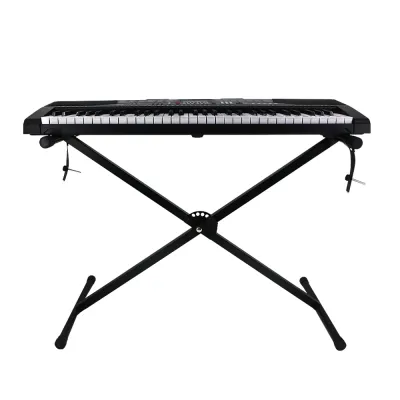
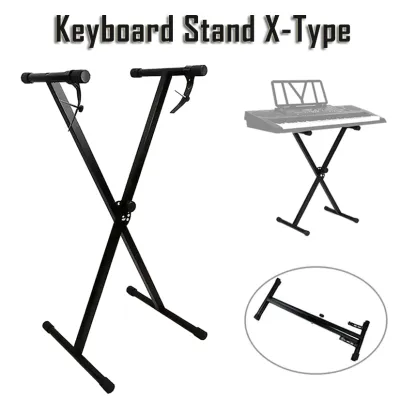
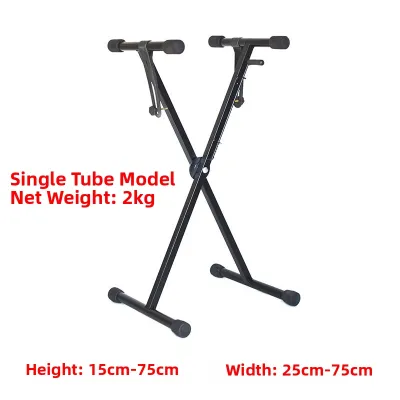
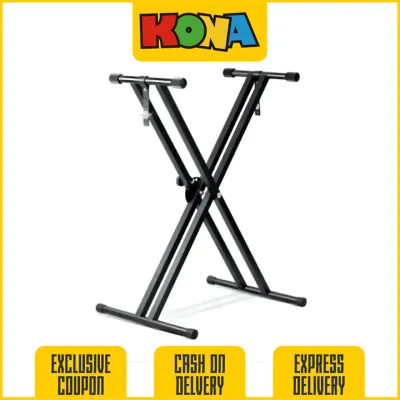
To choose the right support system, it helps to understand how each stand is constructed and how it manages the weight of your instrument. The most common design is the X-stand, named for its scissor-like crossing frame. These stands are available in single-braced configurations, which feature a single metal bar on each side, or double-braced configurations, which use two overlapping bars on each side for added reinforcement. X-stands utilize a central clutch mechanism that allows you to adjust the height, but this mechanism also links the height directly to the width; as you raise the stand, the support arms move closer together, narrowing the overall footprint.
Products mentioned in this guide
Prices are valid at publication and may change. Please refer to the product page for the latest price.
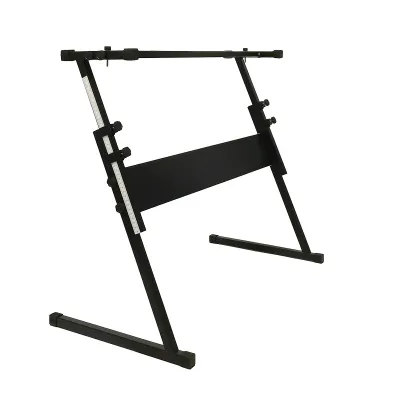
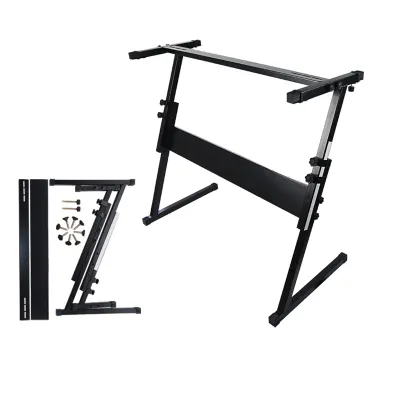
Z-stands feature a distinct profile resembling the letter Z, consisting of two vertical side pillars connected by a heavy-duty horizontal crossbar. The base of each side pillar rests on a flat horizontal foot, while the top features a matching horizontal arm to support the keyboard. Unlike X-stands, Z-stands adjust their height and width independently. The width is typically adjusted via a telescoping center bar, allowing you to widen the stand for longer keyboards without changing the playing height. While some Z-stands feature folding joints for transport, many are semi-permanent structures that require partial disassembly.
Table-style stands utilize a four-legged design that closely resembles a traditional folding utility table. The keyboard rests on a wide, rectangular metal frame supported by four independent legs positioned at the outer corners. These legs can often be adjusted individually in height, which is highly beneficial for leveling the stand on uneven surfaces. The entire structure is designed to distribute weight straight down to the floor, providing a highly stable platform that leaves the entire space beneath the keyboard completely open.
Comparing Stability, Ergonomics, and Portability
When evaluating these three designs, you must balance three competing factors: how stable the stand remains during intense playing, how comfortable it is to sit at, and how easy it is to pack up and transport.

Stability and Weight Distribution
Stability is the most critical safety factor for any keyboard setup. Heavy digital pianos with fully weighted hammer-action keys generate significant kinetic energy when played expressively. A single-braced X-stand has a narrow center of gravity and a single pivot point, making it prone to lateral (side-to-side) wobble when you play at the far ends of the keyboard. Double-braced X-stands offer improved resistance to twisting, but they can still sway under heavy instruments.
Z-stands provide superior stability because their weight distribution is spread across two wide, rigid side frames. The vertical pillars prevent lateral swaying, making them an excellent choice for energetic performances. Table-style stands offer the highest level of stability among portable designs. Because the four legs support the outermost corners of the frame, there is virtually no risk of tipping or shaking, even when supporting heavy 88-key instruments.
Ergonomics and Legroom
If you practice while seated, ergonomics should be a primary concern. X-stands present a significant obstacle for seated players because the crossing metal bars block the space directly beneath the keyboard. This “knee-knock” effect forces you to sit further back, which can strain your back and shoulders, or splay your knees outward, leading to poor posture. Furthermore, the lack of central floor space makes it difficult to position sustain or expression pedals comfortably.
Z-stands and table-style stands excel in ergonomics. Both designs leave the entire center area beneath the keyboard completely clear. This open space allows you to sit with your knees at a comfortable 90-degree angle, slide your bench fully under the stand when not in use, and place multiple pedals exactly where your feet naturally rest. Additionally, because these stands adjust height independently of width, you can set the perfect playing height regardless of how wide your keyboard is.
Portability and Setup Speed
For gigging musicians, music teachers, or players who need to clear their living space after practice, portability is a major factor. X-stands are the undisputed champions of portability. They fold completely flat in a single motion, weigh very little, and can easily fit into the back of a compact car, a tricycle, or be carried on public transit. Setting them up takes only a few seconds.
Table-style stands also offer excellent portability, as their four legs typically fold flat against the main frame. While they have a wider collapsed footprint than an X-stand, they remain highly flat and easy to stack in a vehicle. Z-stands are generally the least portable. Even folding Z-stands tend to be bulky and heavy, often requiring you to loosen several hand screws and carry a multi-piece frame that takes up considerable cargo space.
Decision Guide: Which Stand Fits Your Keyboard and Setup?
To determine which stand type is right for your piano, consider your specific instrument, your playing environment, and your transport needs.
Choose an X-Stand if:
- You use a lightweight 61-key or 76-key synthesizer, arranger keyboard, or MIDI controller.
- You need to set up and tear down your gear in under a minute for rehearsals or gigs.
- You have limited storage space and need a stand that can slide under a bed or behind a wardrobe.
- You primarily play standing up, which minimizes the ergonomic drawbacks of the crossing bars.
- You are on a budget, as simple X-stands are often the most affordable options, starting under ₱1,500.
Choose a Z-Stand if:
- You play a mid-weight 88-key digital piano or a heavy synthesizer workstation.
- You practice seated for long hours and require ample legroom for proper posture and pedal placement.
- You want a highly stable stand that can handle energetic playing without swaying.
- You plan to expand your setup in the future; many Z-stands support official second-tier add-ons for a second keyboard.
- You have a dedicated practice space but still want the option to transport your stand occasionally.
Choose a Table-Style Stand if:
- You own a heavy, premium 88-key digital piano that remains in a fixed location.
- You prioritize absolute stability and want a completely wobble-free playing experience.
- You want maximum legroom and space for a complex pedalboard setup.
- You often perform on uneven floors, such as outdoor venues, tiled floors, or older stages, where the individually adjustable legs can compensate for ground imperfections.
Neither may fit if:
- Your digital piano is designed to pair with a proprietary wooden console stand. Many home-oriented digital pianos feature dedicated mounting points on the underside of the keybed. These models are meant to be bolted onto a matching wooden stand that houses integrated three-pedal units. Placing such an instrument on a generic metal stand can compromise its stability, damage the plastic casing, and prevent you from using the dedicated pedal bar.
Essential Specifications to Verify Before Purchasing
Before finalizing your purchase from a local music retailer or an online marketplace, you must verify several technical specifications to ensure a safe and compatible fit.
First, cross-reference the weight capacity of the stand with the actual weight of your keyboard. Do not guess your instrument’s weight; consult the manufacturer’s manual. Keep in mind that a heavy 88-key digital piano can weigh anywhere from 15 kg to over 25 kg. Your stand’s maximum load rating should comfortably exceed this weight to account for the downward force applied by your hands during fortissimo passages.
Second, check the physical dimensions of both the stand and your keyboard. Ensure the depth of the stand’s support arms matches or is slightly less than the depth of your keyboard’s base. If the support arms are too short, the keyboard may balance precariously; if they are too long, they will protrude unsightly from the front. If you are setting up a multi-tier system, verify the vertical clearance and tilt angle of the upper tier to ensure you can easily see and reach the controls of the lower keyboard.
Finally, consider accessory compatibility and environmental durability. Look for stands with high-quality rubber end caps or non-slip padding to protect your instrument from scratches and prevent it from sliding. In humid tropical environments, metal joints and adjustment pins are susceptible to rust. Prioritize stands with durable powder-coated finishes and heavy-duty steel construction, and regularly inspect the locking mechanisms to ensure they remain secure.
Frequently Asked Questions (FAQ)
Can I use a standard keyboard stand for a heavy 88-key digital piano?
Using a standard, lightweight single-braced X-stand for a heavy 88-key digital piano is not recommended. Heavy instruments place significant stress on the central joint of an X-stand, increasing the risk of structural failure or tipping. Additionally, the length of an 88-key keyboard amplifies any lateral movement, leading to severe wobble while playing. For heavy 88-key models, you should always verify the stand’s weight rating and opt for a heavy-duty double-braced X-stand, a Z-stand, or a table-style stand.
How do I prevent my keyboard from sliding off the stand?
To prevent your keyboard from sliding, ensure your stand is equipped with high-quality, textured rubber end caps or non-slip foam padding along the support arms. Many stands also feature safety straps with screws that thread directly into matching holes on the underside of compatible keyboards. If your keyboard lacks these mounting holes, you can use aftermarket non-slip silicone mats or hook-and-loop straps to secure the instrument to the frame, ensuring it remains stable during expressive performances.

Community discussion
Share your experience or ask a question. Comments are reviewed before publication.