
Choosing between a foldable piano keyboard and a regular electronic keyboard comes down to a fundamental trade-off between ultimate portability and authentic playing feel. If you are dealing with limited space in a shared boarding house or need an instrument that fits into a backpack for commutes across the city, a foldable keyboard provides a practical solution. On the other hand, if your goal is to build proper finger strength and transition smoothly to an acoustic piano, a traditional, rigid keyboard offers the structural stability and key action necessary for serious practice.
Evaluating these instruments requires looking beyond the novelty of a folding frame. You must consider how the physical design impacts your daily practice routine, the tactile response of the keys, and the long-term durability of the internal components. By analyzing your living arrangements, musical aspirations, and budget, you can select an instrument that keeps you motivated to play every day.
Core Differences in Design and Portability
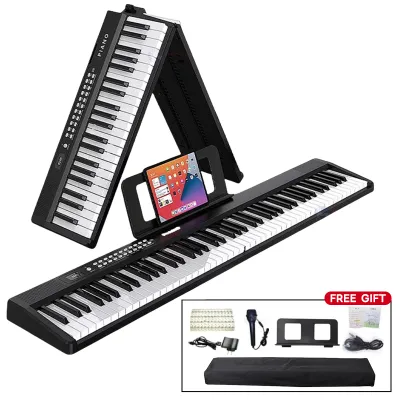
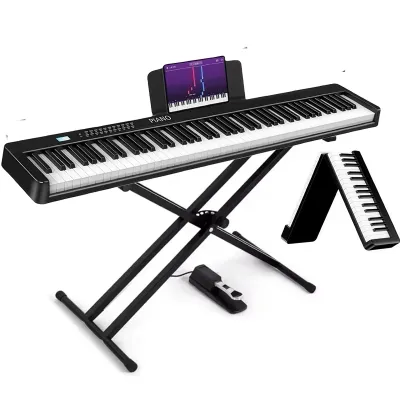
The most obvious distinction lies in how these two instrument types are constructed. A foldable piano keyboard features one or more hinges along its chassis, allowing an 88-key layout to fold down to half or even a quarter of its fully extended length. This design relies heavily on the integrity of its locking mechanisms. When unfolded, the keyboard must sit on a flat, stable surface to prevent the center hinge from flexing or sagging under the weight of your hands. If you play on an uneven table or a flimsy stand, you may notice a slight bounce or instability during energetic pieces.
Products mentioned in this guide
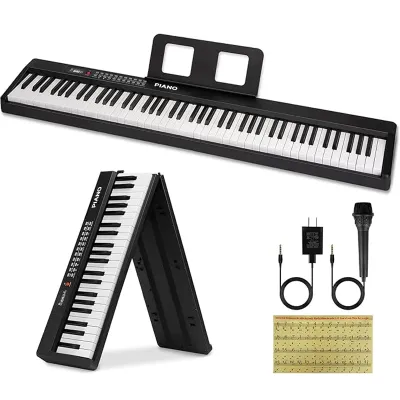
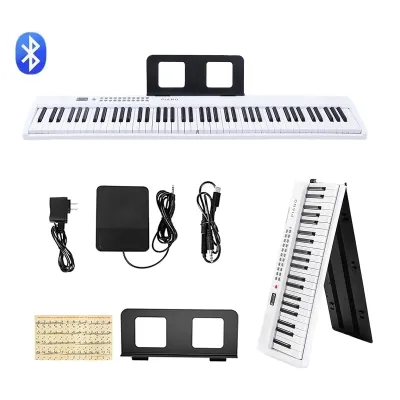
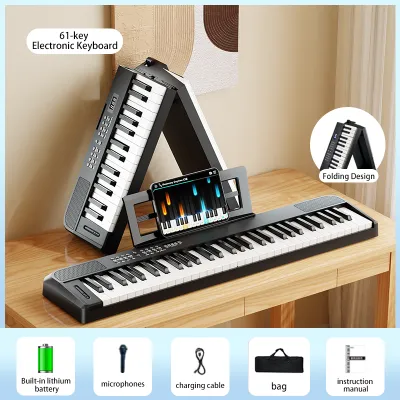
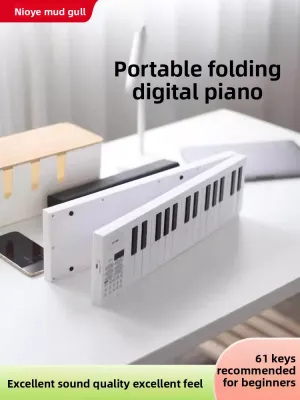
Prices are valid at publication and may change. Please refer to the product page for the latest price.
In contrast, a regular keyboard utilizes a solid, single-piece chassis. This rigid construction ensures that the entire keybed remains perfectly flat and stable, regardless of how hard you press the keys. The absence of moving joints in the frame means there are no structural weak points that can wear out over time. However, this stability comes at the cost of portability. A standard 88-key keyboard is typically over a meter long and requires a dedicated gig bag or a large vehicle to transport safely, making it a permanent fixture in most homes.
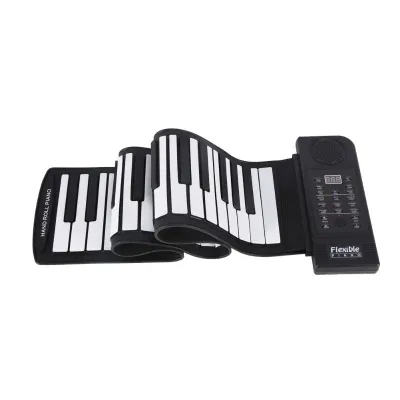
Weight and folded dimensions are critical factors if you plan to move your instrument frequently. Foldable models are engineered with lightweight plastics and compact internal components, often weighing less than three kilograms. They can easily slip into a standard backpack or a carry-on suitcase, making them highly convenient for musicians who travel or commute. Regular keyboards, especially those with weighted key actions, can weigh anywhere from five to over twenty kilograms, requiring significant physical effort to move and set up.
Setup time also differs between the two designs. Unfolding a foldable keyboard requires opening the chassis, securing the manual locks or sliding latches, and placing it on a flat surface. You must ensure the locking mechanism is fully engaged before playing to avoid damaging the internal ribbon cables that connect the two halves. A regular keyboard is much simpler to set up; you simply place it on its stand, plug in the power adapter, and begin playing immediately, with no mechanical parts to align or secure.
Key Action and Playability Comparison
The tactile feel of the keys is where the differences between these two formats become most apparent. Regular keyboards offer a wide range of key actions, including synth-action, semi-weighted, and fully weighted hammer-action keys that mimic the resistance of an acoustic piano. These weighted keys use physical hammers or counterweights inside the chassis to create resistance, which is essential for developing finger strength, control, and expressive dynamics.

Foldable keyboards, due to their slim profiles and lightweight designs, almost exclusively use non-weighted or lightly semi-weighted keys. The key travel is often shallower than that of a standard piano, meaning the keys do not press down as deeply. While some foldable models feature touch sensitivity—where the volume changes based on how hard you strike the key—the lack of physical weight makes it difficult to practice subtle variations in volume and tone. If you plan to take formal piano lessons, practicing on non-weighted keys can make transitioning to a real piano challenging.
Key size and layout also warrant close inspection. While many foldable keyboards advertise “full-size” keys, some models slightly reduce the width or length of the keys to save space. This minor difference can disrupt your muscle memory when switching to a standard instrument. Additionally, the physical gap or seam where the keyboard folds can be a distraction. This hinge gap usually sits between specific keys, and while it does not interrupt the electronic connection, it can feel unusual under your fingers during fast passages or glissandos that cross the center of the keybed.
Regular keyboards maintain a seamless, continuous keybed with standardized key spacing and dimensions. This consistency ensures that your hand positioning and finger spans translate accurately to any other standard piano or keyboard you encounter. For classical training, jazz improvisation, or any style requiring precise finger work, the uninterrupted layout of a traditional keyboard provides a reliable foundation that foldable designs cannot fully replicate.
Sound Engine, Speakers, and Connectivity
The physical limitations of a folding frame directly impact the audio performance of the instrument. Foldable keyboards must house their speakers, sound chips, and batteries within a very thin chassis. As a result, the built-in speakers are typically small and low in wattage, often producing a thin, tinny sound that lacks bass and depth. Because the speakers are often positioned on the sides or bottom of the folding segments, the sound projection can easily be muffled depending on the surface the keyboard is resting on.
Regular keyboards have much larger enclosures, allowing manufacturers to install higher-quality speakers with dedicated acoustic chambers. This results in a richer, more resonant sound that fills the room and provides a more satisfying playing experience. Furthermore, traditional keyboards generally feature more advanced sound engines with higher polyphony limits—the number of individual notes that can sound simultaneously without cutting off. A higher polyphony limit is crucial when playing complex chords with the sustain pedal pressed.
When choosing an instrument, you should carefully check the manufacturer’s specifications for connectivity options. Both types of keyboards often include headphone jacks, which are essential for quiet practice in shared living spaces. However, regular keyboards are more likely to feature dedicated stereo outputs for connecting to external amplifiers or PA systems. If you plan to use your keyboard as a MIDI controller for music production, verify that the instrument has a reliable USB-MIDI port.
Many modern foldable keyboards include built-in rechargeable batteries and Bluetooth connectivity, allowing you to connect wirelessly to learning apps on your tablet or smartphone. While this wireless setup is highly convenient for casual practice, it can sometimes introduce a slight audio latency or delay. If you require precise timing for recording or performance, a wired USB connection is always the more reliable choice, regardless of which keyboard style you select.
Matching the Keyboard to Your Living Space and Routine
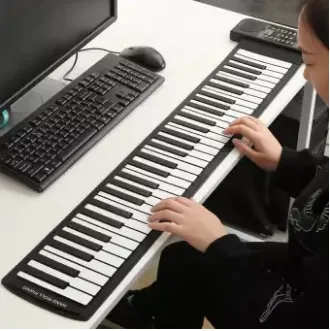
Your physical environment and daily habits should play a major role in your decision. In densely populated urban areas where living space is at a premium, such as high-rise condominiums or shared apartments in Metro Manila, finding room for a permanent musical instrument can be difficult. A foldable keyboard can be set up on a dining table or desk for a quick practice session and then folded away and stored in a drawer or closet when not in use, keeping your living area clutter-free.
For those who travel frequently, commute via public transit, or want to practice during office breaks, the portability of a foldable design is unmatched. It allows you to maintain a daily practice routine even when you are away from home. However, if you have a dedicated music corner, a home studio, or a spacious living room, a regular keyboard on a sturdy stand is highly advantageous. A permanent setup eliminates the friction of having to assemble and disassemble your instrument every time you want to play, making it easier to sit down for spontaneous practice sessions.
Environmental factors are also worth considering, particularly in tropical climates characterized by high humidity and dust. In the Philippines, high humidity and airborne dust can settle into the hinges and exposed ribbon cables of a foldable keyboard. Regular keyboards, while still needing protection, have fewer moving joints and are easier to protect with a simple fabric dust cover. Whichever style you choose, storing your instrument away from direct sunlight and using a protective cover when it is not in use will help preserve the electronics and mechanical components.
Final Verdict: How to Make Your Choice
To make your final decision, evaluate your primary musical goals against your physical space constraints. You should choose a foldable keyboard if your living space is severely limited, you need to store the instrument out of sight daily, or you require a highly portable keyboard for frequent travel. This option is excellent for casual hobbyists, travelers, and those who prioritize convenience and space-saving design over traditional piano feel.
Conversely, you should opt for a regular keyboard if you are serious about learning proper piano technique, require authentic key resistance, and have a dedicated space where the instrument can remain set up. The structural stability, superior sound quality, and reliable key action of a traditional keyboard make it the better long-term investment for students, intermediate players, and music producers.
Before making your purchase, always verify the specific technical details of the model you are considering. Check whether the keyboard supports a standard sustain pedal input, offers the exact key-weighting specifications you need, and provides compatible MIDI routing for your computer or mobile devices. Taking the time to review these specifications ensures that your chosen instrument will support your musical journey for years to come.
Frequently Asked Questions (FAQ)
Are foldable piano keyboards good for beginners?
Foldable keyboards can be a convenient entry point for absolute beginners who want to test their interest without investing in a heavy, expensive instrument. However, because most foldable models lack fully weighted keys, they do not help beginners develop the finger strength and control required for traditional piano playing. If your budget and space allow, starting with a regular keyboard that features touch-sensitive, semi-weighted, or weighted keys is generally better for long-term skill development.
Can I use a standard sustain pedal with a foldable keyboard?
Many foldable keyboards do support external sustain pedals, but you must verify the input jack specifications before purchasing. Look for a standard 1/4-inch (6.35mm) pedal jack on the connection panel. Additionally, because foldable keyboards are very lightweight, they can easily slide or shift on a table when you press the pedal; using a non-slip mat underneath the keyboard can help keep it secure during play.
Do regular keyboards require more maintenance than foldable ones?
Regular keyboards do not necessarily require more maintenance, but they do benefit from consistent dusting and protection from spills. Foldable keyboards actually require extra care regarding their mechanical parts. You must keep the folding hinges and locking mechanisms free of debris, avoid forcing the frame open or closed, and handle the internal ribbon cables gently to prevent connection failures over time.
Community discussion
Share your experience or ask a question. Comments are reviewed before publication.