
Choosing the right keyboard stand is just as important as selecting the instrument itself. The ideal support system keeps your digital piano or synthesizer secure, ensures comfortable playing posture, and fits your transport needs. While X-stands, Z-stands, and table stands all serve the same basic purpose, their structural designs offer vastly different levels of stability, legroom, and portability. Finding the right balance between these factors is essential for protecting your investment and ensuring an enjoyable playing experience.
When shopping for a reliable stand, keyboard players must evaluate how each design interacts with their specific instrument and playing environment. A stand that works perfectly for a lightweight synthesizer in a home studio may prove highly unstable for a heavy 88-key digital piano at a live gig. By understanding the structural differences and practical limitations of each design, you can make an informed decision that supports both your keyboard and your performance style.
Understanding the Core Designs
Keyboard stands are generally categorized into three primary structural designs, each offering distinct advantages for different types of musicians. The most common style is the X-stand, named for its scissor-like cross-braced frame. These stands open and close on a central pivot point, allowing for rapid height adjustment. They are widely available in single-braced configurations, which use a single metal tube on each side, or double-braced configurations, which utilize two parallel tubes on each side for added structural reinforcement.
Products mentioned in this guide
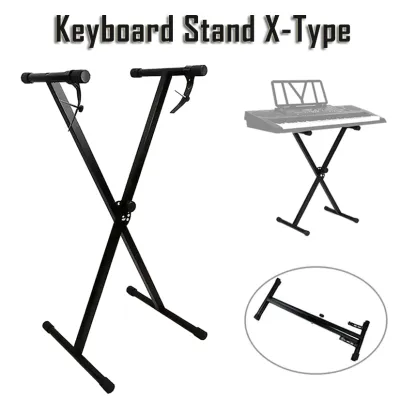
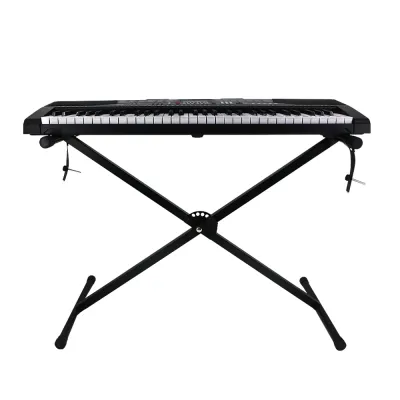
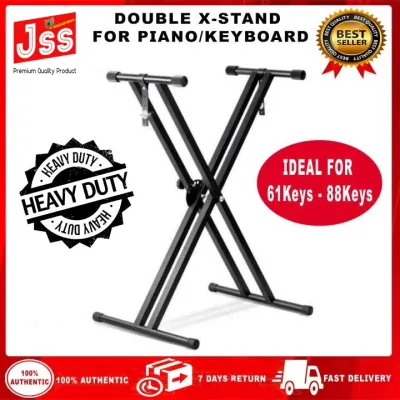
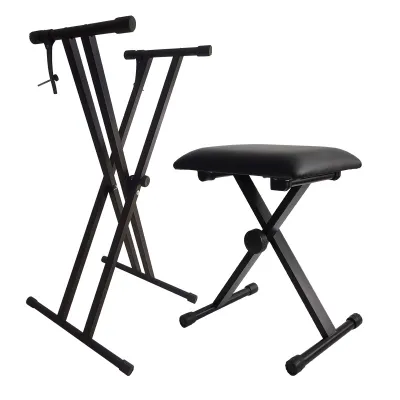
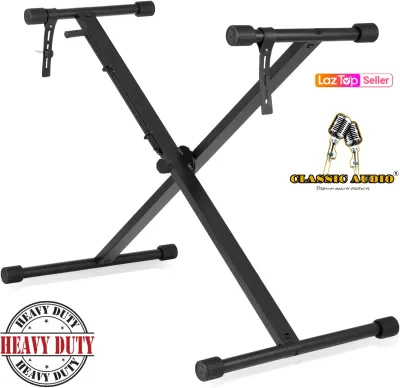
Prices are valid at publication and may change. Please refer to the product page for the latest price.
Z-stands derive their name from their side-profile shape, which resembles the letter Z. They consist of two vertical, Z-shaped metal columns connected by a horizontal crossbar. This design places the support structures at the outer edges of the keyboard, leaving the entire center area beneath the instrument completely open. Z-stands are highly adjustable, allowing players to modify both the height of the vertical columns and the width of the connecting crossbar independently.
Table stands, sometimes referred to as platform stands, feature a flat, desk-like rectangular frame supported by four independent legs. These legs typically fold inward against the main frame for storage and transport. This design mimics the structure of a traditional table or desk, providing a wide, flat surface that can accommodate exceptionally wide or heavy instruments. Like Z-stands, table stands distribute weight evenly across a broad footprint rather than concentrating it on a single central point.
Comparing Stability and Weight Capacity
Stability is the most critical safety factor when choosing a keyboard stand. A wobbly stand not only disrupts your playing rhythm but also risks sending an expensive instrument crashing to the floor. When you perform energetic pieces, play heavy chords, or execute rapid glissandos, your hands exert significant lateral force on the keyboard. If the stand cannot absorb this lateral energy, it will sway from side to side.

X-stands, particularly single-braced models, are highly susceptible to lateral wobble. Because the entire weight of the instrument rests on a single central pivot point, any side-to-side movement can cause the stand to sway. Double-braced X-stands mitigate this issue to some extent by adding extra metal reinforcement, but they still cannot match the structural rigidity of alternative designs when supporting heavier instruments.
Z-stands and table stands distribute weight much more effectively. By transferring the downward force directly through vertical columns or four independent legs to a wide horizontal base, these designs virtually eliminate lateral sway. This makes them the preferred choice for heavy 88-key digital pianos with weighted hammer-action keys, which require a rock-solid foundation to mimic the feel of an acoustic piano.
Before making a purchase, always verify the maximum load capacity of the stand. This information is typically printed on the product packaging, the manufacturer’s website, or the user manual. Never assume a stand can support your keyboard based on its visual appearance alone; always match the physical weight of your instrument against the stand’s certified weight rating to prevent structural failure.
Ergonomics, Legroom, and Playing Comfort
Proper playing posture is essential for preventing wrist strain, back pain, and fatigue during long practice sessions. For seated players, the space beneath the keyboard is a major ergonomic consideration. If your legs are cramped or forced into an unnatural position, your overall playing technique and comfort will suffer.
X-stands present a significant obstacle for seated musicians. The crossing metal bars block the space directly under the center of the keyboard, leaving no room for your knees or feet. This forces you to sit further back from the keys, which can lead to an uncomfortable forward lean, or to splay your legs awkwardly to the sides. Consequently, X-stands are generally better suited for standing performances.
In contrast, Z-stands and table stands excel in providing unrestricted legroom. Because their support structures are located at the outer edges of the frame, you can sit comfortably with your knees bent at a natural 90-degree angle, just as you would at an acoustic piano. This open space allows you to maintain correct spinal alignment and play for hours without discomfort.
This open space is also crucial for pedal placement. If you use a sustain pedal, an expression pedal, or a multi-pedal unit, you need a clear floor area to position them comfortably. On an X-stand, the lower metal bars often interfere with pedal placement, causing the pedals to slide away or forcing you to reach at an awkward angle. Z-stands and table stands allow you to place your pedals exactly where your feet naturally rest.
Height adjustability is another key factor in ergonomic comfort. Most X-stands use a central pull-pin mechanism that adjusts both height and width simultaneously; as the stand gets taller, it also gets narrower. Z-stands and table stands usually feature independent height and width adjustments, allowing you to customize the playing height without sacrificing the width of the support base.
Portability and Setup Convenience
For gigging musicians in the Philippines, portability is often a deciding factor. Transporting gear to venues, church services, or outdoor events means dealing with tight spaces in vehicles, Grab rides, or local transport like tricycles. High humidity and sudden tropical downpours also mean you need gear that can be packed up and moved quickly.
X-stands are the undisputed champions of portability. They fold completely flat in a single motion, requiring no disassembly. This flat profile makes them incredibly easy to slide into a car trunk, stack behind a seat, or carry with one hand alongside your keyboard bag. For quick setups and teardowns, nothing beats the convenience of an X-stand.
Z-stands, while highly stable, are generally less convenient to transport. Many models require you to loosen several hand screws and break the stand down into three separate pieces: two Z-frames and a center crossbar. While some modern Z-stands feature folding joints, they still tend to be bulkier and heavier than X-stands, making them less ideal for musicians who travel frequently without a dedicated support crew.
Table stands offer a practical middle ground. The four legs typically fold flat against the main frame, resulting in a flat, rectangular package. While they do not fold as compactly as an X-stand, they are much easier to transport than a disassembled Z-stand and do not require managing loose parts. This makes them an excellent option for gigging pianists who refuse to compromise on stability.
When evaluating portability, consider your typical gigging frequency and vehicle space. If you perform multiple times a week and have limited cargo space, the rapid setup of an X-stand may outweigh the stability benefits of a heavier stand. If your keyboard rarely leaves your home or studio, portability becomes a secondary concern, and you should prioritize stability and ergonomics.
Decision Framework: Which Stand Fits Your Setup?
To choose the right keyboard stand, you must balance your instrument’s physical requirements with your personal playing style and environment. Prices for these stands can range from under ₱1,000 for basic models to over ₱5,000 for heavy-duty professional options, so matching the stand to your specific needs will also help you budget effectively.
Choose an X-stand if you prioritize a quick setup, have a limited budget, and use a lightweight keyboard, such as a 61-key synthesizer or a compact MIDI controller. If you opt for this design, look for a double-braced model to ensure a basic level of stability and safety. This setup is ideal for standing players or those who perform quick, highly mobile gigs.
Choose a Z-stand if you practice primarily while seated, require ample legroom for pedal work, and use a mid-weight keyboard or arranger workstation. This design offers an excellent balance of professional stability and ergonomic comfort for home studios, music classrooms, and regular practice spaces where the stand does not need to be moved daily.
Choose a table stand if you are setting up a permanent home studio, use a heavy 88-key digital piano with weighted keys, or need a highly stable platform that will not wobble during intense performances. The desk-like structure provides the ultimate foundation for heavy instruments and allows for comfortable, seated playing.
Regardless of the design you choose, always verify the exact weight of your keyboard in its user manual. Compare this figure against the stand’s rated weight capacity before finalizing your purchase to ensure a safe, secure, and long-lasting setup.
Frequently Asked Questions (FAQ)
Can I use an X-stand for a heavy 88-key digital piano?
While it is physically possible to place an 88-key digital piano on an X-stand, doing so carries significant safety risks. Heavy instruments, especially those with weighted hammer-action keys, can easily exceed the weight capacity of standard single-braced X-stands. This can lead to structural failure, causing the stand to collapse or tip over during play. If you must use an X-stand for a heavy keyboard, ensure it is a heavy-duty, double-braced model, and always verify that the instrument’s weight is well below the stand’s maximum rated capacity.
Do Z-stands work well with sustain pedals?
Yes, Z-stands are highly compatible with sustain and expression pedals. Because the vertical support columns are positioned at the outer edges of the stand, the floor space directly beneath the keyboard remains completely clear. This allows you to place your pedals in a natural, comfortable position without any metal bars blocking your feet. To prevent cables from tangling or creating tripping hazards, you can use cable ties to secure the pedal cords along the vertical columns of the Z-frame.

Community discussion
Share your experience or ask a question. Comments are reviewed before publication.