
Neville Goddard’s teachings on the Law of Assumption offer a profound shift in perspective, suggesting that your imagination is the creative force of your reality. However, stepping into his extensive catalog of books and lectures can feel overwhelming. With works ranging from brief, practical manuals to dense, theological interpretations of scripture, choosing the wrong starting point can lead to confusion or frustration. To build a sustainable and practical understanding of his philosophy, you must align your first read with your current familiarity with manifestation concepts. This guide helps you navigate his bibliography to find the perfect entry point for your personal journey.
Identifying Your Current Understanding of Manifestation
Before selecting a book, it is essential to evaluate your baseline knowledge of manifestation. Many readers come to Neville Goddard after encountering the popular “Law of Attraction.” While both philosophies emphasize the power of thought, they differ fundamentally in their core mechanics. The Law of Attraction often treats the individual as a magnet drawing external things toward themselves through positive thinking. In contrast, Neville’s Law of Assumption posits that the external world is merely a projection of your internal state of consciousness, meaning you must assume the feeling of the wish fulfilled to experience it externally.
Understanding this distinction helps set accurate expectations for your reading journey. If you are looking for practical, daily techniques to change your immediate circumstances, you will want to start with books that focus on actionable mental exercises. If you are more interested in exploring deep metaphysical or theological concepts, you can comfortably begin with his later, more complex works. Your choice should reflect whether you want a quick, functional manual or a deep philosophical study.
Products mentioned in this guide
![[Audible and ebook in CDs] At Your Command Includes Neville Goddard: A Cosmic Philosopher by Mitch Horowitz](https://img.lazcdn.com/g/p/6280de9094ed90fe870e21dfbf6b4277.jpg_400x400q80.jpg_.webp)
Prices are valid at publication and may change. Please refer to the product page for the latest price.
Another critical factor is your comfort level with mid-20th-century philosophical language and symbolic biblical allegories. Neville frequently uses King James Version scripture not as historical record, but as a psychological blueprint for human consciousness. If you find archaic language or esoteric biblical interpretations challenging, starting with his most theological texts can hinder your progress. Assessing your tolerance for this style of writing will prevent you from feeling discouraged early on.
Foundational Books for Readers New to the Law of Assumption
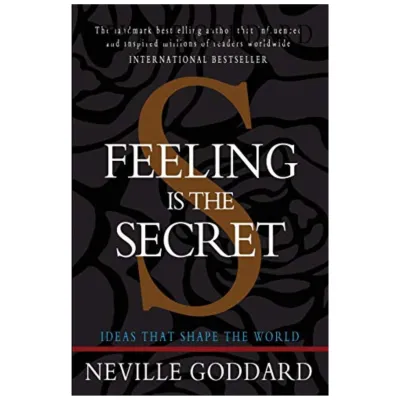
For absolute beginners, the most accessible entry points are Neville’s shortest, technique-focused works. Books like Feeling is the Secret and At Your Command are highly recommended because they explain the core premise of imagination without heavy theological jargon. These texts are remarkably concise, often readable in a single sitting, making them ideal for busy individuals who want to grasp the core concepts quickly.

Starting with these brief texts provides immediate, actionable mental exercises that you can apply to your daily life. Feeling is the Secret, for instance, focuses heavily on the subconscious mind and how to impress desires upon it during the critical moments before sleep. By focusing strictly on the mechanics of belief and consciousness, these books allow you to test the philosophy immediately. You do not need to understand complex scriptural interpretations to begin practicing his methods; you only need to understand how to direct your attention and emotions.
These foundational works serve as an excellent introduction because they strip away the complexity of his broader metaphysical system. They answer the practical “how-to” questions that beginners naturally have. By focusing on the relationship between your thoughts, feelings, and external reality, these books build the confidence and experiential understanding necessary to tackle his more advanced writings later on.
Intermediate Texts for Those Familiar with Basic Manifestation
Once you have a grasp of the basic principles, you can transition to intermediate texts that introduce structured imagination techniques. Books such as The Power of Awareness and Awakened Imagination are perfect for readers who want to refine their daily practice. These works go beyond simple wish-fulfillment and teach you how to sustain prolonged states of consciousness, helping you maintain your desired mental state even when your physical senses contradict it.
In these intermediate texts, Neville introduces specific practices like “revision”—the act of mentally rewriting past events to alter their present psychological impact—and entering a State Akin to Sleep (SATS). These techniques require a higher level of mental discipline than the basic exercises found in his introductory books. By studying these works, you learn how to actively manage your attention and cultivate a stable inner world that is not easily swayed by external circumstances.
A major benefit of these intermediate books is the inclusion of practical case studies and real-life examples. Neville shares numerous stories of individuals who successfully applied the Law of Assumption to overcome financial difficulties, heal relationships, and secure employment. These case studies provide concrete templates for how to apply the law in complex, real-world situations, making the abstract concepts much more tangible and relatable.
Advanced Compilations for Deep Metaphysical Study
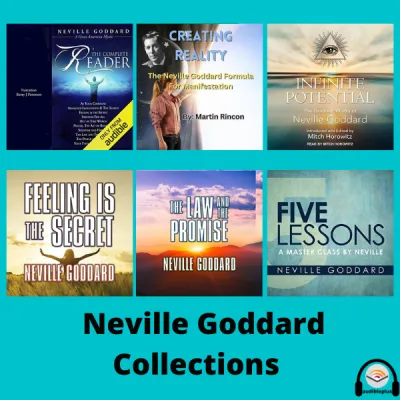
For experienced students who wish to explore the deepest aspects of Neville’s philosophy, advanced compilations and lecture transcripts offer a lifetime of study. Works like The Law and the Promise or comprehensive anthologies of his transcribed audio lectures delve into his evolving mystical views. These texts are not designed for quick reading; they require deep contemplation and a willingness to engage with highly abstract ideas.
These advanced writings rely heavily on psychological symbolism and esoteric interpretations of scripture. Neville views the entire Bible as a dramatization of the human soul’s awakening, and his later works focus intensely on “The Promise”—the ultimate realization of one’s divine nature. If you are not prepared for dense, non-linear, and highly symbolic content, these books can feel impenetrable. However, for those committed to deep metaphysical study, they offer profound insights into the nature of existence and consciousness.
Navigating these compilations requires a significant commitment of time and mental energy. Because many of these texts are transcribed lectures, they often feature a conversational cadence that can jump between different biblical passages and philosophical concepts rapidly. Reading them is an active process of study rather than passive consumption, making them best suited for those who have already proven the practical aspects of the law in their own lives.
Sourcing Authentic Editions and Choosing Your Preferred Format
When sourcing Neville Goddard’s books in the Philippines, choosing the right format and ensuring edition quality are crucial for a good reading experience. The tropical climate and high humidity can make physical books susceptible to yellowing or moisture damage over time, especially if stored in non-air-conditioned rooms. If you prefer physical paperbacks, look for high-quality printings with durable binding, and consider storing them with silica gel packets to protect them from the humid air.
For many readers, digital formats like e-books and audiobooks are highly practical alternatives. E-books are immune to humidity and are incredibly convenient for reading during long daily commutes on the MRT, LRT, or buses. Audiobooks are also excellent for active listening during transits or daily chores, allowing you to absorb the material without needing to hold a physical book in crowded spaces.
Because Neville’s works are now in the public domain, online marketplaces are flooded with poorly formatted, auto-generated reprints. These cheap editions often suffer from severe typographical errors, missing chapters, and terrible layouts that make reading frustrating. To avoid these issues, verify the publisher before purchasing. Look for established local bookstores, official publisher websites, or reputable digital libraries that offer verified, high-quality editions. Investing a little more—perhaps paying ₱300 to ₱600 for a well-produced volume rather than a suspicious ₱100 reprint—ensures you receive a complete and readable text.
Frequently Asked Questions (FAQ)
Do I need to read Neville Goddard's books in chronological order?
No, you do not need to read his books in chronological order. Neville’s core message regarding the power of imagination and the Law of Assumption remained highly consistent throughout his life. While his later works place a heavier emphasis on mystical and theological concepts, his practical instructions on how to manifest desires are present from his very first publications. It is far more beneficial to prioritize thematic accessibility and your personal reading goals over historical publication dates. Starting with a simple, practical book will build a stronger foundation than trying to follow a strict chronological timeline.
Are audiobooks effective for learning the Law of Assumption?
Audiobooks can be highly effective, especially since many available recordings are direct transcriptions of Neville’s original lectures. Hearing the cadence, tone, and emphasis of his spoken words can provide a deeper level of understanding that sometimes gets lost in print. However, because his concepts require deep reflection, active and focused listening is essential. Passive background listening while multitasking may cause you to miss the subtle nuances of his techniques. To get the most out of audiobooks, set aside dedicated time to listen actively and take notes on the specific exercises he describes.

Community discussion
Share your experience or ask a question. Comments are reviewed before publication.