
Starting a business in the Philippines is an exciting milestone, but it also comes with a suite of administrative responsibilities. Among the most critical of these is maintaining your Bureau of Internal Revenue (BIR) books of accounts. These physical or digital ledgers serve as the official record of your business transactions, tracking every peso that flows in and out of your operations.
For many young entrepreneurs and small business owners, walking into an office supply store and seeing rows of identical-looking columnar notebooks can be overwhelming. Choosing the wrong books can lead to unnecessary expenses, while failing to maintain the correct ones can result in steep penalties during a tax audit. To keep your business compliant and your finances organized, you must understand exactly which books your specific registration requires.
Assess Your Business Structure and Tax Registration
Your journey to compliance begins with your Certificate of Registration, also known as BIR Form 2303. This document is the blueprint of your tax obligations, and it dictates the exact bookkeeping rules you must follow. Your business structure—whether you operate as a sole proprietorship, a partnership, or a corporation—plays a major role in determining your accounting complexity.
Products mentioned in this guide
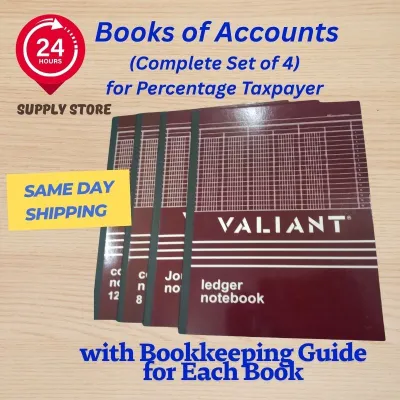
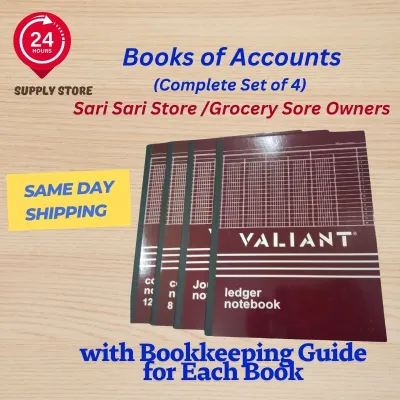
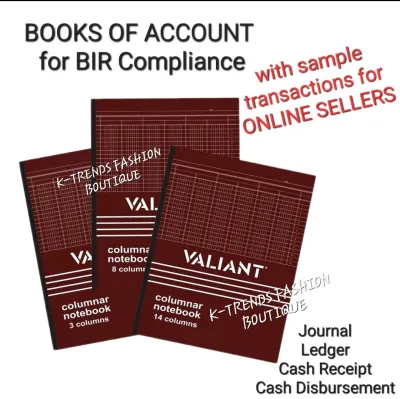

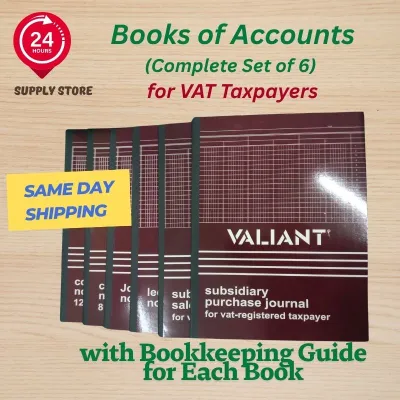
Prices are valid at publication and may change. Please refer to the product page for the latest price.
Sole proprietorships, which are common among freelance professionals and micro-retailers, generally face simpler bookkeeping demands. However, they are still legally required to maintain a complete set of books to track their income and expenses. Partnerships and corporations, on the other hand, have distinct legal personalities and must adhere to more rigid accounting standards to satisfy both the BIR and other regulatory bodies like the Securities and Exchange Commission.
Next, look closely at your tax registration status. Are you registered as a Value-Added Tax (VAT) taxpayer or a Non-VAT taxpayer? This distinction is crucial. Non-VAT businesses, such as those opting for the 8% flat income tax rate or those with gross annual sales below the VAT threshold, typically require fewer books. VAT-registered businesses must track input and output taxes meticulously, which automatically triggers the requirement for additional subsidiary journals.
Finally, keep an eye on your gross sales or receipts. If your business experiences rapid growth and crosses specific financial thresholds, your bookkeeping requirements will shift. For instance, businesses with high transaction volumes or those exceeding certain gross sales limits are required to have their financial statements audited by an independent Certified Public Accountant, which demands highly detailed and perfectly maintained subsidiary ledgers.
Match Your Accounting Method to the Correct Book Types
Once you understand your tax profile, you must decide how you will record your financial data. The BIR recognizes three primary accounting systems: manual, loose-leaf, and computerized. Your choice among these systems will dictate the physical format of the books you need to acquire.

Manual books of accounts are the traditional, pre-printed columnar books that you write in by hand using a pen. They are highly affordable, costing only a few hundred ₱, and are the easiest to set up for micro-businesses. Loose-leaf books allow you to type your transactions into a computer spreadsheet, print them out on loose sheets of paper, and bind them annually. Computerized accounting systems utilize specialized software to automate the entire process. Both loose-leaf and computerized systems require formal approval or permits from the BIR before implementation.
Regardless of the system you choose, there are core mandatory books that almost every registered business must maintain. The first is the General Journal, often called the book of original entry. This is where you record every business transaction chronologically, detailing the date, the accounts affected, and the debit and credit amounts. The second is the General Ledger, known as the book of final entry. In the ledger, you post the summarized transactions from your journal into specific accounts, such as cash, accounts receivable, inventory, and utilities, allowing you to see the balance of each account at any given time.
Depending on your transaction volume and tax type, you will also need subsidiary books. The Cash Receipts Journal is dedicated solely to recording cash inflows, such as payments from customers and cash sales. Conversely, the Cash Disbursements Journal tracks all cash outflows, including payments to suppliers, rent, and employee salaries.
If your business is VAT-registered or handles a high volume of credit transactions, you will also need a Sales Journal and a Purchases Journal. The Sales Journal records all sales made on account or credit, while the Purchases Journal tracks all purchases made on credit. Maintaining these subsidiary books prevents your General Journal from becoming cluttered and makes it much easier to calculate your monthly tax liabilities.
Verify Your Exact Requirements Before Purchasing
Before heading to an office supply store or browsing an online marketplace to buy your books, it is vital to verify your exact requirements. Buying a random assortment of columnar books without a clear plan often leads to wasted money and compliance errors.
Start by cross-referencing your business needs with the latest guidelines issued by the BIR. Because tax regulations can evolve, checking the official BIR portal or visiting your local Revenue District Office (RDO) ensures you are following the most current rules. Some RDOs have specific preferences or localized guidelines regarding the number of columns required for certain business types.
Consulting a licensed accountant or a professional bookkeeper is one of the smartest investments a small business owner can make. A professional can review your Certificate of Registration, assess your business model, and provide a tailored list of the exact books you need. They can also teach you how to make proper entries, ensuring that your records remain accurate and audit-ready from day one.
Avoid the temptation to purchase pre-printed books simply because they are sold as a complete business package. Many of these packages contain books that your business may not legally require, such as specialized subsidiary ledgers that only apply to large corporations or specific industries. By purchasing only the books mandated for your specific tax registration, you save money and keep your administrative workload manageable.
Register and Maintain Your Books for Audit Compliance
Acquiring the correct books of accounts is only the first step; you must also ensure they are legally recognized. Before you write any transactions in your manual books, they must be registered and stamped by the BIR.
The registration process typically involves submitting your books along with a completed BIR Form 1905 to your designated RDO. In many areas, this process can also be initiated online through the BIR’s digital portals. The revenue officers will stamp the first page of each book, officially authorizing them for use. Writing in unstamped books is a serious compliance violation that can result in penalties during an audit.
Once your books are registered and in use, you must adhere to standard record retention periods. Under Philippine tax laws, businesses are required to preserve their books of accounts and supporting documents, such as official receipts and sales invoices, for a designated period of ten years. While the rules allow you to transition older records to digital archives after a certain number of years, keeping your physical books intact and legible is critical.
Proper storage is essential to protect your physical records from damage. The tropical climate of the Philippines presents unique challenges, including high humidity, mold, and pests like termites. Store your manual books in a cool, dry, and elevated location. Utilizing airtight plastic storage bins with silica gel packets can help absorb excess moisture and protect your valuable financial history from water damage or decay.
Frequently Asked Questions (FAQ)
Can I Use a Standard Notebook Instead of Pre-Printed Books?
While the BIR allows some flexibility in bookkeeping, you cannot simply use a standard, unruled school notebook as your official book of accounts. Your books must feature proper accounting columns—such as debit, credit, and balance columns—to accurately reflect financial transactions. Standard pre-printed columnar books, which are widely available at local stationers, are designed specifically to meet these structural requirements and are highly recommended to ensure compliance.
Do I Need to Register New Books Every Year?
If you are using manual books of accounts, you do not need to register new books every single year. You can continue using the same books in the succeeding years until all the pages are completely filled. Once a book is fully consumed, you must present the old book along with a new, blank book to your RDO to have the new volume registered and stamped. However, if you use loose-leaf or computerized accounting systems, you are required to submit or register your bound records annually within the prescribed period after the close of the taxable year.

Community discussion
Share your experience or ask a question. Comments are reviewed before publication.