
A fully weighted piano with 88 keys replicates the physical touch, resistance, and dynamic response of a traditional acoustic piano. Unlike basic electronic keyboards that rely on simple springs to push the keys back up, a fully weighted model utilizes physical hammers and levers inside the chassis to resist your fingers. If you are learning to play the piano, this mechanical design is essential for developing proper finger strength, classical technique, and musical expression.
Choosing the right key action directly impacts how quickly you progress and how easily you can transition to other instruments. Understanding the mechanics behind these keys will help you make an informed investment for your musical journey.
What 'Fully Weighted' Actually Means
To understand a fully weighted piano 88 keys setup, you must look beneath the plastic exterior. In a traditional acoustic piano, pressing a key activates a wooden hammer that strikes a metal string. This mechanical lever system creates a distinct physical resistance. Digital piano manufacturers replicate this sensation by installing individual, free-moving metal hammers or weighted levers behind each key. When you press a key down, you are physically lifting a small weight rather than compressing a spring.
Products mentioned in this guide
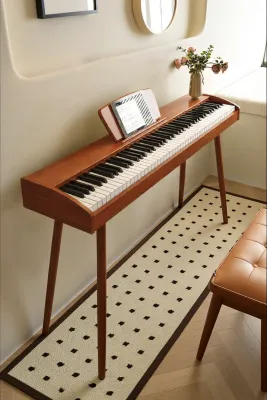
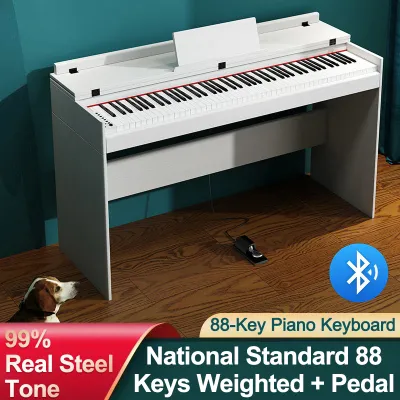
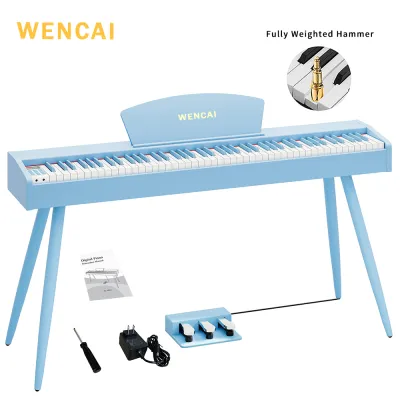
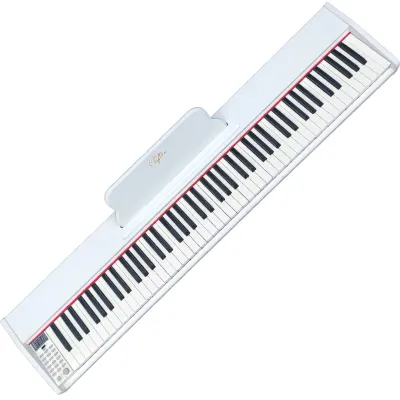
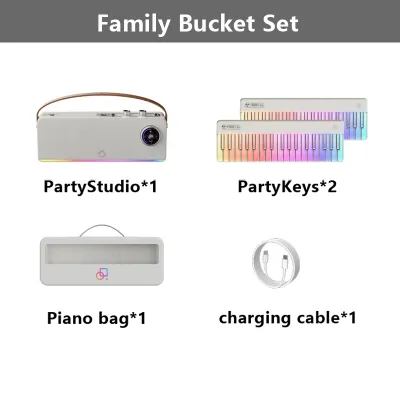
Prices are valid at publication and may change. Please refer to the product page for the latest price.
This mechanical design also allows for “graded” or “progressive” hammer action. On an acoustic piano, the bass strings are thick and heavy, while the treble strings are thin and light. Consequently, the keys on the left side of the piano feel noticeably heavier to press than those on the right. High-quality fully weighted digital pianos mimic this exact gradient. The low register keys require more physical effort to depress, while the high register keys feel progressively lighter.
This physical pushback is crucial because it teaches your hands how to control the instrument. Without this mechanical resistance, your fingers do not receive the tactile feedback necessary to gauge how hard or soft you are playing, which severely limits your expressive capabilities.
Fully Weighted vs. Semi-Weighted vs. Synth Action
When shopping for a digital keyboard, you will encounter three primary key actions. Understanding these terms prevents expensive purchasing mistakes, especially when comparing models online.

Fully Weighted Action This action uses physical, pivot-based hammers to simulate the inertia of an acoustic piano. It provides the heaviest resistance and the most realistic playing experience. Because of the complex mechanical parts inside, these instruments are heavier and more expensive, often starting around ₱20,000 to ₱35,000 for entry-level models in the Philippines.
Semi-Weighted Action Semi-weighted keys combine a light spring mechanism with small weights attached to the underside of the keys. This design offers moderate resistance that is firmer than a basic keyboard but lacks the authentic, mechanical momentum of a real hammer. You will frequently find semi-weighted keys on portable stage keyboards and mid-range MIDI controllers.
Synth Action (Unweighted) Synth-action keyboards use light, spring-loaded keys with virtually no resistance. They are designed for speed rather than expression. This action is ideal for playing rapid synthesizer leads, organ glissandos, or inputting drum patterns into a computer, but it is entirely unsuitable for traditional piano training.
| Key Action Type | Resistance Level | Internal Mechanism | Best Use Case |
|---|---|---|---|
| Fully Weighted | Heavy, graded resistance | Physical hammers and levers | Classical training, acoustic transition, expressive piano pieces |
| Semi-Weighted | Moderate, uniform resistance | Springs combined with small weights | Gigging musicians, synth/piano hybrid playing, light studio work |
| Synth Action | Very light, springy | Tension springs | Electronic music production, organ playing, fast synth leads |
When reviewing product specifications, do not rely on generic marketing buzzwords. Always check the manufacturer’s official spec sheet for specific engineering terms such as “Graded Hammer Action,” “Linear Weighted Hammers,” or “Tri-sensor Scaled Hammer Action.” These terms indicate a genuine mechanical hammer system rather than a simulated spring layout.
Why Weighted Action and 88 Keys Matter for Skill Development
Investing in a fully weighted piano with 88 keys is not just about mimicking an acoustic instrument; it directly impacts your physical and musical development.
Finger Strength and Technique Playing a fully weighted keyboard builds the intrinsic muscles in your hands, fingers, and forearms. This resistance teaches you to use the weight of your arms rather than just poking at the keys with tense fingers. If you practice on unweighted keys, your hands will quickly tire, and your technique will collapse when you attempt to play a real acoustic piano.
Dynamic Control The physical weight of the hammer mechanism allows for precise dynamic control. In piano music, the difference between pianissimo (very soft) and fortissimo (very loud) is determined by key velocity—how fast the hammer strikes the string. A fully weighted key gives you the mechanical control to make micro-adjustments to your finger speed, enabling nuanced, emotional performances.
The 88-Key Range A standard acoustic piano has exactly 88 keys. While smaller 61-key or 73-key keyboards are highly portable, they limit your musical growth. Classical compositions, advanced jazz arrangements, and modern pop pieces frequently utilize the extreme lower and higher registers. Having the full 88-key range ensures you will never run out of notes or have to artificially shift octaves mid-song.
Do You Really Need a Fully Weighted 88-Key Piano?
Deciding whether to buy a fully weighted 88-key instrument depends heavily on your musical goals, budget, and living space.
Who Should Buy It If your primary goal is to learn traditional piano, play classical music, or transition smoothly between home practice and acoustic pianos (such as those in music schools or performance halls), a fully weighted 88-key digital piano is non-negotiable. It is the only digital option that preserves proper hand health and classical technique.
Who Can Skip It If you are primarily interested in producing electronic dance music, creating beats, or playing synthesizer parts in a band, you do not need the heavy resistance of fully weighted keys. A semi-weighted or synth-action MIDI controller will serve you better, allowing for faster note triggers and easier integration with music production software.
Space and Portability Constraints Fully weighted 88-key pianos are physically large and heavy. The internal metal hammers add significant weight, typically making these instruments weigh between 11 to 25 kilograms or more. In typical Philippine households, where space might be limited or humidity levels are consistently high, you must plan ahead. Ensure you have a sturdy, dedicated stand rather than a flimsy X-stand. Additionally, because high humidity can affect electronic sensors and mechanical pivots over time, consider placing your piano in a well-ventilated room and using a fitted dust cover when the instrument is not in use.
Frequently Asked Questions (FAQ)
Can I learn piano on a semi-weighted or synth-action keyboard?
While you can use a semi-weighted or synth-action keyboard to learn basic music theory, memorize note positions, and practice simple chord shapes, it is not recommended for long-term piano study. The lack of physical resistance prevents you from developing the finger strength, independence, and dynamic control required to play an acoustic piano. If you start on unweighted keys, you will face a steep and frustrating learning curve when you finally transition to a real instrument.
Does a fully weighted keyboard need to be plugged in to feel heavy?
No. The weighted feel of a digital piano is entirely mechanical. The resistance is created by physical weights, levers, and hammers built inside the keybed, not by electromagnets or software. Consequently, the keys will feel exactly the same weight and offer the same physical resistance whether the digital piano is powered on, turned off, or completely unplugged from the wall.

Community discussion
Share your experience or ask a question. Comments are reviewed before publication.