
Selecting the right key action is one of the most critical decisions when investing in a digital piano or keyboard. The physical feedback under your fingertips shapes your playing technique, determines how long you can practice without fatigue, and influences which musical genres you can express convincingly. The choice between weighted and semi-weighted key actions depends entirely on your musical background, performance environment, and long-term learning goals.
Choose a fully weighted key action if you are transitioning from an acoustic piano, studying classical music, or need to build proper finger strength and dynamic control. This mechanism simulates the physical resistance of acoustic hammers, allowing you to develop authentic piano technique.
Choose a semi-weighted key action if you primarily play synthesizers, organs, or pop/EDM, need a lightweight setup for gigging, or find fully weighted keys physically fatiguing. Always verify the manufacturer’s specific action terminology on the spec sheet before purchasing, as actual key resistance can vary significantly between brands.
Products mentioned in this guide
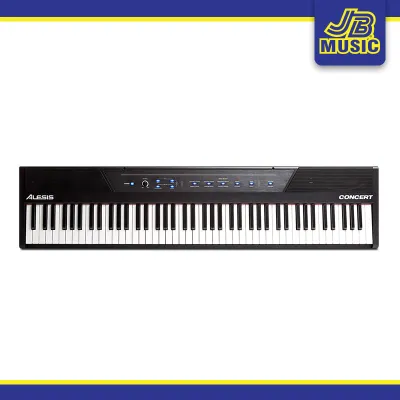
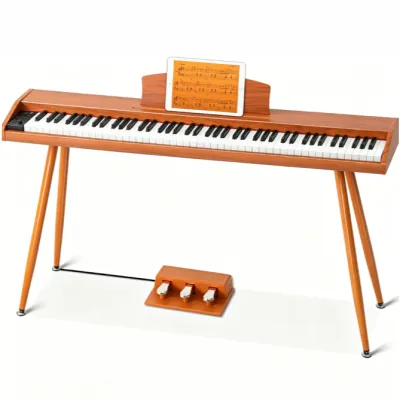
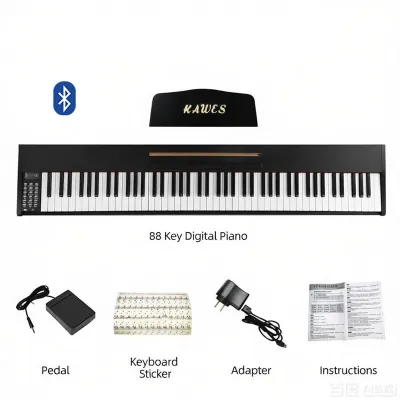
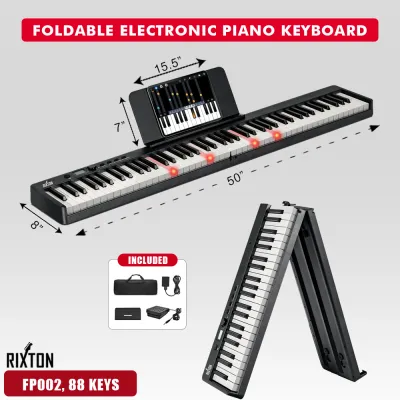
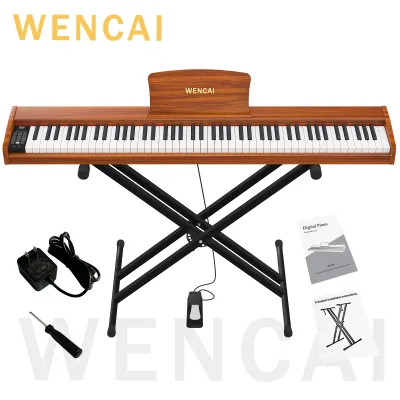
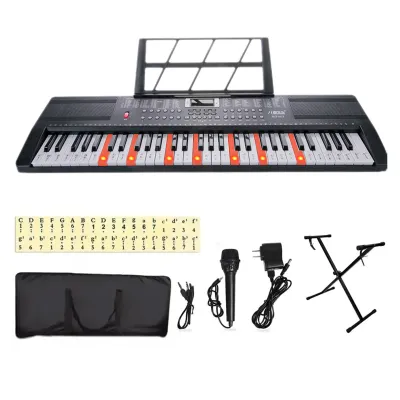
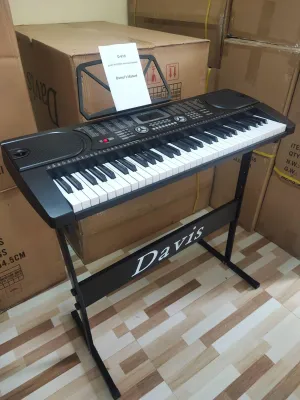
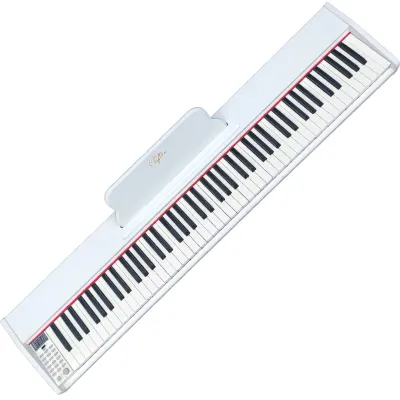
Prices are valid at publication and may change. Please refer to the product page for the latest price.
How Weighted and Semi-Weighted Key Actions Actually Work
To make an informed decision, it is helpful to understand the mechanical engineering beneath the plastic casing of modern digital pianos. Fully weighted keys—frequently labeled as hammer action or graded hammer action—rely on physical levers, counterweights, and simulated hammers rather than springs to create resistance. When you press a weighted key, you are lifting a mechanical hammer assembly that mimics the gravity-defying movement of an acoustic piano action. Graded hammer actions take this design further by making the keys in the lower register physically heavier than those in the higher register, reproducing the natural physics of thicker bass strings and thinner treble strings.
Semi-weighted keys utilize a fundamentally different mechanical approach to generate resistance. Instead of relying on a complex system of pivoting hammers, these keybeds use a spring-loaded mechanism combined with small physical weights attached to the underside of each key. This hybrid design offers a moderate level of resistance that is firmer than the completely unweighted keys found on basic synthesizers, yet it lacks the deep throw, mechanical inertia, and gravity-driven return of a true hammer action.
These structural differences directly dictate how the instrument responds to your playing. A hammer action key possesses physical momentum; once pushed past its initial resistance point, the key’s inertia helps carry the stroke downward, and the key returns to its resting position via gravity. A semi-weighted key, relying on a spring, resists your finger continuously throughout the downward stroke and snaps back upward quickly as the spring decompress. This distinction plays a major role in finger fatigue, speed, and your ability to execute subtle variations in volume.
Core Differences: Comparing Touch, Playability, and Practicality
Evaluating these keybed types side-by-side reveals clear trade-offs in performance, physical handling, and musical application. While weighted actions prioritize acoustic realism, semi-weighted actions focus on versatility and convenience. The following comparison matrix outlines the primary technical and practical distinctions between the two key actions.

| Dimension | Weighted Keys (Hammer Action) | Semi-Weighted Keys |
|---|---|---|
| Mechanism Type | Physical levers, counterweights, and simulated hammers | Spring-loaded tension combined with integrated metal weights |
| Touch Resistance | High resistance with natural mechanical inertia | Moderate, uniform resistance with a quick, springy return |
| Dynamic Range | Exceptionally wide; precise control over MIDI velocity levels | Moderate; less forgiving for delicate, quiet passages |
| Ideal Genres | Classical, traditional jazz, solo acoustic piano, academic studies | Pop, rock, EDM, synth leads, organ performances, sound design |
| Portability | Heavy and bulky (typically 12 to 25+ kg); requires a sturdy stand | Lightweight and compact (typically 4 to 9 kg); highly portable |
| Primary Benefit | Builds authentic finger strength and proper acoustic technique | Reduces physical fatigue, highly portable, versatile for non-piano sounds |
Touch, Feel, and Dynamic Response
The tactile feedback of a fully weighted keybed is defined by its ability to translate the physical force of your fingers into precise MIDI velocity values. Because a hammer action key possesses physical mass and inertia, you can execute delicate pianissimo passages with predictable control, feeling the exact point where the simulated hammer is thrown. This mechanical depth allows for a highly expressive dynamic range, making it possible to voice complex chords where the melody note must stand out clearly above the accompaniment.
In contrast, semi-weighted keys offer less resistance and a much quicker return speed, which alters how you control dynamics. The spring-loaded mechanism provides a relatively linear resistance profile, meaning the force required to depress the key remains constant throughout the key travel. While this design is highly responsive for fast, rhythmic playing, it makes executing subtle volume transitions more challenging. For classical pieces requiring micro-adjustments in touch, a semi-weighted action can feel overly sensitive or jumpy, often triggering louder MIDI velocities than intended.
Musical Genres and Playing Techniques
Your preferred musical repertoire should heavily influence your choice of key action. Weighted keys are indispensable for classical, traditional jazz, and romantic-era piano music, where techniques like rapid double-strikes, complex pedaling, and precise finger voicing are mandatory. Attempting to play intricate classical pieces on a spring-loaded keyboard often results in uneven note volumes and hand tension, as the fingers must work harder to hold down keys without the natural support of gravity-based inertia.
Semi-weighted actions shine when performing modern genres such as pop, rock, synth-pop, and electronic dance music. The rapid return speed of a spring-loaded key allows for incredibly fast synth leads, rapid-fire rhythmic stabs, and effortless glissandos. Performing a glissando on a fully weighted hammer action can cause physical pain or skin abrasions over time due to the heavy resistance, whereas a semi-weighted keybed yields easily to the sweeping motion of your hand. Additionally, playing organ patches feels far more authentic on semi-weighted keys, as traditional drawbar organs historically use light, unweighted actions.
Portability and Cost Considerations
The mechanical complexity of fully weighted digital pianos directly impacts their physical footprint and overall weight. A hammer action mechanism requires a deeper, taller chassis to accommodate the physical levers and pivots, resulting in instruments that typically weigh between 12 and 25 kilograms. For musicians living in compact urban spaces, such as high-rise condominiums in Metro Manila, or for those who must regularly transport their gear to local gigs, moving a heavy weighted digital piano can be physically demanding.
Semi-weighted keyboards are significantly lighter, often weighing under 9 kilograms, and feature a much slimmer profile. This makes them highly practical for mobile giging musicians who rely on public transport or ride-sharing services, as well as home studio producers with limited desk space. From a financial perspective, semi-weighted models generally occupy a lower price tier because they require fewer mechanical components and simpler assembly processes. While fully weighted instruments represent a larger upfront investment, they are engineered to provide long-term durability for serious piano practice.
When to Choose Fully Weighted Keys
Investing in a digital piano with fully weighted keys is the most logical decision for anyone serious about developing or maintaining authentic acoustic piano skills. If you are a student taking formal piano lessons, your instructor will almost certainly require a weighted instrument. Practicing on non-weighted or semi-weighted keys can hinder your progress, as you will not develop the specific intrinsic hand muscles and finger independence needed to control an acoustic grand piano. When you eventually perform on an acoustic instrument, you may find the keys feel impossibly heavy, leading to sloppy technique and rapid hand fatigue.
Advanced players also benefit immensely from graded hammer actions, which replicate the subtle physical variations of an acoustic piano’s keybed. On an acoustic piano, the hammers for the bass notes are larger and heavier than those for the treble notes. A graded digital action mimics this beautifully, ensuring that your muscle memory remains consistent whether you are practicing at home or performing on a concert stage. If your primary musical goal is to interpret the works of classical composers or perform solo jazz arrangements, the expressive potential of a fully weighted action is irreplaceable.
When to Choose Semi-Weighted Keys
A semi-weighted keyboard is often the superior choice for modern keyboardists, music producers, and multi-instrumentalists who do not focus exclusively on traditional piano repertoire. In a home studio, a semi-weighted MIDI controller serves as a versatile tool. It provides enough physical resistance to play expressive virtual piano instruments, yet remains fast and light enough to program drum patterns, record basslines, and perform rapid synthesizer solos. If your production workflow involves switching between orchestral strings, brass sections, and synth pads, a semi-weighted keybed offers the perfect middle ground.
Live performers who play in local bands also favor semi-weighted keyboards for their sheer practicality. When performing on stage, you may need to cover multiple instrumental parts simultaneously, such as playing a piano accompaniment with your left hand while executing a fast brass run with your right. The lighter action reduces overall hand strain during long, multi-set performances. Furthermore, for hobbyists or beginners who find the heavy touch of an acoustic piano intimidating or physically painful due to joint sensitivity, a semi-weighted keyboard offers an approachable, comfortable entry point.
How to Test and Verify Key Actions Before You Buy
When shopping for a digital piano, physical testing is highly recommended, though online buyers can still make informed choices by carefully analyzing technical specifications. If you are testing instruments in a physical showroom, begin by playing the keyboard with the volume turned completely off. This allows you to listen to the physical noise of the key mechanism itself; a high-quality weighted keybed should feel solid and produce a muted, low-frequency thump rather than a loud, plastic clacking sound. Pay close attention to the lateral play of the keys by gently wiggling them from side to side; excessive wobble indicates poor manufacturing tolerances that can lead to premature wear.
Next, turn the volume back up to a normal listening level and test the key return speed by playing rapid, repeated notes on a single key. A high-quality action should return to its resting position fast enough to register subsequent strikes without dropping notes. If you are testing a premium weighted model, feel for escapement or let-off simulation—a subtle notch or click felt when pressing a key down very slowly, which mimics the mechanical release of an acoustic grand piano’s hammer.
If you are purchasing online, you must look past generic marketing terms like “touch-sensitive” or “piano-style keys.” These phrases do not guarantee that the keys are physically weighted; they merely indicate that the keyboard can register how hard a key is pressed to alter the volume. Look specifically for terms such as “Weighted Hammer Action,” “Graded Hammer,” or “Progressive Counterweighting.” Always download the official manufacturer specification sheet to verify the exact mechanical design of the keybed.
Additionally, verify the instrument’s compatibility with your existing equipment. Ensure the keyboard features the correct MIDI-over-USB outputs, sustain pedal inputs, and audio connections required for your setup. For buyers in the Philippines, purchase from authorized local distributors to secure a valid local warranty. Digital piano actions are complex mechanical systems that can occasionally develop squeaks or sticky keys over time, especially when exposed to high tropical humidity. Having access to an authorized local service center ensures that your instrument can be professionally maintained with genuine replacement parts. Finally, verify the input voltage of the power adapter; the standard electrical supply in the Philippines is 220V at 60Hz, so parallel imports designed for 100V or 120V will require a step-down transformer to prevent electrical damage.
Frequently Asked Questions (FAQ)
Understanding the nuances of keyboard actions can help clarify common misconceptions during your buying journey. Below are answers to some of the most frequently asked questions regarding keybeds.
Can I learn piano on semi-weighted keys?
You can learn basic music theory, note reading, and chord structures on a semi-weighted keyboard, but it is not recommended for serious, long-term piano study. Semi-weighted keys do not provide the physical resistance necessary to build finger strength, independence, and proper hand posture. If you practice exclusively on semi-weighted keys, you will struggle to control the dynamics and heavy action of an acoustic piano, which can lead to poor playing habits that are difficult to correct later. For students aiming to learn classical or traditional piano, investing in a fully weighted digital piano is highly recommended.
Are semi-weighted keys the same as synth-action keys?
No, semi-weighted keys are distinct from purely synth-action keys. Synth-action keys are completely unweighted and rely solely on light springs to return the keys to their resting position, resulting in an extremely light, plastic feel with almost no physical resistance. Semi-weighted keys represent a hybrid design; they still utilize a spring-loaded mechanism, but they incorporate physical metal weights inside or underneath the keys. This addition provides a moderate level of resistance and a more substantial feel, offering a middle ground between the feather-light touch of a synthesizer and the heavy, realistic feel of a hammer-action digital piano.

Community discussion
Share your experience or ask a question. Comments are reviewed before publication.