
Choosing between a universal and a brand-specific sustain pedal depends entirely on your keyboard’s input requirements and your playing style. If your digital piano or keyboard requires half-damper (continuous) control, uses a proprietary connection, or is a high-end model, a brand-specific pedal is the necessary choice to guarantee compatibility and full expression. However, if your instrument uses a standard 1/4″ jack and you only need basic on/off sustain for casual playing or beginner practice, a universal pedal offers reliable functionality at a significantly lower cost.
In tropical environments like the Philippines, where high humidity and dust can affect electronic contacts and physical gear stability, selecting the right accessory involves more than just matching a plug. A pedal that slips constantly on smooth tile floors or fails due to moisture buildup can disrupt your practice sessions and performances. Understanding the technical and physical differences between these two pedal categories ensures you invest in gear that matches both your instrument and your playing environment.
Understanding Keyboard Sustain Pedal Compatibility
Before purchasing any accessory, you must verify the physical and electrical specifications of your keyboard’s pedal input. The most common physical connection is a standard 1/4-inch phone jack, but the electrical signal passing through that jack can vary significantly between manufacturers. Most basic keyboards use a TS (Tip-Sleeve) mono connection, while advanced models supporting continuous control require a TRS (Tip-Ring-Sleeve) stereo connection to transmit more complex data.
Products mentioned in this guide
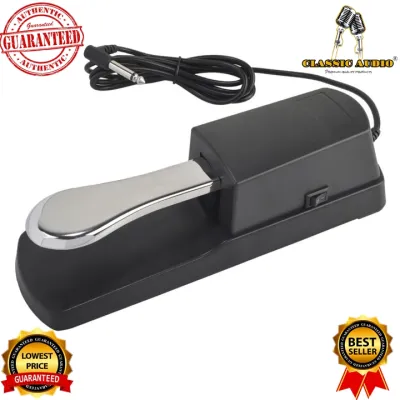
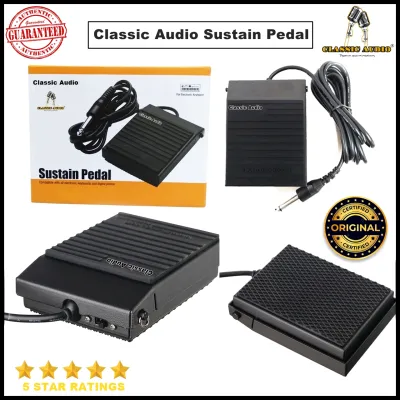
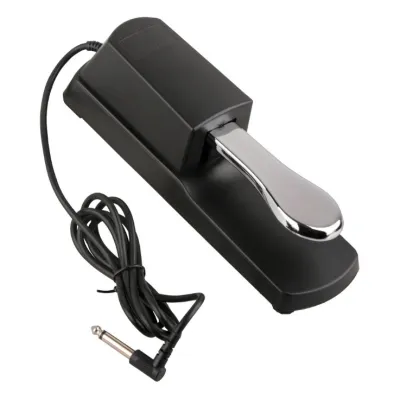
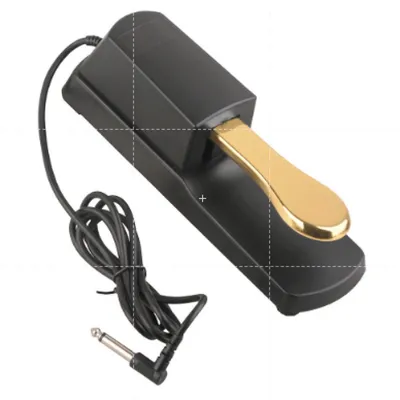
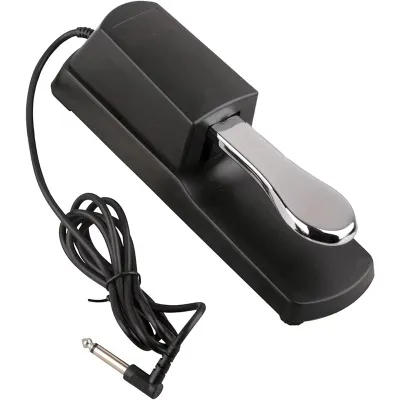
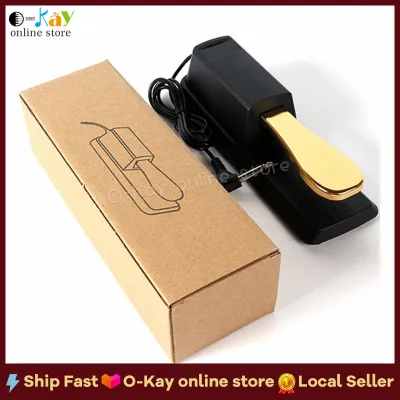
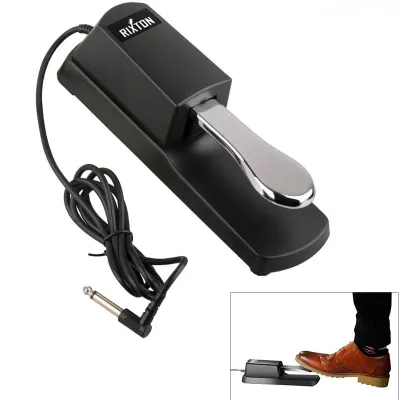
![[ammoon]3.5mm / 6.35mm Interface Sustain Single Pedal for Musical Instruments Roll Up Piano Electronic Keyboard Elctronic Roll Up Drum](https://img.lazcdn.com/g/p/1e0b48f12f35f14a6aa7822410887e01.jpg_400x400q80.jpg_.webp)
Prices are valid at publication and may change. Please refer to the product page for the latest price.
Electrical polarity is the primary reason a pedal might fail to work correctly out of the box. Keyboard manufacturers design their instruments to recognize either a “normally open” or “normally closed” circuit when the pedal is at rest. If you connect a pedal with the opposite polarity, your keyboard will sustain notes when your foot is off the pedal and cut them off when you press down. Many universal pedals solve this issue by including a physical polarity switch on the bottom or side of the casing, allowing you to toggle between the two standards.
To avoid compatibility issues, always consult your instrument’s user manual or the manufacturer’s official website before making a purchase. Look specifically for the technical specifications section, which details the pedal input requirements. If the manual explicitly states that the keyboard only supports proprietary accessories or requires a specific resistance value, a generic universal pedal may not function, even if the physical plug fits perfectly into the jack.
Feature Comparison: Basic Switch vs. Half-Damper Support
The mechanical design of a sustain pedal directly influences your musical expression and playing technique. Basic switch pedals, often referred to as momentary foot switches, operate on a simple binary system: they are either completely on or completely off. This type of pedal is highly suitable for beginners, casual keyboard players, and those performing pop, rock, or electronic music where subtle gradations of sustain are rarely required.

In contrast, advanced classical repertoire, expressive jazz, and nuanced acoustic piano emulations demand a continuous or half-damper pedal. This technology mimics the behavior of an acoustic piano’s physical dampers, which can be lifted partially off the strings to allow varying degrees of ring and resonance. Playing complex classical pieces without half-damper support can make your performance sound muddy or overly dry, as you lose the ability to clear the sound gradually.
Achieving true half-damper functionality almost always requires a brand-specific pedal designed specifically for your keyboard model. Because continuous control relies on precise potentiometer resistance curves or optical sensors calibrated to the keyboard’s internal software, generic universal pedals are rarely compatible with these advanced features. The vast majority of budget-friendly universal pedals on the market only offer basic binary switching, meaning they cannot translate partial pedal presses into intermediate sustain levels.
Price and Value: Evaluating the Brand Premium
When shopping for keyboard accessories in the Philippines, balancing your budget against performance needs is essential. Official brand-specific pedals often carry a noticeable price premium, requiring a larger investment in ₱ compared to generic alternatives. To determine if this extra cost is justified, you must evaluate your long-term musical goals and the specific environment where you plan to practice or perform.
The higher cost of an official brand accessory is often justified by superior build quality and physical stability. Premium brand-specific pedals typically feature heavy-duty metal chassis, realistic spring tension that mimics an acoustic piano pedal, and robust rubber bases designed to grip tile or wooden floors firmly. Furthermore, buying an official accessory usually ensures comprehensive warranty coverage and guarantees that the pedal will not damage the keyboard’s internal circuitry due to electrical mismatches.
Conversely, a budget-friendly universal pedal provides excellent value in several common scenarios. If you are setting up a secondary practice keyboard, configuring a portable MIDI controller for a home studio, or buying gear for a young beginner, spending extra ₱ on a premium pedal may not be necessary. In these cases, a simple, lightweight universal switch pedal offers all the functionality required to learn the basics without inflating your overall equipment costs.
Decision Framework: Choosing the Right Sustain Pedal
To finalize your purchase decision, start by identifying the exact model and primary use case of your keyboard. If you own a high-end digital piano, perform advanced classical or jazz pieces, or if your keyboard features a proprietary multi-pin pedal port, you should choose a brand-specific pedal. This choice guarantees that you can access the full expressive range of your instrument, including half-damper control, without risking compatibility errors or calibration issues.
On the other hand, a universal pedal is the most practical choice if your keyboard uses a standard 1/4-inch jack and you only require basic on/off sustain. This option is ideal for budget-conscious players, gigging musicians who need a highly portable backup pedal, and those using simple electronic keyboards or MIDI controllers. Choosing a universal model with a physical polarity switch ensures that you can use the same pedal across different keyboard brands in the future.
Before completing your purchase on any online marketplace or at a local music store, perform a final verification check. Verify if your keyboard’s user manual warns against using third-party accessories, as some manufacturers may void warranties if non-authorized gear causes electrical issues. Additionally, double-check the physical shape of the pedal port on your keyboard to ensure it is not a proprietary mini-jack or multi-pin connection that would prevent a standard 1/4-inch universal plug from connecting.
Frequently Asked Questions (FAQ)
Can I use a universal sustain pedal on any digital piano?
No, you cannot use a universal sustain pedal on every digital piano. While many entry-level and mid-range keyboards feature standard 1/4-inch jacks that accept generic pedals, some premium digital pianos require proprietary multi-pin connectors or specific electrical resistance levels. Additionally, if your digital piano requires half-damper functionality for advanced expression, a standard universal switch pedal will only provide basic on/off sustain, limiting the instrument’s capabilities.
Why does my sustain pedal work in reverse?
A sustain pedal working in reverse is caused by a polarity mismatch between the pedal and your keyboard. To resolve this, check if your universal pedal has a physical polarity switch on the bottom or side and toggle it to the opposite position. If your pedal lacks a switch, try turning off your keyboard, plugging the pedal in firmly, and then turning the keyboard back on without pressing the pedal, which allows many modern instruments to auto-detect and calibrate to the pedal’s polarity.

Community discussion
Share your experience or ask a question. Comments are reviewed before publication.