
When you first pick up a guitar, every small detail can feel overwhelming, from tuning the strings to holding the instrument comfortably. Among these details, choosing your first plectrum is a small but highly consequential decision. If you have heard players talk about using a “light” pick, they are not referring to how much the piece of plastic weighs in your hand. Instead, a light pick refers to the gauge—or thickness—and the overall flexibility of the pick. For beginners practicing their first chords in a warm room or out on the veranda, a light pick offers a forgiving, flexible tool that makes learning much smoother.
What Exactly Makes a Guitar Pick 'Light'?
A light guitar pick is defined primarily by its physical thickness, which is almost always measured in millimeters. While a heavy pick might feel like a rigid coin, a light pick is thin and bends easily between your fingers. Generally, manufacturers classify any pick with a thickness of less than 0.60 mm as “light” or “thin.” Some brands start their light range at 0.38 mm, while others go up to 0.50 mm or 0.58 mm.
It is crucial to understand that “light” is a measure of bending resistance rather than physical mass. Because the pick is thin, it requires very little force to flex when it makes contact with a guitar string. This flexibility is the defining characteristic of the gauge.
Products mentioned in this guide
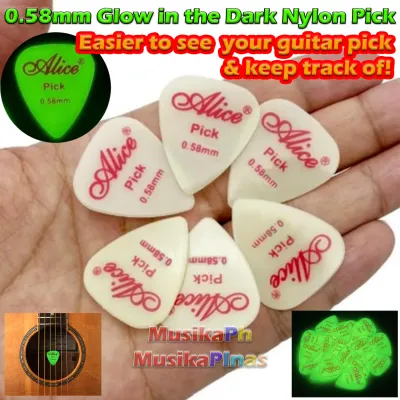
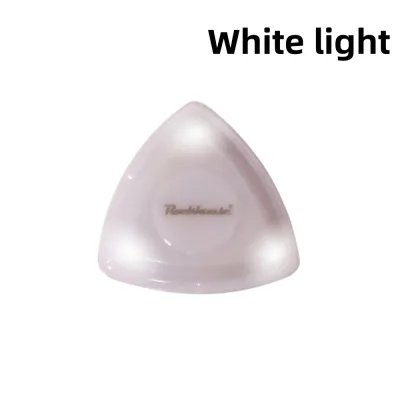

Prices are valid at publication and may change. Please refer to the product page for the latest price.
Keep in mind that there is no universal industry standard for these labels. A “light” pick from one manufacturer might feel slightly stiffer than a “thin” pick from another, depending on the specific plastics or nylon blends they use. When shopping at a local music store or browsing an online marketplace, always look at the actual millimeter measurement printed on the pick rather than relying solely on the word “light.”
How Pick Thickness Changes Your Sound and Feel
The thickness of your pick directly shapes both the physical sensation of playing and the acoustic tone that comes out of your instrument. When you use a light pick, the material bends easily as it passes over each string. This flexing action significantly reduces the physical resistance felt by your holding hand. For beginners who are still developing wrist flexibility and finger strength, this reduced resistance helps prevent hand fatigue and keeps practice sessions comfortable.

Tonal characteristics also shift dramatically with pick thickness. Thinner picks tend to produce a much brighter, crisper, and more articulate sound. When the pick flexes, it creates a distinct “click” or “shish” sound against the strings, which adds a pleasant, shimmery high-end texture to your chords. However, this flexibility means the pick does not transfer as much energy to the strings, resulting in less low-end bass emphasis and a lighter overall tone.
This energy transfer also affects your volume and dynamic control. A light pick naturally caps your maximum acoustic volume because the pick will bend rather than push the string to its absolute limit. While you cannot play extremely loud with a thin pick, it gives you excellent control over softer, delicate passages, making it easier to maintain a consistent volume level without accidentally striking a single string too hard.
Is a Light Pick Right for Your Playing Style?
Deciding whether to stick with a light pick depends heavily on the style of music you want to play and the type of guitar you own. If your primary goal is rhythm playing and strumming chords, a light pick is an exceptional choice. The flexibility allows the pick to glide smoothly across all six strings without getting caught or snagged, which is incredibly helpful when practicing classic strumming patterns.
The type of guitar you play also matters. On an acoustic guitar with steel strings, a light pick helps bring out a bright, jangly tone that cuts through a room beautifully. On an electric guitar, however, the interaction is slightly different. Because electric guitar strings are often thinner and set closer to the fretboard, a highly flexible pick can sometimes feel a bit too soft, especially if you want to play heavy, distorted riffs that require a fast, punchy response.
For absolute beginners, the advantages of a light pick are hard to ignore. When you are first learning to keep time, a stiff pick can easily fly out of your fingers or cause you to tense up your wrist. A light pick acts like a shock absorber, allowing you to build steady rhythm and wrist endurance without fighting the tension of the strings.
How to Choose and Test Your First Light Picks
When you are ready to purchase your first set of picks, you will find a wide variety of materials and shapes. Standard teardrop-shaped picks are the most common and provide a reliable starting point. Materials like nylon are incredibly durable and offer maximum flexibility at thin gauges, while celluloid provides a traditional feel but can be slightly more brittle. Matte-textured materials, such as delrin, are excellent for tropical climates like the Philippines, where high humidity and sweaty fingers can make smooth plastic picks slip out of your grip.
Instead of buying a large pack of a single thickness, the most practical approach is to purchase a mixed-thickness variety pack. These assortments are highly affordable, often costing between ₱150 and ₱300, and allow you to test different gauges side-by-side. You can feel exactly where a 0.46 mm pick ends and a 0.60 mm pick begins.
Before you start playing, perform a quick physical inspection of your new picks. Run your thumb along the edges to check for any rough plastic molding lines or sharp burrs left over from manufacturing. A quality pick should have smooth, consistent edges that glide across the strings without catching, ensuring a clean sound and protecting your strings from unnecessary wear.
Frequently Asked Questions (FAQ)
Do light guitar picks wear out faster than thick ones?
Yes, thinner picks naturally degrade and wear down much faster than their thicker counterparts. Because the edge of a light pick is so thin, the friction of striking metal guitar strings will gradually shave down the plastic, rounding off the tip or creating tiny grooves. It is important to inspect your pick regularly; if you notice the tip has become blunt, rough, or deformed, it is time to replace it, as a worn edge will dull your tone and snag on the strings.
Can I use a light pick for playing lead guitar or fast solos?
While you can technically use any pick for any style, playing fast lead lines or solos with a light pick presents unique challenges. Because a thin pick bends when it hits a string, there is a split-second delay before it snaps back into its original shape. This flex makes fast alternate picking feel mushy and less precise. As you progress to playing single-note solos, you will likely find that a medium or heavy pick provides the immediate response and precise control needed for lead guitar.

Community discussion
Share your experience or ask a question. Comments are reviewed before publication.