
Finding the right balance between your hand, the pick, and the strings is essential for clean playing. For strumming, a larger, more flexible pick with a rounded tip allows you to glide across strings smoothly. For fingerpicking styles—specifically hybrid picking where you combine a pick with your remaining fingers—or single-note articulation, a smaller, stiffer pick with a sharp tip provides the precision and immediate response you need.
Understanding How Pick Shape and Size Affect Your Sound
The geometry of a guitar pick dictates how it releases from the string. Standard shapes, often referred to as the 351 profile, offer a balanced surface area that is easy to hold. In contrast, specialized profiles like Jazz or Teardrop shapes shrink the surface area, forcing your fingers closer to the strings for a more intimate, controlled attack.
Grip security is highly dependent on pick size, especially in warm, humid environments like the Philippines where sweat can make plastic surfaces slippery. A larger pick provides more surface area for your thumb and index finger to pinch, reducing the physical effort required to keep the pick stable. This larger size also naturally widens the arc of your strumming motion, making it easier to maintain a relaxed wrist.
Products mentioned in this guide
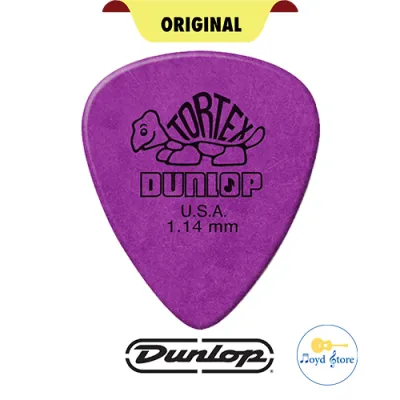
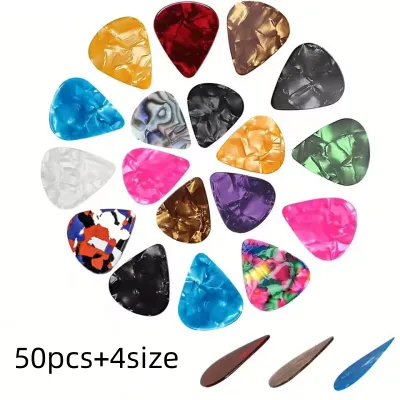
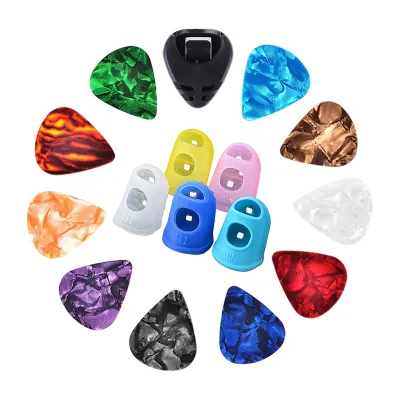
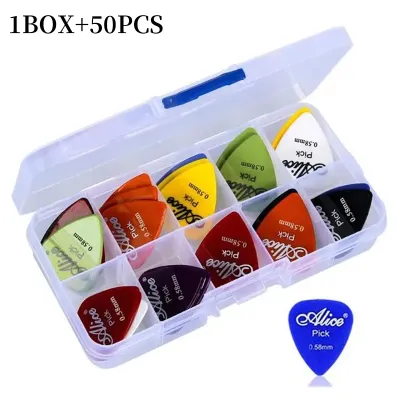

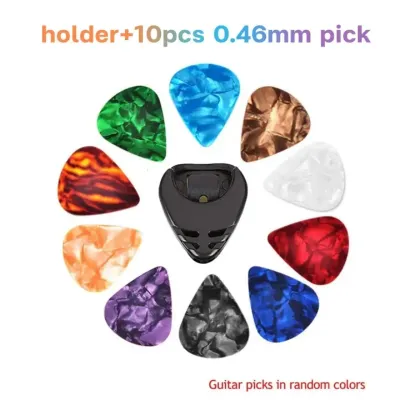

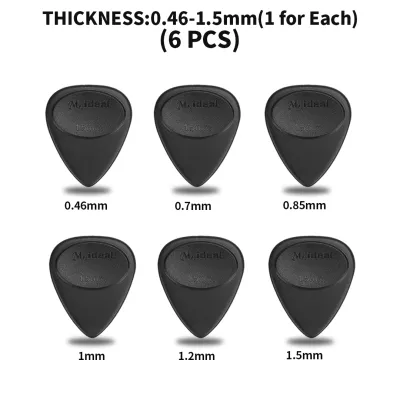
Prices are valid at publication and may change. Please refer to the product page for the latest price.
The tip of the pick acts as the primary point of contact with the instrument. A rounded tip rolls off the string gently, producing a warmer, softer attack with fewer high-frequency overtones. A sharp tip releases the string rapidly, creating a bright, defined attack that helps individual notes cut through a mix.
Choosing the Right Pick for Strumming Chords
When your primary goal is rhythm playing or accompanying a vocalist with broad strumming patterns, minimizing resistance is key. A thin, flexible pick bends slightly as it strikes each string, preventing the pick from catching or dragging. This flexibility smooths out the volume peaks, resulting in a cohesive, blended chord sound rather than a series of harsh, individual string strikes.

Larger picks, such as oversized triangles, are highly beneficial for vigorous rhythm playing. They offer a generous margin of error; even if the pick shifts slightly in your hand during an energetic performance, there is still plenty of material left to make clean contact with the strings. This reduces hand fatigue, as you do not have to grip the pick with excessive force to keep it from spinning.
While thickness is a major factor in flexibility, different materials behave differently at the same thickness. Instead of relying solely on exact millimeter measurements, it is best to check the manufacturer’s flexibility ratings, often labeled as ‘soft’ or ‘light’. Thinner, more flexible picks produce a brighter, chiming tone with a noticeable ‘click’ sound on the strings, while stiffer picks offer a warmer, bass-heavy response but require a lighter grip to avoid sounding harsh.
Selecting the Best Pick for Fingerpicking and Single Notes
For players who incorporate a pick into fingerstyle patterns—often called hybrid picking—or those focusing on intricate melodic lines, precision is paramount. A small pick with a sharp tip minimizes the distance between your fingers and the strings. This compact design allows for micro-adjustments in your hand angle, making it much easier to target individual strings without accidentally striking adjacent ones.
Stiffness is crucial for single-note articulation. A rigid pick does not bend when it hits a string, ensuring that the energy from your hand is transferred instantly into acoustic volume. This immediate response gives you precise control over dynamics, allowing you to play soft, delicate passages or loud, punchy accents with equal ease.
Compact profiles like the Jazz III or small teardrop shapes are highly favored for complex phrasing. The tight physical profile keeps the pick out of the way of your other fingers, which is essential when transitioning between flatpicking and fingerstyle patterns. The reduced surface area also encourages a more efficient, compact picking motion, which naturally increases your playing speed and accuracy.
Adjusting Your Pick Choice for Guitar vs. Ukulele
The physical differences between guitars and ukuleles require a shift in how you select and use a pick. Guitars typically use steel or high-tension nylon strings, which can withstand the hard edge of a plastic pick. Ukuleles, however, are strung with low-tension nylon or fluorocarbon strings that are much softer and more easily damaged by sharp, rigid plastic edges.
If you choose to use a pick on a ukulele, the edge must be exceptionally smooth and polished. Rough edges can quickly fray nylon strings and, more importantly, scratch the delicate soundboard of the instrument during energetic strumming. Many ukulele players prefer specialized felt or leather picks, which mimic the warm, soft attack of a bare thumb while still providing the control of a pick.
When transitioning a playing style from guitar to ukulele, you will generally need to reduce both the size and rigidity of your pick. The smaller body and shorter scale length of the ukulele mean it requires far less physical force to vibrate the strings. A heavy, rigid guitar pick will easily overdrive the instrument, resulting in a harsh, muddy tone rather than the sweet, bright sound characteristic of the ukulele.
A Practical Testing Routine to Find Your Perfect Match
To find the pick that fits your unique playing style, start by evaluating grip comfort under realistic conditions. Hold the pick between your thumb and index finger, and pay attention to how much pressure is required to keep it stable. If you find yourself gripping tightly to prevent slipping—especially during warm, humid practice sessions—look for picks with textured surfaces, raised logos, or matte finishes.
Next, test strumming fluidity by playing a series of open chords at various tempos. Listen closely to the acoustic sound of your instrument. If you hear a loud, distracting clicking noise that drowns out the notes, or if the pick feels like it is getting stuck on the strings, try a thinner profile or a pick with more rounded edges.
Evaluate single-note clarity by playing a slow, melodic scale. Focus on the physical feedback traveling up the pick into your fingers. You want a pick that feels like an extension of your hand, providing a clear sense of when the string is released without causing tension in your wrist or forearm.
Establish clear stopping conditions during your testing. If a pick causes physical discomfort, cramping, or hand fatigue within a few minutes of playing, set it aside immediately. Continued use of an unsuitable pick can lead to poor technique or repetitive strain injuries. Additionally, if you notice any plastic residue on your strings or light scratches on your instrument’s finish, stop using that pick and consult alternative specifications or softer materials.
Frequently Asked Questions (FAQ)
Can I use the same pick for both strumming and fingerpicking?
Yes, many casual musicians prefer a single ‘compromise’ pick that can handle both styles reasonably well. A medium-gauge pick with a standard shape is the traditional choice for this role. It offers enough flexibility for smooth, comfortable strumming while retaining enough rigidity to provide decent articulation and volume when playing single-note lines or hybrid fingerstyle patterns.
Does pick material matter as much as shape and size?
Pick material has a profound impact on tone, grip, and durability, but it should be considered after you have settled on a shape and size. Materials like celluloid offer a traditional, warm tone with a smooth release, while nylon is highly flexible and durable, making it excellent for thin strumming picks. Delrin and polycarbonate provide a bright, aggressive attack with excellent grip. It is best to find the physical dimensions that feel most comfortable in your hand first, then experiment with different materials in that specific shape to fine-tune your tone.
Community discussion
Share your experience or ask a question. Comments are reviewed before publication.