
Starting a career or launching a business requires a diverse set of skills, but none is more critical to immediate survival and growth than sales. For young professionals and entrepreneurs, building a personal sales playbook is the most effective way to transition from theoretical knowledge to practical, revenue-generating action. The right sales literature does not just teach you how to pitch; it provides a structured methodology for understanding customer needs, navigating complex negotiations, and building lasting business relationships. By studying established sales frameworks, you can avoid common trial-and-error mistakes, accelerate your professional development, and establish a reliable foundation for your business or career.
To build an effective sales playbook, you must look beyond generic advice and seek out books that address the specific challenges of your industry, role, and market. A well-rounded reading list should cover the entire customer journey, balancing global strategic frameworks with practical tactics that can be adapted to local business environments. Whether you are a corporate account executive, a freelance consultant, or a startup founder, selecting the right books requires a deliberate approach that aligns with your current career stage and professional goals.
How to Choose the Right Sales Books for Your Career Stage
Selecting the right sales literature begins with a candid assessment of your current professional environment. A sales representative working in a business-to-business (B2B) corporate setting faces a vastly different landscape than a retail associate or a startup founder. B2B sales often involve long sales cycles, multiple decision-makers, and complex procurement processes, requiring books that focus on account mapping, consultative selling, and enterprise negotiation. Conversely, a startup founder or a freelance consultant needs resources that emphasize rapid lead generation, personal branding, and direct-to-consumer communication. Aligning your reading choices with your specific business model ensures that the strategies you learn are immediately applicable to your daily tasks.
Products mentioned in this guide

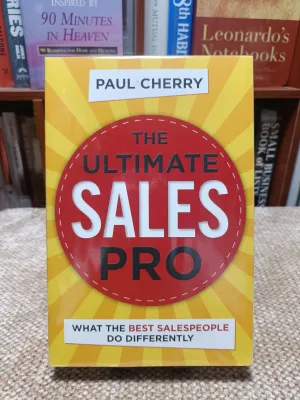
Prices are valid at publication and may change. Please refer to the product page for the latest price.
Once you have defined your sales environment, the next step is to identify your most pressing skill gaps. Sales is not a single, monolithic skill; it is a collection of distinct disciplines, including prospecting, discovery, presentation, objection handling, negotiation, and account management. If your primary challenge is a dry pipeline, your reading list should prioritize books on cold outreach, social selling, and lead qualification. If you find yourself securing meetings but failing to close deals, your focus should shift toward consultative questioning, value proposition design, and structured negotiation frameworks. Targeting your specific weaknesses allows you to build a highly customized learning path that yields measurable improvements in your performance.
In addition to matching your role and skill gaps, it is essential to evaluate the publication dates and editions of the books you choose. The sales landscape has evolved dramatically with the rise of digital communication, customer relationship management (CRM) software, and social media. While classic sales texts offer timeless psychological insights, books written decades ago may lack practical guidance on modern omnichannel selling, video-first presentations, or digital lead nurturing. Look for recent publications or updated editions that address how to leverage technology to streamline the sales process, manage virtual relationships, and analyze sales data effectively.
Finally, pay close attention to the author’s background and the industry context of their case studies. An author who built their career in high-tech software sales will offer different frameworks than one who succeeded in industrial manufacturing or consumer packaged goods. While core sales principles remain consistent, the execution of those principles varies widely across industries. Reading books written by authors who have excelled in your target sector ensures that the examples, scripts, and case studies resonate with your actual day-to-day experiences and client interactions.
Core Pillars of a Complete Sales Playbook
A reliable sales playbook is not a collection of disconnected closing tricks; it is a comprehensive system that guides a prospect from initial awareness to long-term brand advocacy. Relying solely on books that teach high-pressure closing techniques is a recipe for high customer churn and a damaged professional reputation. To build a sustainable career or business, your educational foundation must span the entire customer lifecycle, ensuring that every stage of the relationship is managed with professionalism and strategic intent.

To achieve this comprehensive understanding, your reading list should be structured around three core pillars of sales mastery. These pillars represent the natural progression of the sales process: finding the right opportunities, guiding those opportunities to a successful commitment, and nurturing those commitments into long-term partnerships. By selecting literature that addresses each of these areas, you can develop a balanced skill set that supports consistent, predictable revenue growth.
Mastering Prospecting and Lead Generation
The first pillar of any successful sales playbook is prospecting, which is the systematic process of identifying, qualifying, and reaching out to potential customers. Without a steady stream of qualified leads, even the most skilled negotiator will struggle to hit their targets. When selecting books in this category, look for resources that focus on modern prospecting methodologies, such as identifying your Ideal Customer Profile (ICP) and utilizing social selling techniques. These books should teach you how to research prospects effectively, ensuring that your outreach is highly targeted and relevant to their specific business challenges.
Effective prospecting literature must also provide practical frameworks for cold outreach across multiple channels, including email, phone, and professional social networks. Look for books that teach you how to write compelling outreach sequences that focus on delivering value rather than immediately asking for a sale. The material should also address the psychological aspects of prospecting, offering strategies for managing rejection, maintaining high activity levels, and staying disciplined in your daily outreach routines.
While global prospecting frameworks offer excellent structural guidance, it is important to remember that outreach tactics must be adapted to local communication preferences. In the Philippines, professional etiquette tends to favor a more relational and respectful tone compared to the highly direct approach common in Western markets. When studying prospecting books, focus on the underlying principles of personalization and value delivery, and then adapt the actual templates and scripts to match the polite, warm, and professional tone expected by local business leaders.
Navigating the Sales Process and Closing
Once you have successfully generated leads, the next pillar of your playbook is navigating the sales process and securing a commitment. This stage involves conducting discovery calls, presenting your solution, handling objections, and negotiating final terms. Look for books that champion consultative, value-based selling rather than outdated, high-pressure tactics. Modern buyers are highly informed and easily repelled by aggressive sales pitches; instead, they respond to professionals who act as trusted advisors, asking deep, diagnostic questions to understand their unique pain points.
Your reading choices in this category should provide clear frameworks for structuring sales presentations and proposals that clearly articulate the return on investment (ROI). The literature should also offer structured approaches to handling objections, reframing them as opportunities for deeper discussion rather than roadblocks. Look for negotiation frameworks that emphasize win-win outcomes, helping you protect your margins while ensuring the client feels they are receiving fair value.
Ethical selling practices should be a non-negotiable criterion when selecting books on closing and negotiation. The best sales literature emphasizes transparent communication, realistic expectation setting, and absolute honesty about what your product or service can deliver. Overpromising to secure a quick signature might help you hit a short-term target, but it ultimately destroys trust, leads to costly service disputes, and damages your brand’s reputation in a highly connected market.
Building Long-Term Client Relationships
The final pillar of a complete sales playbook focuses on what happens after the sale is closed. In modern business, especially within subscription-based models, professional services, and recurring B2B contracts, the majority of revenue is generated post-sale through retention, upselling, and cross-selling. Prioritize books that cover customer success, key account management, and structured post-sale follow-up systems. These resources will teach you how to ensure that clients actually achieve the outcomes they were promised during the sales process.
Look for literature that provides clear strategies for handling customer complaints and managing service recovery. Mistakes and service disruptions are inevitable in any business, but a structured, empathetic approach to resolving these issues can actually strengthen client loyalty. Books in this category should teach you how to turn a negative customer experience into an opportunity to demonstrate your commitment to their success, thereby reducing churn and securing long-term contracts.
Additionally, consider books that bridge the gap between sales, customer service, and community building. Learning how to cultivate a loyal community of clients can transform your business by generating a steady stream of organic, high-quality referrals. When your existing clients become active advocates for your brand, your customer acquisition costs decrease, and your sales cycle shortens, making your entire business model more resilient and profitable.
Adapting Global Sales Concepts to the Philippine Market
Most of the world’s leading sales literature is written by authors based in North America or Europe, reflecting business cultures that value directness, speed, and highly transactional interactions. While the core psychological principles of sales are universal, the execution of these strategies must be carefully adapted to the unique cultural and economic realities of the Philippine market. Young professionals who blindly copy Western sales scripts often find themselves struggling to build trust with local clients, who place a high premium on personal relationships and mutual respect.
In the local business ecosystem, relationship-building norms such as shared identity and maintaining harmony play a decisive role in sales success. Cold, transactional pitches that get straight to the point can often be perceived as aggressive or disrespectful. Successful local professionals use global sales frameworks as a structural guide but soften their delivery, investing time in building genuine rapport, sharing stories, and establishing mutual trust before introducing business proposals.
Economic factors also require a thoughtful adaptation of global sales concepts. Pricing frameworks, payment terms, and budget cycles in the local market can differ significantly from those described in international business books. For instance, local businesses often operate on tighter cash flows, requiring flexible payment structures, post-dated checks, or extended terms. When presenting value propositions, it is crucial to frame your solution in terms of local purchasing power, immediate cost-efficiency, and long-term reliability, rather than relying on abstract global metrics.
Furthermore, the local business landscape is heavily reliant on community trust, personal referrals, and word-of-mouth networks. A recommendation from a trusted mutual connection often carries far more weight than a polished corporate presentation or a data-driven pitch. Finally, young professionals must learn when to pivot from the rigid, formal sales structures designed for large multinational corporations to the more flexible, relationship-driven approaches required when dealing with local small and medium enterprises (SMEs), where the business owner is often the sole decision-maker.
Where to Source and Verify Business Books
Building your sales library requires a strategic approach to sourcing and verifying your reading materials. The first step is determining which format best suits your learning style, daily routine, and budget. Physical books are highly effective for deep, active study, allowing you to highlight key passages, write notes in the margins, and easily reference frameworks during sales calls. E-books offer unmatched portability and convenience, allowing you to carry an entire library on your phone or tablet, while audiobooks are an excellent way to utilize passive time, such as during long commutes in heavy traffic.
When purchasing books online, it is critical to verify the authenticity of the seller to avoid falling victim to pirated or incomplete editions. Online marketplaces and ecommerce platforms are often flooded with unauthorized, low-quality reprints that suffer from missing chapters, severe printing errors, and outdated translations. To ensure you are receiving complete, authorized editions that support the authors, always purchase from official brand stores, verified distributors, or established local bookstores.
Do not overlook the value of local physical bookstores, which often feature curated business sections tailored to the needs of local professionals. Additionally, university libraries, corporate learning centers, and professional networking groups are excellent resources for borrowing expensive business texts and participating in peer-led book discussions. Sharing insights with other young professionals not only helps you internalize the concepts but also provides diverse perspectives on how to apply global sales strategies to local business challenges.
Frequently Asked Questions (FAQ)
How many sales books should I read at the same time?
It is highly recommended to focus on one core sales methodology at a time rather than trying to digest multiple strategy books simultaneously. Sales is a highly practical discipline that requires active implementation, role-playing, and real-world testing to master. Reading too many books at once can lead to cognitive overload and conflicting tactical advice, making it difficult to execute any single strategy effectively. To achieve a balanced learning experience, you can pair one theoretical strategy book with a practical, tactical workbook or a book focused on a different skill set, such as personal productivity or communication.
Are audiobooks effective for learning complex sales frameworks?
Audiobooks are incredibly convenient for consuming business literature during passive activities like commuting, exercising, or performing routine administrative tasks. They are highly effective for absorbing high-level concepts, motivational content, and narrative-driven case studies. However, complex sales frameworks, detailed conversational scripts, and visual charts often require a physical or digital text format for proper study. To get the most out of complex sales literature, consider using audiobooks for your initial exposure to the material, and then use a physical or e-book copy to highlight, annotate, and practice the specific scripts and frameworks in your daily work.

Community discussion
Share your experience or ask a question. Comments are reviewed before publication.