
Choosing your very first personal finance book is a critical step toward financial independence, especially when navigating the unique economic landscape of the Philippines. With rising living costs, the pressure of family obligations, and the temptation of constant online sales, building a solid financial foundation requires both the right mindset and practical strategy. Two global bestsellers dominate the recommendations for beginners: The Psychology of Money by Morgan Housel and Rich Dad Poor Dad by Robert Kiyosaki. While both aim to help you build wealth, they approach the challenge from entirely different angles.
To decide which book to read first, you must identify your immediate financial hurdle. If your primary struggle is behavioral—such as impulse spending, difficulty maintaining savings, or feeling anxious about your financial future—The Psychology of Money is the ideal starting point. It focuses on your relationship with money, teaching you how to manage your behavior, cultivate patience, and build quiet wealth. If your struggle is structural—meaning you work hard but do not understand how money works, how taxes affect you, or how to make your income grow beyond a salary—Rich Dad Poor Dad offers the mindset shift you need to start viewing yourself as an investor rather than just an employee.
Core Philosophies: Behavior vs. Asset Building
The Psychology of Money operates on the premise that doing well with money has surprisingly little to do with how smart you are and everything to do with how you behave. Morgan Housel argues that financial success is not a hard science filled with complex mathematical formulas; instead, it is a soft skill where your emotions, ego, and personal history dictate your decisions. The book encourages readers to seek “enough” rather than chasing endless accumulation, emphasizing that control over your time is the highest dividend money can pay. For a young professional working in a bustling business district like Makati or BGC, this philosophy serves as a shield against lifestyle inflation and the urge to project a wealthy image.
Products mentioned in this guide
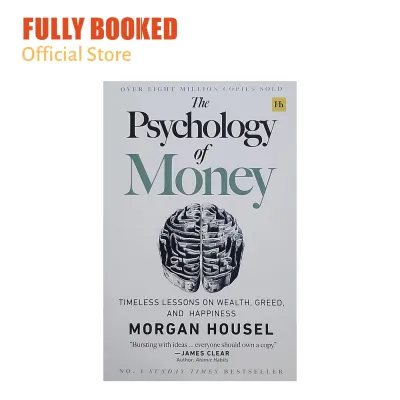
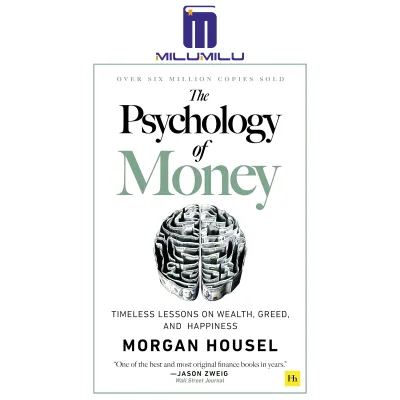



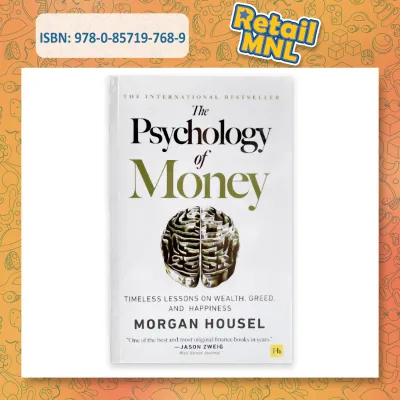
Prices are valid at publication and may change. Please refer to the product page for the latest price.
In contrast, Rich Dad Poor Dad centers on financial literacy and the mechanics of wealth creation. Robert Kiyosaki uses the narrative of his two fathers—his highly educated but financially struggling biological father (Poor Dad) and his friend’s entrepreneurial father (Rich Dad)—to contrast two opposing worldviews. The core philosophy here is that the poor and middle class work for money, while the rich make money work for them. Kiyosaki introduces a strict, simplified definition of assets and liabilities: assets put money into your pocket, while liabilities take money out. This perspective challenges traditional beliefs about security, urging readers to prioritize cash-flowing investments over conventional employment.
These contrasting philosophies appeal to different stages of a beginner’s journey. If you are currently overwhelmed by financial anxiety or struggle to keep a portion of your monthly salary, Housel’s focus on emotional regulation provides immediate comfort and practical boundaries. If you are already disciplined with your savings but feel trapped in a cycle of trading time for money, Kiyosaki’s aggressive push toward asset acquisition offers the conceptual spark needed to explore entrepreneurship or investing.
Key Concepts and Practical Takeaways
When reading The Psychology of Money, you will encounter concepts designed to build long-term financial resilience. One of the most vital lessons is the distinction between being wealthy and being rich; richness is current income displayed through expensive items, while wealth is unseen assets that offer flexibility and security. Housel also emphasizes the immense power of compounding, illustrating how consistency and time outweigh brilliant but risky investment moves. Furthermore, the book highlights the role of luck and risk in financial outcomes, teaching readers to design a financial plan that leaves a wide margin for error so that unexpected life events do not ruin their progress.

Rich Dad Poor Dad delivers a different set of conceptual tools, most notably the Cashflow Quadrant, which categorizes how people earn income: as an Employee (E), Self-Employed (S), Business Owner (B), or Investor (I). Kiyosaki argues that true financial freedom lies on the right side of the quadrant (B and I). He stresses the importance of continuous financial education, learning how to read basic financial statements, and understanding how taxes and corporate structures can protect wealth. The practical takeaway is a relentless focus on acquiring income-generating assets, such as rental properties, stocks, or small businesses, rather than accumulating liabilities disguised as assets.
Applying these concepts to the Philippine context reveals distinct practical differences. The behavioral lessons in The Psychology of Money are immediately actionable; any beginner can start building an emergency fund of ₱20,000 or ₱50,000 by adjusting their daily spending habits and resisting peer pressure. On the other hand, the asset-building strategies in Rich Dad Poor Dad require significant adaptation. While the concept of buying real estate is inspiring, a young Filipino beginner must navigate high local interest rates, complex property registration laws, and substantial capital requirements, making Kiyosaki’s real estate examples more of a conceptual guide than a direct step-by-step manual.
Reading Experience and Beginner Accessibility
The Psychology of Money is highly praised for its exceptional readability and elegant structure. The book is divided into short, standalone chapters, each built around engaging historical anecdotes and real-world stories. Housel’s writing style is warm, humble, and free of dense financial jargon, making it incredibly easy to digest during a daily commute on the MRT or during a quick lunch break. Because the chapters do not rely heavily on sequential learning, you can read them at your own pace without feeling overwhelmed by technical details.
Rich Dad Poor Dad offers a highly motivational, narrative-driven reading experience written in the form of a personal memoir. Kiyosaki uses simple parables and repetitive core messages to ensure his foundational concepts stick with the reader. This repetitive style is highly effective for breaking down deep-seated beliefs about money, but it can sometimes feel overly simplistic. While the book is excellent at generating enthusiasm and shifting your mindset, it notoriously lacks concrete, step-by-step technical instructions on how to actually execute the investments it champions.
It is crucial for beginners to understand that neither book serves as a localized investment guide. You will not find specific stock recommendations, explanations of local tax laws, or instructions on how to open a Pag-IBIG MP2 account or invest in Philippine digital banks. Both authors provide the mental frameworks and philosophical foundations of wealth; the technical execution and localization of these concepts remain the reader’s responsibility.
How to Choose the Right Book for Your Starting Point
To make an informed decision, assess your current financial situation and emotional relationship with money. If you find yourself living paycheck to paycheck because of impulse spending, struggle to maintain an emergency fund, or feel constant anxiety about financial instability, you should read The Psychology of Money first. This book will help you heal your relationship with money, curb destructive spending habits, and teach you the quiet discipline required to keep the money you earn.
If you already have stable saving habits, a secure emergency fund, and are looking for a way to break out of the traditional corporate ladder, you should read Rich Dad Poor Dad first. This book will challenge your assumptions about job security, introduce you to the basic language of investing, and motivate you to start looking for ways to build passive income streams outside of your primary job.
For the most comprehensive foundation, the ideal approach is to read both books sequentially. Start with The Psychology of Money to establish a stable emotional foundation, learn the value of saving, and understand the role of risk. Once you have mastered the behavioral discipline of keeping your money, transition to Rich Dad Poor Dad to learn how to strategically deploy those savings into assets that can grow your wealth over time.
What to Verify Before Buying Your Copy
Before purchasing your copy of either book, it is essential to verify the edition and format to ensure a high-quality reading experience. Rich Dad Poor Dad has been in print for decades and has undergone multiple anniversary updates, revisions, and study-guide editions. Check the publication details to ensure you are purchasing the standard text or the specific updated edition you prefer, as some older versions may lack modern context or updated introductions.
Consider which format best fits your lifestyle and device compatibility. If you prefer digital reading, verify that the e-book or audiobook format is compatible with your specific device, such as a Kindle or smartphone app, and check for any regional restrictions that might prevent downloading in the Philippines. For physical books, pay close attention to the publisher details and paper quality, especially since cheap, unauthorized reprints are common in online marketplaces.
To avoid purchasing pirated copies, which often suffer from blurry text, missing pages, and poor binding that easily deteriorates in high tropical humidity, always verify the seller’s authenticity. Look for official, authorized distributors or reputable local bookstores when shopping online. Check customer reviews specifically for photos of the physical book’s print quality, paper thickness, and cover texture to ensure you are investing in a genuine, durable copy that will last on your bookshelf.
Frequently Asked Questions (FAQ)
Is The Psychology of Money better for investing beginners?
Yes, but primarily for developing the emotional discipline and long-term mindset required for investing, rather than the technical mechanics. The book does not teach you how to analyze corporate balance sheets, read stock charts, or navigate local brokerage platforms. Instead, it prepares you for the psychological challenges of investing, such as surviving market downturns without panicking, understanding the role of luck, and remaining patient while compounding works its magic. For technical investing steps, you will need to pair this book with local financial guides.
Can I read Rich Dad Poor Dad if I have a low income?
Yes, the foundational concepts of financial literacy, such as understanding the difference between an asset and a liability, are highly valuable regardless of your current income level. However, you must approach the book’s practical examples with caution. The real estate and business acquisition strategies described by Kiyosaki often require significant capital that may not be accessible to a low-income beginner. Focus instead on the book’s advice regarding continuous self-education, minimizing unnecessary liabilities, and finding small, low-cost ways to increase your income before attempting large-scale investments.

Community discussion
Share your experience or ask a question. Comments are reviewed before publication.