
Choosing between the Roland GO:PIANO and other portable keyboards comes down to how you plan to balance physical key feel, portability, and smart features. If you need a lightweight instrument that runs on battery power and connects easily to your smartphone or tablet for casual practice, the Roland GO:PIANO offers a highly specialized design. However, if your musical goals require the heavy, realistic feel of a traditional acoustic piano or advanced controls for studio production, other portable keyboards on the market may serve you better. Evaluating your daily playing environment, space constraints, and long-term learning objectives will guide you to the right choice.
What Defines the Roland GO:PIANO?
The Roland GO:PIANO is designed primarily for musicians who prioritize mobility and modern connectivity over traditional, heavy piano hardware. Its design philosophy centers on removing the barriers to daily practice, allowing you to set up and play anywhere from a small apartment desk to an outdoor space. By focusing on a compact footprint and lightweight chassis, this instrument targets casual players, travelers, and those with limited living space.
To achieve this level of portability, the instrument utilizes a synth-action keybed rather than a heavy, hammer-action mechanism. While this makes the keyboard exceptionally easy to carry, it represents a distinct trade-off for players accustomed to the physical resistance of an acoustic piano. Additionally, the built-in speakers are optimized for personal monitoring in quiet rooms, meaning they may not deliver the deep bass response or high volume levels found in larger digital pianos.
Products mentioned in this guide
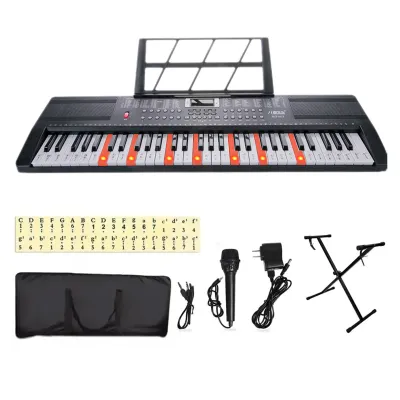
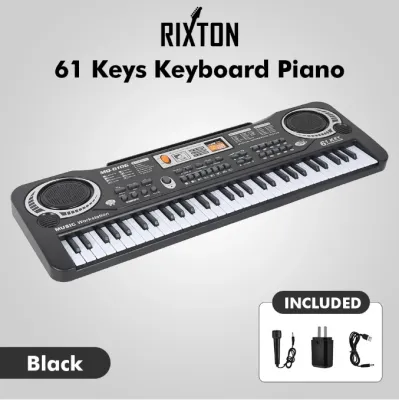
Prices are valid at publication and may change. Please refer to the product page for the latest price.
Before making a decision, you should verify the exact specifications of the specific model variation you are considering. Check the official manufacturer manual or product label to confirm the maximum polyphony limits, the specific sound engine utilized, and the supported Bluetooth profiles. This ensures that the wireless features are fully compatible with your existing mobile devices and learning applications.
Essential Dimensions for Comparing Portable Keyboards
To find the instrument that most closely matches your musical journey, you must look past general marketing terms and focus on concrete technical specifications. Comparing portable keyboards requires a systematic evaluation of how each model handles physical playability, sound reproduction, and modern connectivity. By analyzing these core dimensions, you can objectively measure the Roland GO:PIANO against any alternative model on your shortlist.

Key Action, Touch Response, and Sound Generation
The physical connection between your fingers and the keys is the most critical factor in how an instrument feels and plays. Keyboards generally fall into three categories: synth-action, semi-weighted, and fully weighted hammer action. Synth-action keys, like those on the GO:PIANO, offer very little resistance and spring back quickly, which is excellent for playing organ or synthesizer parts but can make classical piano dynamics harder to control. Fully weighted hammer-action keys mimic the physical levers of an acoustic piano, building finger strength and allowing for a wider range of expressive dynamics, though they add significant weight to the instrument.
Touch sensitivity determines how the keyboard responds to the speed and force of your keystrokes. A highly responsive keybed allows you to play soft, delicate passages and loud, powerful chords naturally. When comparing models, check the number of adjustable touch-sensitivity levels available in the settings, as this allows you to customize the response to your playing style.
Sound generation quality relies heavily on the internal sound engine and polyphony. Polyphony refers to the maximum number of individual notes or voices the keyboard can play simultaneously without cutting off older notes. For complex classical pieces or layered sounds, a higher polyphony count is essential. You should review the manufacturer’s spec sheet to compare the polyphony limits and the variety of built-in instrument voices, ensuring the keyboard can handle your preferred repertoire.
Portability, Power Options, and Connectivity
Portability is not just about weight; it also involves how easily the instrument integrates into different environments. If you plan to practice in areas without easy access to wall outlets, look for models that support battery operation alongside a standard AC adapter. A lightweight keyboard that runs on common AA batteries offers immense freedom, but you must check the expected battery life in the manual to plan your practice sessions effectively.
Modern connectivity options can greatly expand what you can do with a portable keyboard. Bluetooth MIDI and Bluetooth audio allow you to stream lessons through the keyboard’s speakers or control learning apps on your tablet without a clutter of cables. However, wireless connections can sometimes introduce minor latency. If you plan to record music or use software instruments, verify whether the keyboard features a low-latency USB-MIDI port or traditional 5-pin MIDI connections for stable hardware integration.
The built-in speaker system dictates how the instrument sounds in your room. Speaker output is measured in wattage, and smaller, highly portable keyboards typically feature lower-wattage speakers designed for personal, close-up listening. If you intend to play for small groups or practice in noisy environments, you will need to evaluate whether the built-in speakers are sufficient or if you will need to rely on external amplification or high-quality headphones.
Aligning Keyboard Features With Your Playing Goals
Your choice of keyboard should directly reflect your daily musical activities and the environment where you practice. For casual players, hobbyists, or those living in compact spaces, a lightweight, battery-powered model with a simple, uncluttered interface is often the most practical choice. These instruments are easy to store under a bed or in a closet when not in use, and their quick setup encourages spontaneous practice sessions.
If your primary goal is serious classical piano study or preparing for formal examinations, your priorities must shift toward physical realism. In this scenario, prioritizing a keyboard with fully weighted hammer-action keys and a high-quality acoustic piano sample engine is crucial. While these models are heavier and less convenient to travel with, they ensure you develop the proper finger technique and hand strength required to play on traditional acoustic pianos.
For music production, songwriting, and digital studio work, the focus shifts toward technical integration. You will want to look for keyboards that offer robust USB-MIDI connectivity, assignable control knobs or sliders, and seamless compatibility with Digital Audio Workstations (DAWs). In a studio setting, the physical feel of weighted keys is often secondary to how efficiently the keyboard communicates with your music software and external audio interfaces.
Pre-Purchase Verification Checklist
Before finalizing your purchase on any online marketplace or at a local music store, it is essential to verify the exact details of the product package. Ensure you are looking at the precise model number, as manufacturers often produce similar-looking models with vastly different feature sets. Confirm whether essential accessories—such as the music rest, power adapter, and sustain pedal—are included in the box or if they must be purchased separately, as these extras can quickly increase your total investment in ₱.
Always consult the official product manual or manufacturer specification sheet rather than relying solely on promotional summaries or retail descriptions. Double-check the exact speaker wattage and polyphony limits to ensure they match your performance expectations. Additionally, verify the regional voltage compatibility of the included AC adapter to ensure it operates safely on local electrical standards without requiring an external transformer.
Finally, confirm the warranty terms and the authorized retailer status of the seller. Purchasing from an authorized source ensures that you receive genuine hardware and have access to valid local after-sales support and repair services in the Philippines. This protection is particularly important for electronic musical instruments that may require servicing or replacement parts over time.
Decision Framework: Which Keyboard Fits Your Needs?
To make your final decision, evaluate your primary playing requirements against the specific strengths of each keyboard type. The Roland GO:PIANO is an excellent fit if your lifestyle demands extreme portability, frequent travel, or wireless integration with mobile learning apps. Its lightweight design and battery-powered capability make it a highly convenient tool for casual practice and spontaneous music-making in any room or outdoor setting.
Conversely, you should look toward alternative portable keyboards if your musical path requires a traditional piano experience. If you are practicing classical repertoire, preparing for piano lessons, or need to develop authentic finger dynamics, look for an alternative model that features fully weighted hammer-action keys. Similarly, if you require extensive physical controls, sliders, and low-latency audio routing for studio recording, a dedicated MIDI controller or workstation keyboard will better serve your workflow.
If neither of these categories completely matches your needs—such as if you require specialized professional audio outputs for live stage performances or specific built-in educational software—take the time to verify the exact input/output ports and software compatibility of any candidate model. Choosing the right instrument is a highly personal decision, and verifying these technical details beforehand ensures your keyboard will support your musical growth for years to come.
Frequently Asked Questions (FAQ)
Can I use the Roland GO:PIANO as a MIDI controller for my computer?
Yes, you can use the instrument as a MIDI controller, but you must verify the connection requirements first. Check the product specifications to see if it supports USB-MIDI or Bluetooth MIDI. You should also consult the manufacturer’s documentation to confirm driver compatibility with your computer’s specific operating system, ensuring a stable connection to your digital audio workstation.
Do portable keyboards require an external amplifier for live performances?
Portable keyboards generally feature low-wattage built-in speakers designed for personal practice in quiet rooms. For live performances in larger venues or noisy environments, the built-in speakers will not provide enough volume or projection. You will need to use the keyboard’s line-out or headphone jacks to connect the instrument to an external amplifier, keyboard amp, or venue PA system.
How do I maintain the keys and casing of a portable keyboard?
To keep your keyboard in optimal condition, dust the keys and casing regularly using a dry or slightly damp microfiber cloth. Avoid using harsh chemical cleaners, alcohol, or abrasive materials, as these can damage the plastic finish and key surfaces. Additionally, store the instrument in a dry environment away from direct sunlight and extreme tropical humidity to protect the internal electronics.

Community discussion
Share your experience or ask a question. Comments are reviewed before publication.