
Choosing between the Roland FP-30X, Yamaha P-125, and Kawai ES110 is a common dilemma for pianists seeking a high-quality portable digital piano. Because each instrument utilizes distinct key action technologies, sound generation methods, and feature sets, there is no single universal winner. The best choice depends entirely on your specific playing style, practice environment, and connectivity needs. This guide breaks down the critical differences to help you match the right instrument to your musical goals.
Evaluating these models requires looking closely at how their physical mechanisms and digital engines align with your daily practice. Whether you are a classical student needing realistic key resistance or a gigging musician prioritizing lightweight portability, understanding these technical specifications will guide you to the right investment.
Key Action and Playability
The physical feel of the keys is the most critical factor when choosing a digital piano, as it directly impacts your technique development and playing comfort. Each of these three manufacturers employs a proprietary key action technology designed to simulate the weight and resistance of an acoustic grand piano hammer system.
Products mentioned in this guide
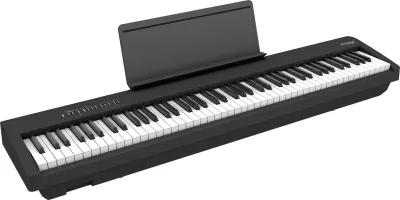
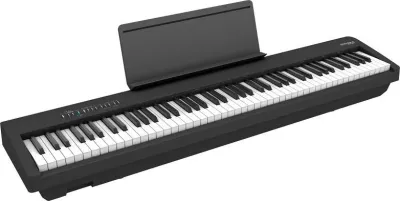
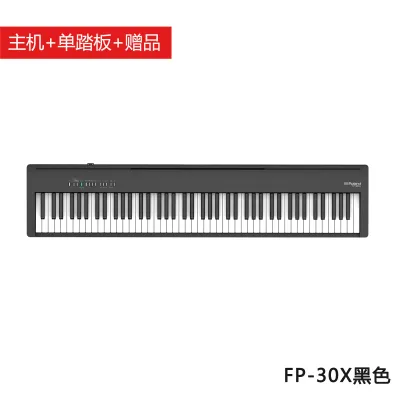
Prices are valid at publication and may change. Please refer to the product page for the latest price.
Roland’s FP-30X features the PHA-4 Standard keyboard action. This mechanism is highly regarded for its realistic weight and the inclusion of an escapement simulation, which reproduces the subtle “click” felt when pressing an acoustic piano key slowly. Additionally, the PHA-4 keys are finished with a synthetic ivory texture that helps absorb moisture from your fingers, providing a secure grip during long practice sessions in warm climates.
Yamaha’s P-125 utilizes the Graded Hammer Standard (GHS) action. This action is graded, meaning the keys in the lower register have a heavier touch than those in the higher register, mimicking the graduated hammer sizes of an acoustic piano. The GHS action is generally lighter and has a smoother plastic key surface compared to Roland’s offering, making it a popular choice for players who transition frequently between acoustic pianos and electronic keyboards.
Kawai’s ES110 features the Responsive Hammer Compact (RHC) action. This design uses a springless hammer system to deliver a natural, bouncy key return. The RHC action is often described as the lightest and fastest of the three, which can be highly advantageous for rapid note repetitions, jazz solos, or contemporary pop styles, though it lacks the escapement simulation found on the Roland model.
When researching these actions, consider your primary musical genre. Classical pianists often prefer the heavier resistance and escapement of the Roland PHA-4 to build finger strength, while those playing fast synth lines or pop arrangements may favor the quick responsiveness of Kawai’s RHC or Yamaha’s GHS.
Sound Engine and Tonal Character
A digital piano’s sound engine determines how realistically it reproduces the complex acoustic properties of a grand piano, including string resonance, damper resonance, and dynamic tonal shifts.

The Roland FP-30X is powered by the SuperNATURAL Piano sound engine. This technology combines high-resolution multi-layer sampling with physical modeling algorithms. Instead of simply triggering static recordings, the engine calculates the interactive resonances of the strings and soundboard in real-time, resulting in a highly expressive and customizable acoustic tone.
Yamaha’s P-125 uses the Pure CF Sound Engine, which features meticulous multi-layer samples of the famous Yamaha CFIIIS 9-foot concert grand piano. The tonal character of the P-125 is bright, clear, and modern, allowing it to cut through a band mix exceptionally well. It is a highly reliable sound profile that many contemporary musicians find immediately satisfying without extensive adjustment.
Kawai’s ES110 employs the Harmonic Imaging sound engine, which utilizes 88-key stereo sampling of the Kawai EX concert grand piano. By recording each individual key at various dynamic levels, Kawai preserves the unique tonal identity of every note. The resulting sound is warm, rich, and traditional, appealing to players who prefer a darker, more classical acoustic piano voice.
Polyphony is another crucial specification to verify. The Roland FP-30X offers a maximum polyphony of 256 notes, while the Yamaha P-125 and Kawai ES110 both offer 192 notes. Higher polyphony ensures that complex classical pieces with heavy sustain pedal usage do not suffer from premature note dropouts. Additionally, consider the built-in speaker systems: verify the wattage and physical placement of the speakers on each model, as downward-firing speakers may sound muffled if placed on a solid tabletop rather than an open keyboard stand.
Connectivity, Features, and Usability
Modern digital pianos serve as versatile hubs for learning, recording, and performance. Verifying the wireless and physical connectivity options of each model ensures seamless integration with your existing devices and software workflows.
The Roland FP-30X offers robust wireless connectivity with built-in Bluetooth MIDI and Bluetooth Audio. This allows you to stream backing tracks or lesson videos from your smartphone directly through the piano’s internal speakers while simultaneously sending MIDI data to learning applications. The Kawai ES110 includes Bluetooth MIDI for wireless app integration but lacks Bluetooth Audio support. The Yamaha P-125 does not feature built-in Bluetooth, requiring optional external adapters or wired connections to interface with mobile devices.
Proprietary companion apps greatly enhance usability by providing visual interfaces for sound editing and registration storage. Roland’s Piano App, Yamaha’s Smart Pianist, and Kawai’s PianoRemote allow you to select voices, split the keyboard, adjust metronome settings, and access digital sheet music directly from a tablet or smartphone screen.
For physical connections, verify that the instrument has dedicated line-out jacks if you plan to connect to external amplification. Both the Roland FP-30X and Kawai ES110 feature dedicated 1/4-inch (L/Mono, R) outputs, which keep the internal speakers active or allow clean signal routing to a mixer. The Yamaha P-125 also includes dedicated auxiliary outputs. Additionally, check the headphone jack configurations; models with dual headphone outputs (such as a 1/4-inch jack and a 3.5mm jack) are highly convenient for quiet student-teacher sessions.
Portability, Build, and Included Accessories
If you need to transport your instrument for rehearsals, gigs, or community events, physical dimensions and weight are critical practical considerations.
The Kawai ES110 is the lightest of the three models, weighing approximately 12 kilograms, which makes it exceptionally easy to carry. The Yamaha P-125 is also highly portable at approximately 11.8 kilograms. The Roland FP-30X is the heaviest at approximately 14.8 kilograms, a trade-off for its more robust, triple-sensor key action assembly. Verify the exact physical dimensions of each unit to ensure it fits comfortably in your vehicle or designated home practice space.
When purchasing, clarify what accessories are included in the standard retail box. Most packages contain a basic music rest, a power adapter, and a sustain pedal. However, the quality of the included pedal varies significantly; some packages only include a basic plastic footswitch, while others feature a more realistic, piano-style sustain pedal. For a permanent home setup, matching wooden furniture stands and triple-pedal lyres are available as optional purchases for all three models.
In tropical environments like the Philippines, high humidity and dust can affect electronic contacts and key sensors over time. It is highly recommended to verify the local warranty terms, authorized dealer status, and the availability of local service centers before making your purchase. Buying from an authorized distributor ensures access to genuine replacement parts and professional technical support if maintenance is required.
How to Decide: Matching the Piano to Your Goals
To choose the right digital piano, match the specific strengths of each model to your personal playing environment, skill level, and technical requirements.
Choose the Roland FP-30X if:
- You want a heavy, realistic key action with escapement simulation that closely mimics an acoustic grand piano.
- You require built-in Bluetooth Audio to stream backing tracks directly through the piano's speakers.
- You play complex classical pieces that benefit from a high 256-note polyphony limit.
Choose the Yamaha P-125 if:
- You prefer a bright, modern acoustic piano tone that easily cuts through live band mixes.
- You value a straightforward, user-friendly physical interface with dedicated buttons for quick setting adjustments.
- You want a balanced, moderately weighted key action that is comfortable for a wide variety of musical genres.
- You plan to use the Smart Pianist app via a wired connection for intuitive control.
Choose the Kawai ES110 if:
- You prioritize a lightweight, highly portable instrument for frequent travel or gigging.
- You prefer a fast, springless key action with a quick return for rapid note repetitions.
- You enjoy a warm, traditional, and expressive acoustic piano sound.
Verify first if your preferred model is currently in stock at authorized local music stores in the Philippines. Compare package pricing in Philippine Pesos (₱) to determine whether purchasing the portable slab alone or a complete bundle with a matching wooden stand and triple-pedal unit offers the best value for your budget. Whenever possible, visit a local showroom to test the key action and sound projection in person, or carefully review the return and exchange policies of online marketplaces before finalizing your order.
Frequently Asked Questions (FAQ)
Can I use these digital pianos as MIDI controllers for music production?
Yes, all three models can function as MIDI controllers for digital audio workstations (DAWs). You can verify compatibility by checking the manufacturer specifications for USB-to-Host connectivity or Bluetooth MIDI support. Some models may require specific driver installations on your computer, while others offer plug-and-play functionality to control virtual instruments and recording software seamlessly.
Do I need to buy a separate amplifier for live performances?
While the built-in speakers (ranging from 7W to 11W per side depending on the model) are sufficient for home practice and small rooms, they are not powerful enough for large venues or noisy performance environments. For live gigs, you will need to connect the digital piano to an external keyboard amplifier or PA system. Verify that your chosen model has dedicated 1/4-inch line-out jacks to ensure a clean, professional audio signal.
Are the included sustain pedals sufficient for advanced classical pieces?
Basic plastic footswitches included in some entry-level packages only support simple on/off switching, which is insufficient for advanced classical repertoire. Advanced pieces require half-pedaling capability to achieve graduated control over sustain and resonance. To utilize this technique, verify if the digital piano supports half-pedaling and ensure you purchase a compatible, continuous-detection piano-style sustain pedal.

Community discussion
Share your experience or ask a question. Comments are reviewed before publication.