
When shopping for a budget piano keyboard in the Philippines, finding the right balance between affordability and playability is a common challenge. Rixton keyboards have gained significant traction in the local market, primarily because they offer highly competitive pricing and comprehensive accessory bundles that appeal directly to absolute beginners. However, to determine whether a Rixton keyboard or an alternative budget brand offers the best value for your specific musical journey, you must look beyond the initial price tag and evaluate key technical specifications.
Choosing the right instrument requires analyzing how these budget-friendly options perform in critical areas such as key action, sound generation, and long-term durability. While a bundled package can save you the hassle of sourcing accessories separately, an instrument that fails to support proper finger technique or lacks essential connectivity can quickly hinder your progress. By understanding what to look for on the manufacturer’s spec sheet, you can make an informed decision that aligns with your skill level and learning goals.
Understanding Rixton's Position in the Budget Keyboard Market
Rixton has carved out a distinct niche in the Philippine musical instrument market by targeting absolute beginners, young learners, and casual hobbyists who want to explore the piano without making a massive financial commitment. Their product lineup is designed to lower the barrier to entry, offering an accessible starting point for households testing the waters of music education.
Products mentioned in this guide
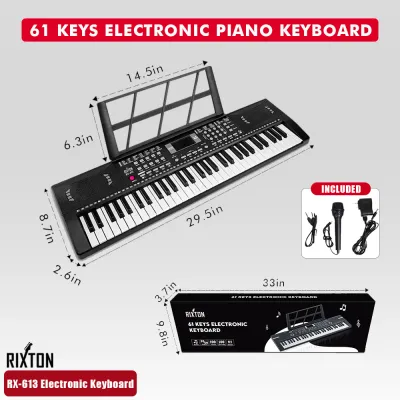
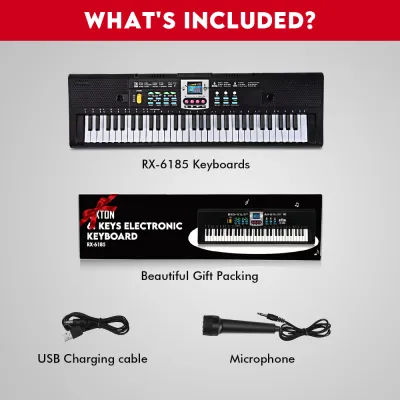
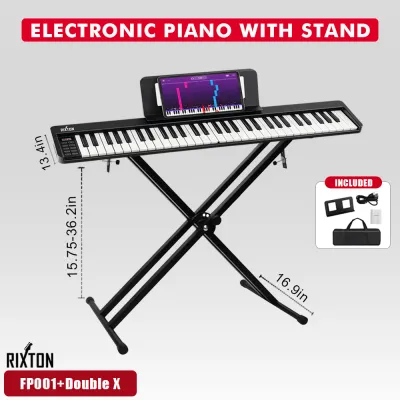
Prices are valid at publication and may change. Please refer to the product page for the latest price.
One of the primary ways this brand distinguishes itself is through all-in-one bundles. When you purchase a keyboard, the package often includes essential accessories such as an adjustable stand, a padded bench, headphones, a power adapter, and sometimes a basic sustain pedal. This comprehensive approach saves buyers from the additional step of purchasing compatible hardware separately, providing a ready-to-play setup right out of the box.
However, because features and build quality can vary significantly across different production runs and models, you must verify the exact specifications of the specific model you are considering. Do not assume that all keyboards in this price tier share the same capabilities. Instead, carefully inspect the official store page or the product packaging to confirm the exact feature set before finalizing your purchase.
Key Comparison Dimensions for Budget Piano Keyboards
To make an objective comparison between Rixton and other entry-level brands, you need a structured way to evaluate their technical specifications. Relying solely on promotional images or online marketing descriptions can lead to disappointment, as these materials often emphasize aesthetic appeal over functional performance.

Before making a purchase, consider using a simple comparison checklist to evaluate the models you are interested in. You can fill out this framework using the official specifications provided by the manufacturers:
| Specification Dimension | Model A (e.g., Rixton) | Model B (Alternative Brand) |
|---|---|---|
| Key Count | (e.g., 61 or 88 keys) | (e.g., 61 or 88 keys) |
| Key Action Type | (Non-weighted / Touch-sensitive / Weighted) | (Non-weighted / Touch-sensitive / Weighted) |
| Maximum Polyphony | (e.g., 32, 64, or 128 notes) | (e.g., 32, 64, or 128 notes) |
| Connectivity | (USB-MIDI, 1/4" Sustain, Headphone Out) | (USB-MIDI, 1/4" Sustain, Headphone Out) |
| Included Accessories | (Stand, Bench, Headphones, Pedal) | (Stand, Bench, Headphones, Pedal) |
Always check the physical manufacturer’s label or the official user manual for these details. Marketing materials on ecommerce platforms sometimes use ambiguous terms, so verifying the technical specifications is the most reliable way to ensure the instrument meets your expectations.
Sound Engine and Polyphony Limits
The sound engine determines how realistic the keyboard’s piano tones will sound, while the polyphony limit dictates how many individual notes can ring out simultaneously. To find this information, locate the “Maximum Polyphony” specification in the product manual or on the technical spec sheet of the keyboard.
A low polyphony limit can severely impact your playing as you progress to more complex pieces. When you hold down the sustain pedal and play a series of chords or fast runs, older notes are cut off abruptly to make room for new ones if the polyphony limit is exceeded. For beginners, a lower limit might not be immediately noticeable, but as you begin layering sounds or practicing expressive classical pieces, note-dropping can become highly distracting.
Additionally, the quality of the built-in speakers plays a massive role in your daily practice experience. When evaluating a keyboard in person, or when checking user demonstrations, pay close attention to how the speakers perform at higher volumes. Budget instruments sometimes exhibit cabinet rattling or audio distortion when turned up, which can ruin the tone of your performance.
Key Action and Touch Sensitivity
The physical feel of the keys is perhaps the most critical factor in developing proper finger strength and expressive playing habits. Budget keyboards generally fall into three categories: non-weighted keys (which offer no resistance, similar to an organ), semi-weighted keys (which use light spring tension), and fully weighted hammer-action keys (which mimic the physical hammer mechanism of an acoustic piano).
If you want to learn proper piano technique, you must verify whether the specific model features touch-sensitive (or velocity-sensitive) keys. Touch sensitivity ensures that the volume of the sound changes based on how hard or soft you strike the key. Without this feature, every note will play at the exact same volume, making it impossible to play with dynamics or expression.
Established budget brands often utilize standardized, proprietary keybed mechanisms that have been refined over decades to ensure consistent resistance across all octaves. In contrast, lesser-known or ultra-budget brands may sometimes exhibit inconsistent key resistance, where some keys feel stiffer or looser than others, potentially hindering the development of muscle memory.
Connectivity and Expandability
As your skills develop, you may want to connect your keyboard to external devices for learning, recording, or practicing quietly. Ensure the model you choose features a standard USB-MIDI port or Bluetooth MIDI capabilities. This connection allows you to link the keyboard to a tablet or computer to use interactive learning apps, music notation software, or digital audio workstations.
Another crucial connection to verify is the sustain pedal jack. Look for a standard 1/4-inch (6.35mm) input rather than a proprietary or fragile mini-jack connection. A standard jack ensures that you can easily replace the included pedal with a high-quality, piano-style sustain pedal from any brand in the future.
Finally, check the audio output options. Having a dedicated headphone jack is essential for silent practice, especially in busy households or apartments. If you plan to perform for others or practice with a band, verify if the keyboard has a dedicated line-out port to connect to external amplifiers or PA systems without disabling the internal speakers entirely.
Evaluating Value for Different Skill Levels
An instrument that is perfect for a young child taking their first steps in music may prove highly frustrating for an adult student preparing for formal lessons. Understanding your current proficiency and where you expect to be in two to three years will help you avoid buying an instrument you will quickly outgrow.
Beginners and Casual Players
For those who are completely new to the keyboard, built-in features like interactive lesson modes, demo songs, and a wide variety of instrument voices can keep practice sessions engaging. These features allow beginners to experiment with different sounds and rhythms, which can be highly motivating during the early, repetitive stages of learning.
While a compact 61-key model is often sufficient for learning basic melodies and simple chords, it will eventually limit your ability to play classical repertoire or two-handed arrangements that span a wider range. However, for casual players with limited space in their homes, a 61-key keyboard offers a practical, space-saving solution that is easy to store when not in use.
The inclusion of comprehensive accessory bundles is also a major practical benefit for beginners. Sourcing a compatible stand, bench, and headphones individually can add significant costs and research time, making an all-in-one package an incredibly convenient and cost-effective way to start playing immediately.
Intermediate Students and Gigging Musicians
Once a student moves past basic chord shapes and begins studying classical, jazz, or advanced pop arrangements, the limitations of entry-level keyboards become apparent. For these players, a full 88-key keyboard with fully weighted hammer action and a high polyphony limit is non-negotiable for developing the finger strength and nuance required for acoustic pianos.
If you plan to use the keyboard for live performances, church services, or band rehearsals, you must also consider the physical durability of the chassis and the reliability of the output jacks. Gigging musicians require robust build quality that can withstand frequent transport, as well as quick-access buttons to change sounds instantly mid-song without navigating complex menus.
For intermediate players, investing in a mid-tier model from an established brand is often more cost-effective in the long run than buying a top-tier budget model. While the initial investment is higher, the superior key action, realistic sound samples, and durable construction mean you will not need to upgrade your instrument again for many years.
Price-to-Performance Trade-offs and Warranty Considerations
When evaluating the financial aspect of your purchase, it is essential to look at the total cost of ownership rather than just the initial price tag. Comparing the upfront cost in ₱ of a complete Rixton bundle against the cost of purchasing an established brand’s keyboard, stand, bench, and pedal separately reveals a clear short-term saving. For families on a strict budget, this immediate affordability can make the difference between starting music lessons now or waiting months to save up.
However, you must also factor in the local warranty terms and the availability of authorized service centers in the Philippines. In tropical climates with high humidity, electronic components and key contacts can be susceptible to moisture-related wear over time. Before buying, verify whether the specific seller offers a reliable local warranty, how long the coverage lasts, and whether they have a physical service center where you can bring the instrument for repairs.
Additionally, consider the potential hidden costs of proprietary accessories. If a budget keyboard uses a non-standard power adapter or a unique pedal connection, replacing a lost or broken part can be incredibly difficult and expensive. Choosing an instrument that utilizes standard, widely available power supplies and 1/4-inch jacks ensures that you can easily find affordable replacements at any local music store.
Decision Framework: When to Choose Rixton vs. Alternatives
To help you finalize your decision, use this condition-based framework to match your specific situation to the right keyboard category.
Choose Rixton if:
- You are working with a strict budget and want to minimize upfront costs.
- You want an all-in-one beginner bundle that includes a stand, bench, and headphones without the hassle of separate shopping.
- The keyboard is intended for a young child, a casual hobbyist, or someone testing their long-term interest in playing.
- You have limited space and prefer a lightweight, portable instrument for casual home use.
Choose an established budget brand if:
- You are committed to long-term piano study and want to develop proper finger technique on consistent, realistic key action.
- You plan to take formal graded music exams that require specific equipment standards, such as fully weighted keys.
- You require reliable, plug-and-play MIDI integration for music production or interactive learning software.
- You prioritize long-term durability, brand-backed warranties, and access to local authorized service centers.
Verify first if:
- The seller provides a clear, written local warranty and has a reliable return policy in case of shipping damage.
- You have checked recent user reviews on local online marketplaces to assess the quality control of the specific batch or model.
- The physical dimensions of the keyboard and stand bundle will comfortably fit your designated practice space.
Frequently Asked Questions (FAQ)
Are Rixton keyboards suitable for taking formal piano exams?
Formal piano examinations, such as those conducted by international boards, typically require candidates to practice and perform on an instrument with 88 fully weighted keys and realistic pedal responses. Most budget keyboards, especially 61-key or non-weighted models, do not meet these rigorous technical requirements. Before purchasing an instrument for exam preparation, always consult the current equipment guidelines provided by your specific exam board to ensure your keyboard is compliant.
Can I connect a Rixton keyboard to a computer for music production?
Yes, provided the specific model you choose includes a USB-MIDI port or a traditional 5-pin MIDI output. You must verify this feature on the product’s specification sheet before buying, as some ultra-budget models only feature audio outputs and lack MIDI capabilities. If you want to record the actual built-in sounds of the keyboard rather than just sending MIDI data to control virtual instruments, you will also need an external audio interface to connect the keyboard’s audio output to your computer.

Community discussion
Share your experience or ask a question. Comments are reviewed before publication.