
Choosing your first musical instrument is an exciting milestone, but navigating the crowded market of digital pianos can feel overwhelming. For beginners in the Philippines, the Rixton 88 keys piano has emerged as a highly visible, budget-friendly option on local e-commerce platforms. However, making a wise investment requires looking past promotional banners and understanding how this instrument truly compares to established digital piano alternatives. By evaluating key action, sound generation, and build quality, you can determine whether this keyboard fits your learning goals or if you should save your budget for a different model.
In the tropical climate of the Philippines, factors like high humidity and ambient temperature also play a role in the longevity of electronic instruments. Beginners must balance the initial cost of the instrument against its long-term durability and ability to support proper finger technique. This guide provides a practical, step-by-step comparison framework to help you make an informed decision based on verifiable specifications and realistic expectations.
Essential Features for a Beginner 88-Key Digital Piano
Before comparing specific brands, you must understand the baseline technical specifications that directly impact how you learn to play. The most critical element of any digital piano is its key action, which determines how closely the instrument mimics the feel of a traditional acoustic piano. Acoustic pianos use physical hammers to strike strings, creating a natural resistance that builds finger strength and control. When evaluating an 88-key digital piano, you will encounter three primary types of key action: fully weighted (or hammer action), semi-weighted, and synth-action.
Products mentioned in this guide
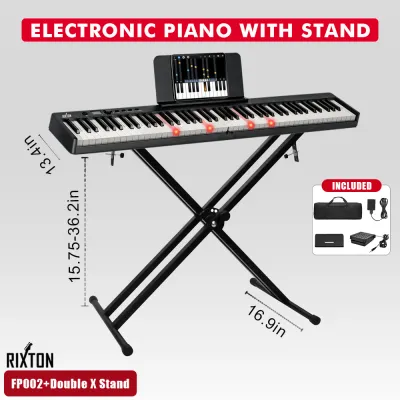
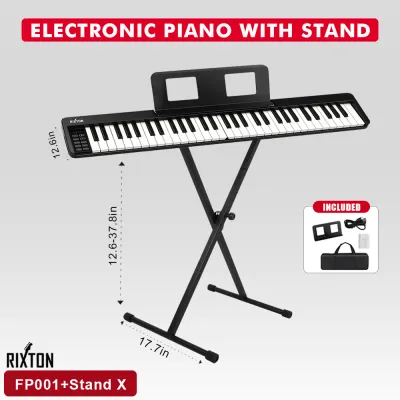
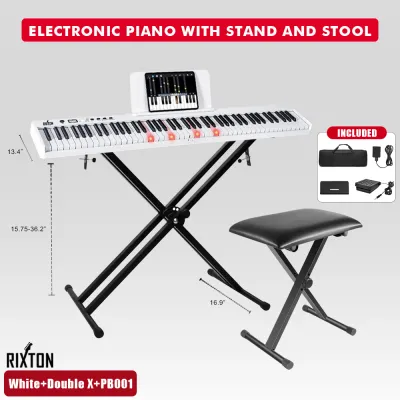
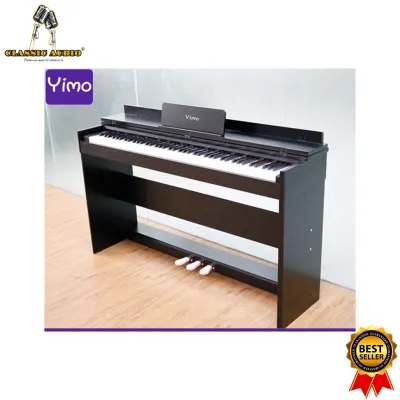
Prices are valid at publication and may change. Please refer to the product page for the latest price.
Fully weighted keys use actual weights or mechanical linkages to replicate the heavy feel of acoustic keys, which is essential for developing proper classical technique. Semi-weighted keys use springs combined with light weights, offering some resistance but feeling noticeably lighter and faster. Synth-action keys are entirely spring-loaded, offering very little resistance and feeling more like an organ. For a beginner, starting on a fully weighted keyboard is highly recommended to prevent the development of poor hand habits that are difficult to correct later.
Another vital specification is the polyphony count, which refers to the maximum number of individual notes or voices the piano can produce simultaneously. When you play a chord and press the sustain pedal, the piano continues to play those notes while you move to the next ones. If an instrument has a low polyphony count, such as 32 notes, older sustained notes will abruptly cut off to make room for new ones. For smooth, expressive playing, beginners should look for an instrument with a polyphony count of at least 64, though 128 is ideal for long-term progress.
Connectivity options are equally important for modern learners who want to utilize technology to speed up their practice. A dedicated headphone jack is essential for quiet practice sessions, especially in dense residential areas or shared family spaces. Additionally, a USB-to-Host or MIDI port allows you to connect the piano to a tablet, smartphone, or computer. This connection enables the use of interactive learning applications, sheet music readers, and music production software, transforming your keyboard into an interactive educational tool.
Evaluating the Rixton 88 Keys Piano
To assess the Rixton 88 keys piano accurately, you must carefully examine its official product specifications rather than relying on generic marketing descriptions. Many budget-friendly keyboards are advertised as having “touch-sensitive” or “weighted” keys, but these terms can be misleading. You should verify whether the specific Rixton model you are viewing features true graded hammer action or if it utilizes a lighter semi-weighted key system. Semi-weighted keys are common in this price bracket, offering a compromise that is easier on the budget but less realistic for formal piano training.

Build quality and physical stability are also crucial, particularly for a full-size 88-key instrument which occupies a significant amount of space. You should check the materials used in the chassis; lightweight plastic bodies are highly portable but may flex or vibrate when played enthusiastically. Ensure that the piano is paired with a sturdy, double-brace X-stand or a dedicated wooden cabinet stand to prevent wobbling. Furthermore, verify the type of sustain pedal included in the package, as a substantial, metal piano-style pedal offers far better control than a small, plastic foot switch.
In the Philippines, after-sales support and warranty coverage are critical considerations for electronic goods. Before purchasing a Rixton piano, check the seller’s warranty policy to see if they offer a local warranty or if you must ship the unit back internationally for repairs. Look for sellers who provide clear contact information and have a reputation for responsive customer service. Because budget electronics can occasionally experience component issues due to high humidity, having access to local repair options or a straightforward return policy provides essential peace of mind.
Rixton vs. Established Digital Piano Alternatives
When comparing the Rixton 88 keys piano to entry-level models from established brands like Yamaha, Casio, Roland, or Korg, the most obvious difference is the price-to-feature ratio. Rixton models are generally positioned at a fraction of the cost of mainstream digital pianos, making them highly attractive to absolute beginners who are hesitant to invest a large sum of ₱ upfront. However, this lower price point often comes with trade-offs in key action realism and sound engine sophistication that you must carefully weigh.
Sound quality is a major point of divergence between budget brands and established manufacturers. Mainstream brands invest heavily in high-fidelity acoustic sampling, capturing the complex resonances of multi-million-peso concert grand pianos at various dynamic levels. Budget digital pianos often use simpler, compressed sound samples that can sound repetitive or artificial, particularly through the built-in speakers. When evaluating sound, pay close attention to how the tone decays after a key is struck and whether the speakers distort at higher volumes.
Long-term durability and resale value are also areas where established brands hold a distinct advantage. Mainstream digital pianos are built to withstand years of daily practice, and their internal sensors are designed to maintain consistent touch sensitivity over time. If you decide to upgrade to a higher-end model in the future, or if you find that the piano is no longer being used, a recognized brand name retains a significant portion of its value on the local secondhand market. Conversely, lesser-known budget brands tend to depreciate rapidly and can be more difficult to resell.
Decision Framework: Which Piano Should You Choose?
The Rixton 88 keys piano is a suitable choice if your budget is strictly limited and you want to test your interest in the instrument without a major financial commitment. It provides a full-size layout that allows you to learn basic note geography, practice simple hand coordination, and explore digital features at an accessible price point. If your primary goal is casual playing, learning pop songs, or using the keyboard as a MIDI controller for basic music production, a budget-friendly model can serve your needs well during the initial stages of your journey.
On the other hand, you should consider saving for an entry-level model from an established brand if you are committed to formal classical piano lessons. Developing the proper finger strength, wrist flexibility, and expressive control required for advanced repertoire demands a highly realistic graded hammer action that budget models rarely provide. Investing in a more robust instrument from the start ensures that you will not outgrow its capabilities within your first year of study, saving you the hassle and expense of an early upgrade.
If you remain undecided, the best course of action is to verify the feel and sound of different instruments in person. Visit a local music store in your area to try out various key actions, paying close attention to how heavy the keys feel and how responsive they are to your touch. If you are purchasing online, carefully read the product specifications, check the e-commerce platform’s return policies, and look for detailed video demonstrations that showcase the actual sound of the instrument without external audio enhancement.
Frequently Asked Questions (FAQ)
Is an 88-key digital piano necessary for a complete beginner?
While you can learn the absolute basics of music theory and simple melodies on a smaller 61-key keyboard, an 88-key digital piano is highly recommended from the beginning. A full-size keyboard ensures that you develop correct spatial awareness and do not run out of keys when practicing classical pieces or modern arrangements. Starting with 88 keys also prevents the need to purchase a replacement instrument once your lessons progress past the beginner stage, making it a more cost-effective choice in the long run.
Can I connect the Rixton piano to learning apps on my tablet?
To connect any digital piano to a tablet or computer for use with learning apps, you must verify that the instrument features a USB-to-Host port or built-in Bluetooth MIDI. This connection transmits MIDI data, which tells the app exactly which notes you are playing and when, allowing the software to provide real-time feedback. Before purchasing, check the specific Rixton model’s user manual or official specification sheet to confirm its compatibility with your operating system, and ensure you have the correct adapter cable for your tablet.

Community discussion
Share your experience or ask a question. Comments are reviewed before publication.