
When you are a beginner guitarist trying to master your first chords and read scrolling tabs, your focus should be entirely on your finger placement and rhythm. Balancing your phone on your knee, propping it against a pile of books, or squinting at a screen flat on a table only leads to frustration and poor posture. A dedicated guitar phone clip solves this common hurdle by securing your mobile device directly to your instrument, keeping your learning materials right in your line of sight. To find a mount that supports your practice sessions without causing distraction, you must prioritize features like clamping security, flexible articulation, protective padding, and effective vibration dampening.
Choosing the right accessory requires understanding how these small tools interact with your instrument. A poorly designed clip can slip mid-song, scratch your guitar’s finish, or shake so violently with every strum that the text becomes a blur. By focusing on the mechanical design and physical compatibility of the mount, you can establish a comfortable, ergonomic practice environment that keeps you motivated to play every day.
Key Features That Make or Break Your Practice Session
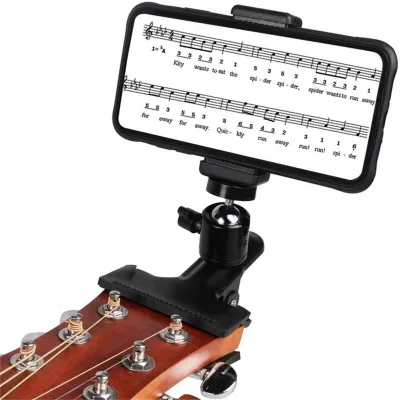
The primary job of a guitar phone clip is to hold your device securely in place while you play, but not all clamping mechanisms are created equal. The most common design is the spring-loaded headstock clamp, which functions much like a heavy-duty peg. These are incredibly quick to attach and remove, making them ideal if you share your instrument or pack up your gear frequently. Another option is the screw-tightened bracket, which offers a more permanent and adjustable grip but takes longer to set up. Soundhole clips, on the other hand, slide directly onto the edge of your acoustic guitar’s soundboard, positioning the screen closer to your picking hand for a different viewing perspective.
Products mentioned in this guide
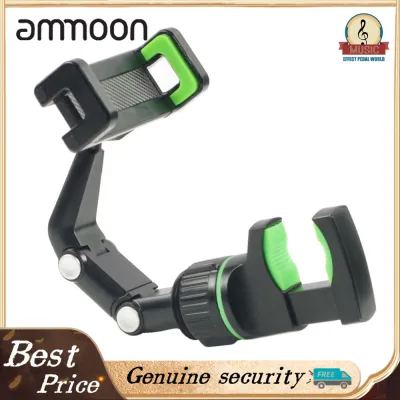
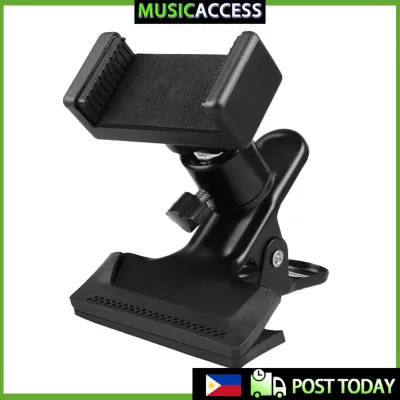
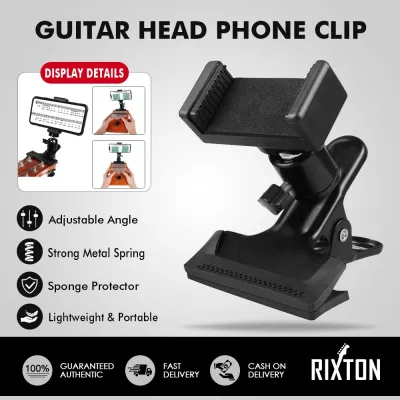
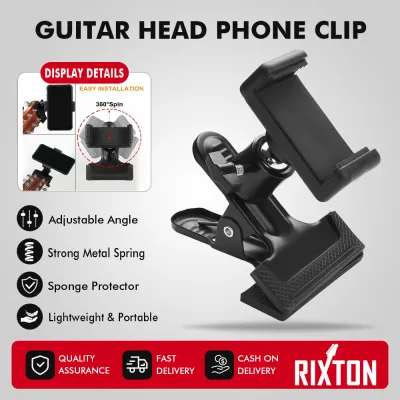
Prices are valid at publication and may change. Please refer to the product page for the latest price.
Regardless of the clamping style, the ability to adjust the viewing angle is absolutely critical for reading small tab notation. Look for a mount that features a robust ball joint or a flexible gooseneck arm. A high-quality ball joint allows for 360-degree rotation, enabling you to quickly switch between portrait mode for vertical chord sheets and landscape mode for wide, scrolling tablature. This adjustability also helps you angle the screen away from overhead light fixtures or bright tropical sunlight streaming through a window, preventing glare from washing out your screen.
Protective padding is another non-negotiable feature that directly impacts the longevity of your instrument. The clamp jaws must be lined with soft, high-density materials such as silicone, vulcanized rubber, or thick felt. In warm, humid environments, wood can expand slightly, and certain guitar finishes—especially delicate nitrocellulose or thin lacquers—can become softer and more susceptible to pressure marks. Without adequate padding, the hard plastic or metal edges of a cheap clamp can easily bite into the wood, leaving permanent dents or scratches on your headstock or soundboard.
Finally, consider the overall build quality of the adjustment collars and tension screws. Plastic threads can easily strip if over-tightened, especially when subjected to regular adjustments. Opting for a clip with reinforced metal threads or heavy-duty composite plastics ensures that the joint remains tight over months of daily use. Spending a little extra, perhaps investing ₱500 to ₱1,500 in a well-constructed mount, can save you from the costly mistake of a dropped phone or a damaged guitar neck.
Matching the Mount to Your Guitar Type
Your choice of phone clip should be heavily influenced by the specific type of guitar you play, as different body styles and neck shapes present unique mounting challenges. Acoustic guitars, with their hollow bodies and large soundboards, offer two primary mounting locations: the headstock and the soundhole. A headstock mount keeps the phone at the end of the neck, which is excellent for keeping your eyes near your fretting hand. However, because acoustic guitars are relatively lightweight, adding a heavy smartphone to the very tip of the headstock can alter the instrument’s balance, making the neck feel slightly heavy during long standing sessions.

If you prefer a soundhole mount for your acoustic, you must ensure the clip is designed specifically for the thickness of a standard soundboard. These clips place the phone right next to your strumming hand, which keeps the screen incredibly close and easy to read. The trade-off is that a soundhole mount can occasionally get in the way of vigorous strumming patterns, especially for beginners who are still developing control over their right-hand motion. Additionally, you must be careful not to clamp the device too tightly against the delicate spruce or cedar top wood.
Electric guitars, with their solid bodies and varied headstock shapes, require a different approach. Many electric guitars feature highly angled headstocks or asymmetrical tuner layouts, such as the classic six-in-line configuration. A standard spring clamp might struggle to find a flat, secure surface to grip on these designs without interfering with the tuning pegs. For solid-body electrics, look for compact headstock clips with narrow, adjustable jaws that can sneak between the tuning posts, or consider body-mounting options that attach to the strap button or the upper horn of the guitar.
Classical guitars present their own set of rules due to their wider, thicker necks and slotted headstocks. Standard headstock clips designed for thin electric necks often cannot open wide enough to grip a classical headstock securely. Furthermore, classical guitars traditionally feature incredibly delicate finishes, such as French polish or thin water-based lacquers, which are highly sensitive to pressure. If you practice on a classical guitar, a specialized wide-jaw clamp with extra-soft silicone padding is essential to prevent structural and cosmetic damage.
Ensuring Phone and Case Compatibility
Before purchasing any phone clip, you must verify that the clamp jaws can physically accommodate your specific mobile device. Most manufacturers list the minimum and maximum opening width of their clamps in millimeters or inches. Take a moment to measure your phone, keeping in mind that you should always measure it with its protective case on. If you use a heavy-duty, rugged case to protect your phone from accidental drops on tiled floors, the added thickness and width can easily exceed the capacity of a standard, low-profile guitar clip.
Camera bumps are another modern design element that can interfere with a secure grip. Many contemporary smartphones feature large, protruding camera modules on the back. If the phone clip’s backing plate is completely flat, a prominent camera bump can cause the phone to sit crookedly in the clamp, reducing the contact surface area and increasing the risk of the phone slipping out. Look for clips that feature a recessed backing plate or adjustable side grips that hold the phone by its edges, leaving the back of the device completely clear.
Weight capacity is a critical factor that is often overlooked by beginner players. Larger “Max” or “Ultra” smartphones, especially when housed in thick protective cases, can weigh a significant amount. This weight exerts a constant downward leverage on the clip’s ball joint or articulating arm. If the joint is weak or made of low-grade plastic, the weight of your phone will cause the screen to slowly droop downward while you play, forcing you to constantly interrupt your practice to push the screen back up. If you plan to use a small tablet or an oversized phone for reading sheet music, you must seek out heavy-duty mounts specifically rated for larger payloads.
Managing Stability and Vibration During Play
When you play the guitar, the physical act of fretting, strumming, and plucking transmits energy throughout the entire instrument. This resonance is what makes the guitar sound beautiful, but it also means that the headstock and body are constantly vibrating. If your phone clip lacks proper stability, these micro-vibrations will travel directly into the mount, causing your phone screen to shake. Trying to read tiny tab numbers or chord diagrams on a vibrating screen can quickly lead to eye strain, headaches, and general frustration.
To combat this issue, high-quality guitar clips incorporate vibration-dampening materials into their design. Look for mounts that feature thick, rubberized inserts inside the phone cradle and around the main clamp. These rubber components act as shock absorbers, isolating your phone from the natural resonance of the wood. Additionally, shorter, stiffer mounting arms are inherently more stable than long, flexible goosenecks. While a long gooseneck offers maximum adjustability, it acts like a spring, amplifying every movement of your guitar and causing the phone to bounce with every heavy strum.
There are several clear signs that a phone clip is too loose or poorly balanced for active practice. If you notice the phone shifting position when you transition between open chords, or if the clamp rotates slightly on the headstock when you move your arm, the grip is insufficient. A loose mount not only threatens the safety of your phone but also dampens the natural sustain of your guitar by absorbing too much of the neck’s vibration. Ensuring a tight, padded, and structurally rigid connection is the only way to keep your screen perfectly still while you play.
Pre-Purchase Checklist for Beginner Guitarists
To ensure you get the right accessory the first time, use this practical checklist when browsing online marketplaces or visiting your local music store:
- Measure Your Setup: Use a ruler to measure the width and thickness of your phone with its case on, as well as the thickness of your guitar's headstock or soundboard edge.
- Verify the Return Policy: Because guitar dimensions vary wildly between brands, always buy from a seller on your preferred ecommerce platform that offers a clear, hassle-free return policy in case the clamp does not fit your specific instrument.
- Read Targeted Reviews: Search the user reviews specifically for keywords like "acoustic," "electric," "classical," or your specific phone model to see if other players have encountered stability or fitment issues.
- Prioritize Ergonomics: Choose a mount that allows you to position the screen at eye level or slightly below, ensuring you can read your tabs without hunching your back or straining your neck during long practice sessions.
- Check for Spare Parts: Some premium brands offer replaceable rubber pads or extra adjustment knobs, which can extend the lifespan of your mount if a small piece gets lost in your gig bag.
Frequently Asked Questions (FAQ)
Can I use a standard desk phone stand instead of a guitar clip?
While a standard desk phone stand or a music stand can hold your device, they lack the portability and direct line-of-sight advantages of an instrument-mounted clip. A desk stand requires a flat surface nearby, which limits where you can practice and often forces you to turn your head away from your hands to read the screen. This constant head-turning can disrupt your playing posture and slow down your learning progress. A guitar clip keeps the screen directly in your peripheral vision, allowing you to monitor your fretting hand and the chord chart simultaneously. Furthermore, a clip-on mount is incredibly portable, fitting easily into your gig bag pocket so you can practice anywhere, whether you are in a bedroom, a park, or a friend’s house.
Will a soundhole clip affect my acoustic guitar's tone?
Yes, attaching any object directly to the soundboard of an acoustic guitar will have a minor physical impact on its tone and volume. The top wood of an acoustic guitar acts as a soundboard, vibrating to project the sound of the strings. Clamping a plastic or metal phone holder to the edge of the soundhole adds mass and dampens these vibrations, which can slightly reduce the guitar’s overall volume and sustain. However, for bedroom practice and learning basic chords, this tonal difference is usually negligible and will not hinder your progress. If you are recording a performance or playing live where maximum acoustic projection is required, it is best to remove the soundhole clip and opt for a headstock mount or a freestanding music stand instead.

Community discussion
Share your experience or ask a question. Comments are reviewed before publication.