
Choosing your first acoustic guitar is an exciting milestone, but the variety of body shapes can be overwhelming. For a beginner, the ideal body size is not a universal standard; it depends on your physical frame, your musical goals, and your practice environment. The three most common acoustic guitar body shapes—parlor, concert, and dreadnought—each offer a distinct balance of physical comfort, volume, and tonal character. A parlor guitar is compact and highly portable, making it exceptionally comfortable for smaller players and fingerstyle enthusiasts. A concert guitar serves as an ergonomic middle ground, offering a balanced sound that handles both strumming and fingerpicking with ease. A dreadnought is the large, traditional powerhouse of the acoustic world, delivering the robust volume and deep bass required for heavy strumming and group performances. By understanding how these physical designs affect your playing experience, you can confidently select an instrument that keeps you motivated to practice every day.
How Body Size Affects Sound and Playability
To understand why these three shapes sound and feel so different, it helps to look at the physics of an acoustic guitar. The body of the guitar acts as a natural amplifier. A larger body cavity holds more air and features a larger soundboard area, allowing it to move more air and produce deeper bass frequencies and higher overall volume. Conversely, a smaller body cavity restricts air movement, which naturally rolls off the low-end bass and emphasizes the midrange and treble frequencies.
Beyond the sound, the physical dimensions of the body dictate how comfortable the instrument is to hold. The “waist” of the guitar—the curved middle section—plays a crucial role in how the instrument sits on your leg when playing seated. A deeply curved waist lowers the guitar’s resting height, bringing the neck closer to your body and reducing wrist strain. Additionally, body depth determines how far you must wrap your strumming arm over the instrument. A deep body can force your shoulder into an awkward, elevated position, which can lead to muscle fatigue during long practice sessions, particularly in warm, humid climates.
Products mentioned in this guide

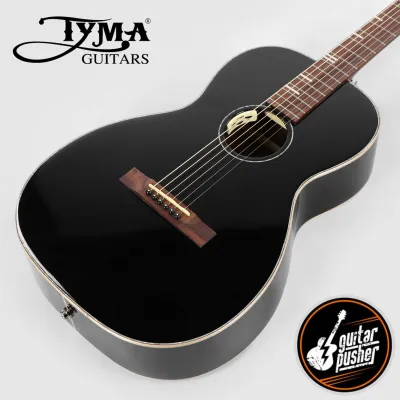
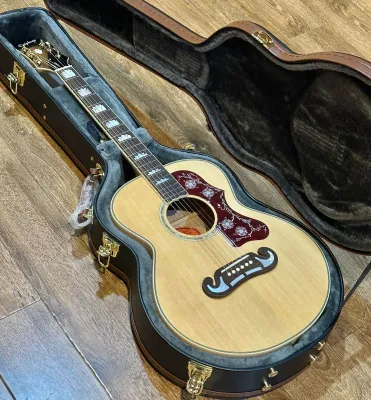
Prices are valid at publication and may change. Please refer to the product page for the latest price.
Finally, body size often correlates with scale length and nut width. Smaller guitars frequently feature shorter scale lengths, which places the frets slightly closer together and reduces string tension. For a beginner whose fingertips are not yet calloused, lower string tension makes pressing down chords significantly easier.
Parlor Guitar: The Compact Choice for Travel and Fingerstyle
The parlor guitar is the smallest of the three traditional shapes, tracing its heritage back to when instruments were designed to be played in small living rooms or “parlors.” Typically characterized by an elongated, narrow body and a waist that is less pronounced than a concert model, the parlor guitar is incredibly lightweight and portable. Its compact footprint makes it an exceptional choice for younger players, individuals with smaller physical frames, or anyone who wants a comfortable “couch guitar” that can be played effortlessly while relaxing.

Tonally, the parlor guitar is punchy, focused, and highly articulate in the midrange. Because the small soundbox does not generate overwhelming bass, individual notes ring out with exceptional clarity. This tonal profile is highly suited for fingerstyle playing, acoustic blues, and folk music, where note separation is more important than raw volume. However, this compact design does come with trade-offs. A parlor guitar has a lower volume ceiling; if you strum it aggressively with a heavy pick, the sound can compress and become muddy rather than getting louder.
When shopping for a parlor guitar, it is essential to check the manufacturer’s specification sheet. While many parlor models feature a standard nut width, some are designed with wider nuts to accommodate fingerstyle players who need extra space between the strings. Additionally, verify the scale length; a very short scale length is highly comfortable for small hands but may feel cramped if you have long fingers.
Concert Guitar: The Balanced Middle Ground
The concert guitar, often referred to as a “000” or “OM” depending on the brand, represents the ultimate compromise in the acoustic guitar world. It features a body that is larger than a parlor but noticeably sleeker and shallower than a dreadnought. The defining physical characteristic of the concert guitar is its tight, curvaceous waist. This deep curve allows the guitar to sit low and secure on your thigh, which naturally aligns your fretting hand and reduces shoulder strain.
This balanced physical design translates directly into a balanced acoustic voice. The concert guitar produces a clear, even frequency response across the entire musical spectrum. The bass is present without being boomy, the midranges are warm, and the trebles are crisp. This versatility makes the concert shape the absolute safest starting point for undecided beginners. Whether you want to practice delicate fingerpicking, strum along to pop songs, or learn flatpicking patterns, the concert guitar adapts beautifully to almost any playing style.
For beginners browsing online marketplaces, the concert guitar is highly recommended because of its predictable ergonomics. It fits a wide range of body types comfortably, making it an easy instrument to play for hours at a time. It also handles moderate strumming without distorting, providing enough volume for home practice and small gatherings without overpowering your singing voice.
Dreadnought Guitar: The Standard for Strumming and Volume
The dreadnought is the most popular and recognizable acoustic guitar shape in the world. The design features broad shoulders, a wide waist, and a deep body cavity. This massive soundbox acts as a powerful acoustic engine, moving a substantial volume of air to produce a loud, booming sound with a rich, prominent bass response.
If your musical goals involve strumming chords with a pick, playing in a band, or performing genres like country, bluegrass, pop, or rock, the dreadnought is the traditional standard. Its high volume ceiling means that the harder you strum, the louder it gets, allowing you to project your music clearly even in noisy environments. The deep bass response provides a satisfying, full-bodied cushion for vocal accompaniment.
However, the dreadnought’s large size can be a significant physical hurdle for beginners. The wide lower bout forces your strumming arm to reach up and over a thick body, which can cause shoulder discomfort or even pain if you have a smaller frame or shorter arms. Additionally, the longer scale length typical of dreadnoughts increases string tension, requiring more finger strength to press down chords cleanly. When purchasing online, always verify the body depth and lower bout width to ensure you can comfortably wrap your arms around the instrument. If possible, test a similar-sized instrument in a local shop to ensure you can maintain a relaxed, natural posture while playing.
Side-by-Side Comparison: Parlor vs Concert vs Dreadnought
To help you quickly contrast these three popular body shapes, the following table summarizes their key physical and tonal characteristics.
| Body Shape | Typical Body Depth | Tonal Character | Best Playing Style | Ideal Player Frame |
|---|---|---|---|---|
| Parlor | Shallow (approx. 90–100 mm) | Midrange-focused, punchy, clear | Fingerstyle, blues, light strumming | Smaller frames, travelers, couch players |
| Concert | Medium (approx. 100–105 mm) | Balanced, articulate, even | Mixed styles, light strumming, fingerpicking | Average frames, versatile players |
| Dreadnought | Deep (approx. 115–125 mm) | Bass-heavy, loud, resonant | Heavy strumming, flatpicking, vocal backing | Larger frames, players needing high volume |
Please note that these dimensions and tonal descriptions are general guidelines. The exact measurements, scale lengths, and sound profiles can vary significantly depending on the manufacturer’s design choices and the specific tonewoods used for the top, back, and sides. Use this comparison matrix as a preliminary filter to narrow down your options before diving into the detailed specifications of individual models.
How to Choose the Right Size for Your Specific Situation
Making your final decision comes down to matching your physical comfort with your musical aspirations. If you are a smaller player, a frequent traveler, or someone who primarily wants to practice quietly at home, a parlor guitar is an exceptional choice. Its compact size ensures you will not struggle with physical fatigue, and its focused midrange is perfect for intimate fingerstyle sessions.
If you are unsure of your preferred playing style and want an instrument that can do a little bit of everything, choose a concert guitar. Its ergonomic waist makes it incredibly comfortable to play while seated, and its balanced tone ensures that whether you are strumming chords or plucking individual strings, the guitar will respond beautifully. It is the most versatile option for the average beginner.
If you are physically comfortable with a larger instrument, want to focus heavily on strumming with a pick, and need enough volume to sing over or play alongside other instruments, the dreadnought is your best match. The deep bass and powerful projection are unmatched, making it the classic choice for singer-songwriters and rhythm players.
Before finalizing your purchase on any online marketplace, always verify the exact product specifications. Pay close attention to the scale length, body depth, and nut width. Additionally, if you live in a tropical climate with high humidity, such as the Philippines, remember that solid wood guitars are highly sensitive to moisture. High humidity can cause the wood to swell, raising the string action and making the guitar harder to play. Regardless of the body size you choose, consider investing in a padded gig bag or hard case along with a simple humidity control pack to keep your new instrument stable, playable, and sounding its best for years to come.
Frequently Asked Questions (FAQ)
Is a parlor guitar too quiet for playing with others?
Yes, a parlor guitar is naturally quieter than a concert or dreadnought because of its smaller soundboard and shallower body depth. In an unplugged ensemble setting with louder instruments like dreadnoughts, violins, or hand drums, a parlor guitar can easily get drowned out. However, if you plan to play with others, you can look for an acoustic-electric parlor guitar that features a built-in pickup, allowing you to plug into an amplifier to boost your volume to any level required.
Can a beginner play a dreadnought if they have small hands?
Yes, a beginner with small hands can absolutely play a dreadnought, because hand comfort is determined by the neck profile, nut width, and scale length rather than the overall size of the guitar body. A dreadnought with a slim neck profile and a narrow nut width (such as 1.68 inches or 43 mm) can feel very manageable for small hands. The primary challenge of a dreadnought for smaller players is not hand size, but rather the physical bulk of the body, which can cause shoulder and arm strain.
Do I need to buy a specific case for a parlor guitar?
Yes, you will generally need to purchase a case or gig bag specifically designed for a parlor guitar. Standard acoustic guitar cases and gig bags are sized to fit dreadnoughts or large classical guitars. If you place a compact parlor guitar inside a standard dreadnought case, the instrument will slide around during transport, which can lead to scratches, dents, or structural damage. Always check the interior dimensions of the case or look for bags explicitly labeled for parlor or 3/4-size guitars to ensure a snug, protective fit.

Community discussion
Share your experience or ask a question. Comments are reviewed before publication.