
Choosing between an organ keyboard and a digital piano is a fundamental decision that shapes your musical journey, technique, and daily practice habits. While both instruments feature black and white keys, they are designed for entirely different musical traditions, playing styles, and tactile experiences. If your musical goals center on the rich, swirling textures of gospel, jazz, blues, or classic rock, an organ keyboard equipped with physical drawbars and a fast, unweighted keybed is the appropriate tool. Conversely, if you aim to master classical compositions, contemporary pop ballads, or develop the finger strength required for an acoustic piano, a digital piano with fully weighted, hammer-action keys is the correct investment. Evaluating your core repertoire, physical space, and technical requirements before committing to either instrument will ensure you choose the right setup for your creative aspirations.
Core Differences in Sound Generation and Key Action
The fundamental difference between these two instruments lies in how they produce sound and how their keys respond to your touch. Organ keyboards use physical modeling or specialized sampling to recreate the continuous, additive synthesis of classic tonewheel organs or the wind-driven pipes of traditional church organs. When you press a key on an organ, the sound is continuous; it sustains at a constant volume for as long as the key is held down. Digital pianos, by contrast, rely on high-resolution, multi-layered samples of acoustic grand pianos. These samples capture the natural decay of a struck string, where the sound gradually fades away over time, and the tone changes dynamically depending on how hard the key is struck.
The physical key action of each instrument is tailored to these sound generation methods. Organ keyboards typically feature “waterfall” keys, which have slightly rounded front edges and no projecting lip. They are unweighted or semi-weighted, offering very little resistance. This design allows players to perform rapid palm glides, smears, and quick trills without injuring their hands. Digital pianos employ fully weighted, hammer-action keybeds that mechanically mimic the leverage, weight, and resistance of an acoustic piano’s wooden hammers. The keys are heavier to press down, and they rebound with a distinct physical inertia.
Products mentioned in this guide
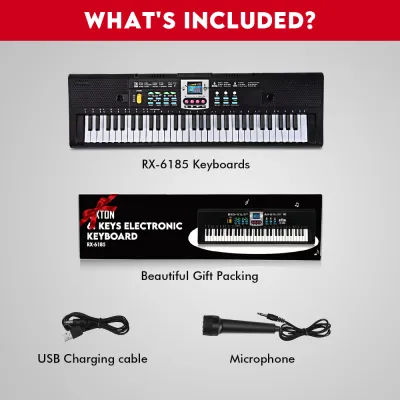
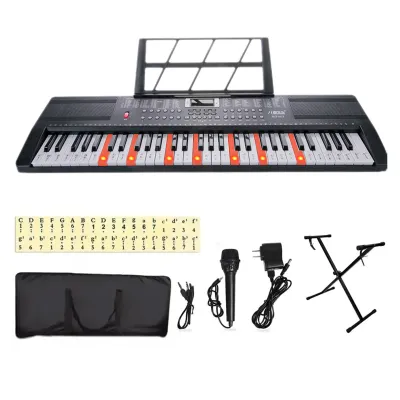
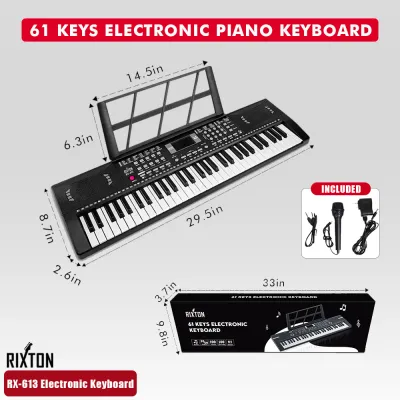
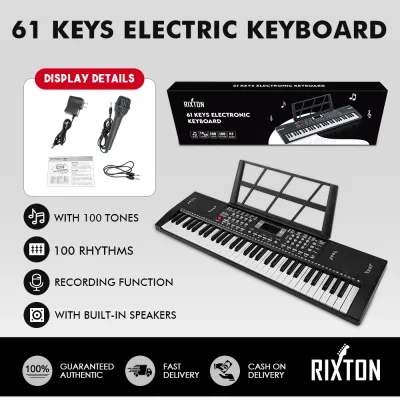
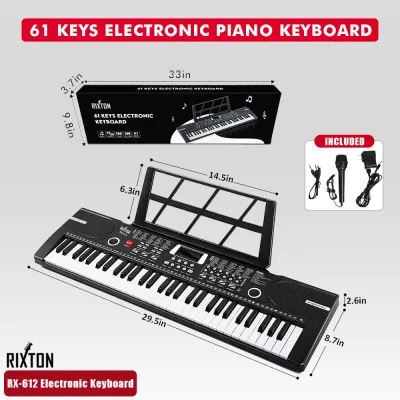
Prices are valid at publication and may change. Please refer to the product page for the latest price.
These physical differences directly affect your playing technique, finger strength development, and dynamic control. The physical feedback of weighted keys is essential for developing finger independence and hand strength. Playing a digital piano teaches you to control the volume and tone through the velocity of your finger strike. On an organ, volume is not controlled by how hard you strike the key, but rather by an expression pedal or the drawbar settings. Attempting to learn classical piano technique on an unweighted organ keyboard can lead to poor hand posture and a lack of dynamic control when transitioning to an acoustic piano. Conversely, playing fast organ licks on a heavy digital piano keybed can quickly fatigue your fingers and limit your speed.
Matching the Instrument to Your Musical Goals and Genres
Aligning your preferred musical genres and performance needs with the appropriate keyboard type is crucial for long-term satisfaction. For musicians performing in gospel bands, jazz trios, classic rock groups, or leading church worship services, the organ keyboard is indispensable. These genres rely heavily on real-time manipulation of the sound. An organist constantly adjusts physical drawbars to change the harmonic mix, toggles the speed of a rotary speaker simulation, and engages percussion effects to punctuate specific chords. Dual-manual setups, featuring two stacked keyboards, are common in these settings, allowing the player to perform a bassline or accompaniment on the lower manual while soloing on the upper manual.

For classical training, contemporary pop, jazz piano, and formal beginner lessons, a digital piano is the correct choice. Standard piano pedagogy is built around the physical response of a weighted 88-key keyboard. Students must learn how to express emotion and nuance through key velocity, a skill that requires the physical resistance of hammer action.
Trying to use one instrument for the other’s repertoire leads to significant compromises. If you play classical piano pieces on an organ keyboard, you lose all touch sensitivity and dynamic expression, making the piece sound flat and mechanical. If you attempt to play a high-energy gospel organ solo on a digital piano, the heavy keys will slow down your runs, and the lack of physical drawbars will prevent you from shaping the tone dynamically during the performance.
Essential Specifications to Verify Before Purchase
When comparing specific models in a store or online, a detailed checklist of technical specifications will help you make an informed decision. Begin by evaluating the keybed specifics. Most digital pianos feature a full 88-key layout, which is necessary for advanced classical and contemporary repertoire. Organ keyboards often come in 61-key or 73-key configurations, which are lighter and more portable but may limit your range for two-handed piano arrangements. Look for velocity sensitivity curves on digital pianos to customize how the sound engine responds to your touch. For organ keyboards, check if the keybed supports aftertouch, a feature that allows you to modulate the sound by applying extra pressure after the key is fully depressed.
Next, examine the sound engine and physical controls. For an organ keyboard, prioritize models with physical drawbars (usually nine sliders) rather than digital menus, as real-time adjustment is crucial during live play. Ensure the sound engine includes high-quality rotary speaker emulation and adjustable key click and percussion settings. For digital pianos, look for advanced acoustic modeling features such as string resonance, damper resonance, and key-off simulation, which recreate the complex sympathetic vibrations of an acoustic piano’s internal cabinet.
Finally, review the connectivity and expansion options on the back panel. Both types should offer MIDI connectivity via traditional 5-pin ports or USB-to-Host to connect to computers or external sound modules. Ensure there are dedicated stereo audio outputs for connecting to amplifiers or PA systems, which is especially important in tropical climates where high humidity can affect built-in speaker longevity over time. Check the pedal inputs as well. A digital piano requires a sustain pedal input that supports half-damper action, while an organ keyboard requires a continuous expression pedal input to control volume and swell dynamically.
Practical Constraints: Space, Portability, and Budget
Your physical environment and financial requirements are major factors in this decision. Consider your physical living space first. A full console digital piano with a wooden cabinet is a heavy, permanent piece of furniture that requires dedicated floor space and is difficult to move alone. Stage pianos are more portable but still heavy due to the weighted key mechanism. In contrast, a single-manual 61-key organ keyboard is highly portable, lightweight, and easy to store in a closet or transport in a gig bag. However, if you opt for a dual-manual organ setup with a dedicated stand and pedalboard, the physical footprint can easily equal or exceed that of a digital piano.
Budget for necessary accessories alongside the instrument itself. A digital piano usually requires a sturdy stand, a comfortable bench, and a high-quality sustain pedal. An organ keyboard setup often demands additional investments, such as a continuous expression pedal, a rotary speaker speed switch, and potentially a specialized bass pedalboard if you plan to play traditional organ basslines with your feet.
When evaluating options, check local retail prices in Philippine Pesos (₱) at authorized musical instrument distributors. While entry-level portable keyboards are relatively affordable, high-quality digital pianos and dedicated organ keyboards represent a significant financial investment. Compare the long-term value by examining the build quality, the manufacturer’s warranty coverage in the local market, and the depth of features. A well-built instrument with a robust warranty is highly desirable, especially in humid tropical environments where electronic components and key sensors require reliable protection against moisture.
Decision Framework: Which Instrument Should You Choose?
To finalize your purchase decision, evaluate your specific user profile against the following criteria:
Choose an organ keyboard if your primary focus is on tonewheel emulation, real-time drawbar control, and specific organ-centric genres like gospel, jazz, or classic rock. This instrument is designed for players who prioritize sound modulation, fast key response, and the unique performance techniques associated with classic organs.
Choose a digital piano if your priority is developing proper piano technique, playing classical or contemporary acoustic repertoire, and experiencing the expressive dynamics of a fully weighted, hammer-action keybed. This is the standard choice for students, classical pianists, and songwriters who require an authentic acoustic feel.
Before committing, verify if you actually need a hybrid stage keyboard or a master MIDI controller paired with software instruments. Some stage keyboards offer split keybeds or semi-weighted actions that attempt to bridge the gap, while a MIDI controller allows you to trigger high-quality piano and organ software on a laptop, providing a flexible setup that can adapt to both playing styles as your skills evolve.
Frequently Asked Questions (FAQ)
Can I play piano pieces on an organ keyboard?
While you can physically press the keys on an organ keyboard to trigger piano sounds, playing expressive piano pieces is highly challenging. The lack of weighted hammer action makes it difficult to control dynamics, often resulting in a flat, unexpressive performance. Additionally, the typical 61-key range of most organ keyboards will limit your ability to play classical pieces that require the lower and upper registers of a full 88-key piano.
Do digital pianos have good organ sounds?
Most digital pianos include a few organ presets, such as pipe organ or jazz organ tones, but they are generally limited in performance flexibility. They lack the physical drawbars needed for real-time harmonic shaping, do not support dual-manual configurations, and rarely feature advanced rotary speaker controls. Furthermore, playing fast organ techniques on a heavy, weighted piano keybed can be physically tiring and less responsive than playing on a dedicated unweighted organ keyboard.

Community discussion
Share your experience or ask a question. Comments are reviewed before publication.