
Direct Answer: Which Medeli Instrument Fits Your Needs?
Choosing between a Medeli portable keyboard and a Medeli digital piano depends entirely on your immediate musical goals, your preferred learning style, and your physical space. Beginners who want to explore music production, experiment with diverse instrument sounds, or play along with automated backing tracks will find a portable arranger keyboard to be the most suitable option. Conversely, those who aim to study classical piano, develop traditional finger strength, and replicate the tactile response of an acoustic instrument should opt for a digital piano. Because features vary widely across the brand’s lineup, verifying the exact specifications of your chosen model is essential before making a final purchase.
Core Differences: Arranger Keyboards vs. Digital Pianos
To make an informed decision, it is helpful to understand how these two categories of instruments differ in design, function, and primary purpose. Portable arranger keyboards are designed as versatile musical workstations. They emphasize a vast library of built-in rhythms, diverse instrument voices, and auto-accompaniment features that allow a single player to sound like a full band. These instruments typically feature lightweight, unweighted keys that make them highly portable and easy to set up on temporary stands.

Digital pianos, on the other hand, are engineered with a singular focus: replicating the acoustic piano experience as closely as possible. Instead of offering hundreds of synthetic sounds, they prioritize high-quality acoustic piano samples and weighted key actions that mimic the physical hammers of a traditional piano. Many digital pianos are built into heavy, furniture-style cabinets that provide excellent stability but make them difficult to move once assembled.
Products mentioned in this guide
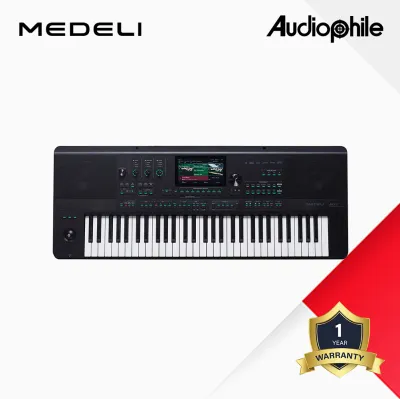
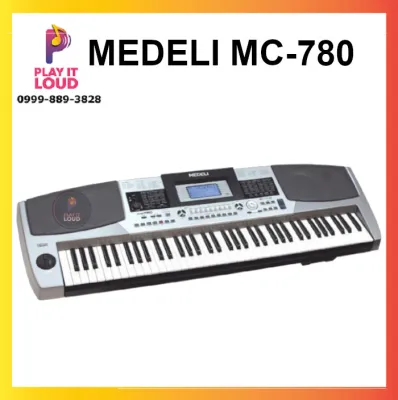
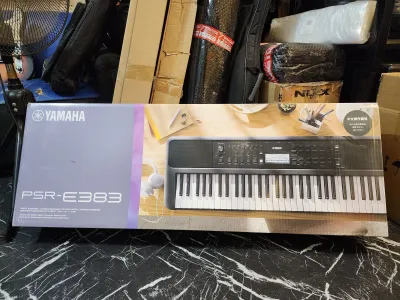
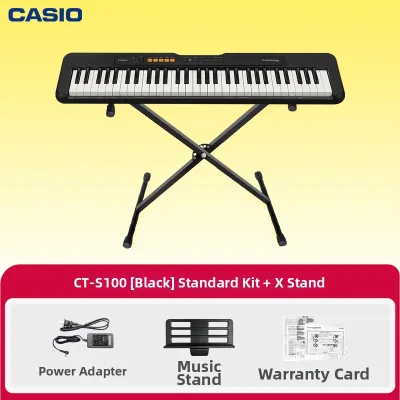
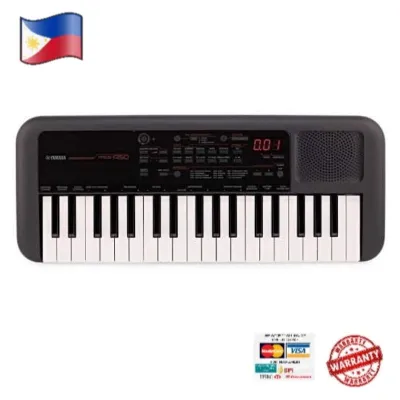
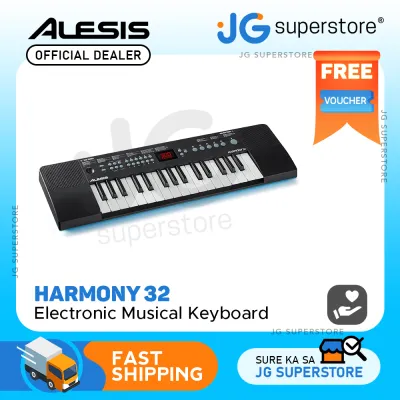
Prices are valid at publication and may change. Please refer to the product page for the latest price.
This structural difference creates a clear trade-off between versatility and tactile realism. A portable keyboard offers immense sonic variety and easy transport, but it cannot provide the physical resistance needed to develop proper classical technique. A digital piano provides the necessary resistance and expressive control for serious piano study, but it lacks the lightweight mobility and extensive arrangement features of a portable keyboard.
Aligning Your Choice with Learning Goals and Space
Your choice of instrument should align closely with your long-term learning goals. If you are enrolling in formal classical piano lessons, your instructor will likely require an instrument with 88 fully weighted keys. Learning on unweighted keys can lead to poor hand posture and make it difficult to transition to a real acoustic piano during exams or performances. However, if your goal is to play casual pop songs, write your own music, or perform in a modern band setting, a portable keyboard offers the flexibility and modern connectivity you need.
Physical space and environmental conditions are also critical factors, especially in tropical climates like the Philippines. Digital pianos often require a dedicated, permanent space in your home due to their size and weight. When positioning a digital piano, you must avoid areas with high humidity or direct sunlight, such as spots next to open windows, to protect the internal electronics and cabinet materials. Portable keyboards offer much more flexibility, as they can be easily packed away into a gig bag or stored in a closet when not in use.
Budget allocation is another practical consideration for beginners. Entry-level portable keyboards are generally more affordable, making them an excellent low-risk option if you are testing your interest in music. Digital pianos represent a more significant financial investment due to the complex mechanical key actions and larger cabinet structures. Before making a decision, it is wise to check current retail listings in ₱ at authorized local music stores to compare pricing and find an option that fits your financial plan.
Spec Sheet Checklist: What to Verify Before Buying
Before finalizing your purchase, you should carefully review the official product manual or spec sheet to ensure the instrument meets your technical requirements.
Key Action and Count First, verify the total number of keys on the instrument. While standard digital pianos almost always feature 88 keys, portable keyboards may come with 61, 76, or 88 keys. Next, check the key action type. Look for terms like “fully weighted” or “hammer action” if you want a realistic piano feel. If the spec sheet lists “synth-action” or “semi-weighted,” the keys will feel light and springy, which is suitable for organ or synthesizer playing but not for classical piano training.
Polyphony and Connectivity Polyphony refers to the number of individual notes the instrument can sound simultaneously. For beginners, a minimum of 64-note polyphony is recommended, though 128-note or higher is ideal for complex classical pieces or layered keyboard sounds. Additionally, check the available connectivity ports. Ensure the instrument has a USB-MIDI port if you plan to connect it to a computer or tablet for learning apps. If you wish to practice silently, verify the presence of a standard headphone jack.
Power and Accessories Confirm how the instrument is powered. Many portable keyboards can run on batteries, which is highly convenient for outdoor playing or areas with unstable power grids. Digital pianos almost always require a dedicated wall outlet. Finally, check what accessories are included in the box. Some models bundle a sustain pedal, a music rest, or a power adapter, while others require you to purchase these essential items separately.
Final Decision Framework: Choose A or Choose B
To simplify your decision, use this straightforward framework to guide your purchase.
Choose a Medeli portable keyboard if:
- You want to experiment with hundreds of different instrument sounds, rhythms, and backing tracks.
- You have limited space at home and need an instrument that can be easily stored or transported.
- You are on a tighter budget and want a low-risk entry point into learning music.
- Your primary interest is in modern pop music, songwriting, or casual playing.
Choose a Medeli digital piano if:
- You are committed to formal classical piano lessons and need to develop proper finger strength.
- You want the authentic feel and expressive control of weighted, hammer-action keys.
- You have a dedicated space in your home to set up a permanent, furniture-style instrument.
- You prioritize high-quality acoustic piano tones over a wide variety of synthetic sounds.
If you remain undecided, the best course of action is to visit an authorized local music retailer. Testing the physical key feel and hearing the sound quality in person will provide the clarity you need to make a confident investment in your musical journey.
Frequently Asked Questions (FAQ)
Can I use a Medeli portable keyboard to learn classical piano?
While a beginner can use a portable keyboard to learn basic music theory, note reading, and simple chord shapes, it is not suitable for long-term classical piano study. Classical repertoire relies heavily on dynamic expression and touch sensitivity, which require the resistance of fully weighted hammer-action keys. Learning on unweighted or semi-weighted keys can prevent you from developing the necessary finger strength and control. Always check the specific model’s user manual to verify the key action type before committing to a classical curriculum.
Do Medeli digital pianos require regular tuning like acoustic pianos?
No, digital pianos do not require regular tuning. Unlike acoustic pianos, which rely on physical strings under high tension that shift with temperature and humidity changes, digital pianos produce sound using digital samples stored on internal microchips. General maintenance for a digital piano is minimal. It involves keeping the keys clean with a dry, soft cloth, protecting the unit from extreme tropical humidity, and ensuring all power and pedal cables are securely connected.

Community discussion
Share your experience or ask a question. Comments are reviewed before publication.