
Mastering the art of spending money requires more than just tracking every centavo. It demands a fundamental shift in how you view value, utility, and long-term security.
For young professionals in the Philippines, the temptation to spend is amplified by seamless digital payment systems and targeted social media advertisements. Cultural pressures like lifestyle inflation and social obligations further complicate daily money management.
Finding the right personal finance books can provide the structural blueprint needed to resist these external pressures. The most effective financial literature focuses on intentional allocation rather than extreme deprivation.
Products mentioned in this guide
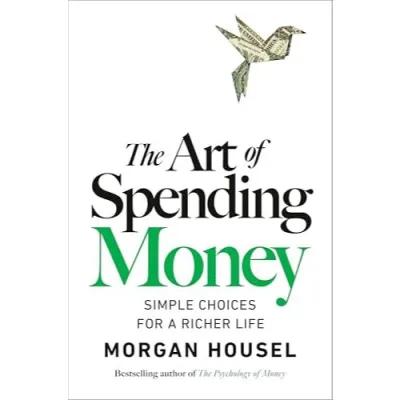

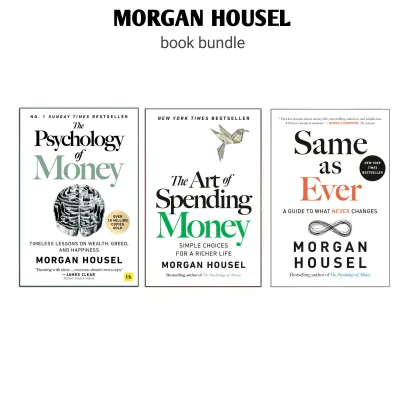

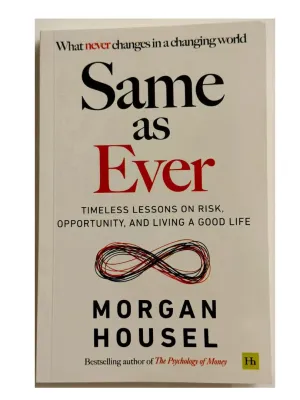
Prices are valid at publication and may change. Please refer to the product page for the latest price.
These books teach you how to align your daily expenditures with your personal values. By studying established financial frameworks, you can transition from passive consumption to active, mindful money management.
Defining Your Financial Goals Before Choosing a Book
Before purchasing any financial literature, you must evaluate your current career stage, income stability, and immediate financial obligations. An entry-level professional earning a modest salary in a major city faces vastly different challenges than a mid-level manager with multiple income streams.
If you are currently managing entry-level compensation, your primary focus should be on cash flow optimization and building a basic safety net. Complex investment strategies that require significant capital are less urgent at this stage.
Identifying your specific spending pain points is the next critical step in narrowing down your reading list. If you find yourself frequently succumbing to impulse purchases during midnight sales on e-commerce platforms, you require books that address behavioral psychology and habit formation.
Conversely, if you struggle to keep track of where your money goes despite having a disciplined mindset, your priority should be books that offer practical, step-by-step budgeting systems.
It is also essential to distinguish between immediate cash flow management and long-term wealth-building objectives. Reading an advanced book on stock market investing when you do not yet have an emergency fund can lead to implementation paralysis or risky financial decisions.
A structured approach involves mastering the day-to-day mechanics of saving and spending before moving on to complex asset allocation models.
Finally, consider how your unique lifestyle choices and career trajectory influence your financial needs. Factors such as supporting family members, renting an apartment close to your workplace, or planning for further education require tailored financial strategies.
Selecting a book that aligns with these personal realities ensures that the advice you receive is directly applicable to your daily life.
Key Evaluation Criteria for Personal Finance Books
With thousands of personal finance titles available, establishing a strict evaluation framework prevents you from wasting time on low-quality or irrelevant advice. Start by verifying the author’s professional credentials, regulatory background, and the historical accuracy of their financial recommendations.

Authors who have navigated diverse economic cycles or possess formal financial planning credentials generally offer more stable, reliable guidance than self-proclaimed internet gurus who rely on short-term market trends.
A high-quality personal finance book must address behavioral psychology and emotional triggers rather than relying solely on mathematical formulas. While the math of personal finance is relatively simple—spend less than you earn—the execution is deeply emotional.
Books that ignore the psychological aspects of spending often fail to help readers sustain long-term habits. They do not address the root causes of emotional spending, peer pressure, and consumerism.
You must also verify whether the core principles of the book are adaptable to different economic environments. Many popular personal finance books are written by foreign authors and depend heavily on specific tax laws, retirement accounts, or investment vehicles that do not exist in the Philippines.
Look for literature where the underlying concepts—such as paying yourself first, automating savings, and understanding opportunity cost—can be easily translated to local banking systems and investment options.
Lastly, assess the presence of actionable worksheets, tracking templates, or step-by-step implementation guides within the book. Passive reading rarely leads to financial transformation.
Books that include diagnostic quizzes, monthly budget templates, or clear action steps at the end of each chapter provide significantly higher practical value.
Core Themes and Book Categories for Mindful Spending
To build a comprehensive understanding of financial discipline, it helps to categorize personal finance literature into distinct thematic areas. Each category addresses a different aspect of the art of spending money, allowing you to target your specific knowledge gaps systematically.
By understanding these categories, you can curate a balanced reading list that addresses both your psychological relationship with money and the practical systems required to manage it. This structured approach prevents overwhelm and ensures a steady progression from basic mindset shifts to advanced wealth preservation.
Behavioral Psychology and Spending Habits
Books in this category focus on the cognitive biases and emotional triggers that influence our purchasing decisions. They help you understand why you buy things you do not need, how marketing strategies exploit your psychological vulnerabilities, and how to redefine your personal values around material possessions.
By focusing on mindset shifts, these resources teach you to view spending not as a chore to be restricted, but as a conscious choice that reflects your true priorities.
These books frequently utilize behavioral case studies and psychological frameworks to explain common spending anomalies. This includes the tendency to spend more when using digital payment methods compared to physical cash.
Understanding these concepts allows you to design your environment to resist temptation. Useful strategies include removing saved card details from shopping applications or implementing a mandatory waiting period before major purchases.
However, purely motivational books have distinct limitations. While they are excellent for inspiring change and shifting your perspective, they often lack the actionable, measurable steps required for daily expense tracking. To achieve lasting financial discipline, you must pair behavioral insights with practical budgeting systems.
Practical Budgeting and Cash Flow Systems
This category of literature provides concrete, step-by-step systems for tracking income, managing expenses, and allocating funds effectively. These books move beyond theory to offer specific methodologies, such as the envelope system, zero-based budgeting, or proportional allocation models like the 50/30/20 rule.
They teach you how to categorize your expenses, plan for irregular costs, and ensure that your savings are secured before discretionary spending begins.
When evaluating books in this category, look for resources that provide downloadable templates, digital integration tips, or printable trackers. The best systems are those that can be easily maintained without requiring hours of manual data entry every week.
Furthermore, ensure that the recommended systems can be adapted to modern digital banking, mobile wallets, and cashless payment methods.
In an increasingly digital economy, traditional cash-envelope systems must be translated into virtual envelopes or separate digital bank accounts to remain practical and convenient for daily use.
Long-Term Wealth and Investment Principles
Once you have mastered mindful spending and established a stable cash flow system, you can transition to books that focus on growing your wealth through strategic asset allocation. This category of literature helps you understand how to make your saved money work for you, shifting your focus from short-term preservation to long-term financial independence.
It is crucial to differentiate between active trading guides and passive, long-term investing principles. For most young professionals, passive investing strategies that focus on low-cost index funds or diversified portfolios are more suitable than high-risk, active trading.
Look for books that offer clear, jargon-free explanations of risk tolerance, the impact of inflation on cash savings, and the power of compound interest over time.
Be highly cautious of literature that promises guaranteed returns, quick wealth schemes, or highly speculative trading strategies. Reputable financial authors emphasize patience, diversification, and consistent contributions over speculative risk-taking, aligning your investment strategy with your overall financial security.
How to Verify Editions, Formats, and Local Relevance
Before finalizing your purchase of any personal finance book, you must verify several critical details to ensure the content is accurate, accessible, and applicable to your situation. Start by checking the publication date and edition number.
Financial regulations, tax laws, and economic contexts change over time. Reading an outdated edition can lead to applying obsolete advice that may no longer be legally or financially sound.
Next, compare physical books, e-books, and audiobooks based on your personal learning style and daily routine. If a book relies heavily on visual charts, complex budgeting tables, or interactive worksheets, a physical copy or an e-book with high-resolution graphics is generally superior to an audiobook.
However, if you have a long daily commute or prefer to absorb conceptual, mindset-focused content while multitasking, an audiobook format can be highly efficient.
You must also determine how much local adaptation the book’s core principles require. While universal concepts like living below your means apply everywhere, specific advice regarding retirement accounts, tax deductions, and local investment platforms must be verified against the regulatory framework of the Philippines.
When reading foreign authors, take the time to research the local equivalents of the financial instruments they discuss. This includes substituting local voluntary retirement funds or Pag-IBIG MP2 for foreign retirement accounts.
Finally, compare your purchasing options carefully to ensure you are buying authentic copies. When shopping on major e-commerce platforms or online marketplaces, verify the seller’s credentials, read customer reviews, and look for official publisher badges.
Purchasing pirated PDFs or low-quality, unauthorized physical reprints not only deprives authors of their livelihood but often results in missing pages, illegible charts, and formatting errors that ruin the reading experience. Whenever possible, support local independent bookstores or purchase directly from official publisher websites.
Frequently Asked Questions (FAQ)
How many personal finance books should I read at the same time?
It is highly recommended to focus on one core financial system or methodology at a time. Attempting to read multiple personal finance books simultaneously can lead to information overload and implementation paralysis, as different authors often advocate for conflicting strategies.
For example, one author might recommend aggressive debt repayment while another suggests building a large cash buffer first. Trying to execute both strategies at once can dilute your focus and progress.
Instead, adopt a balanced reading diet by alternating between mindset-focused literature and highly practical, technical workbooks. Read one conceptual book to shift your perspective, fully implement its core principles in your daily life, and only then move on to a practical workbook to refine your tracking and budgeting systems.
Are audiobooks effective for learning complex financial strategies?
Audiobooks are exceptionally effective for absorbing mindset shifts, behavioral psychology, and motivational financial concepts. Listening to discussions about consumer behavior, emotional spending triggers, and personal values during your daily commute or workout is an excellent way to reinforce positive financial habits without dedicated reading time.
However, for sections of a book that require detailed charts, complex mathematical formulas, or interactive budgeting worksheets, audiobooks are less effective.
For highly technical financial strategies, it is best to have a physical or e-book copy on hand. This allows you to pause, study the visual data, and fill out the worksheets at your own pace.
What should I do if a book's advice conflicts with my current bank's features?
When a book’s specific recommendation conflicts with your bank’s features, prioritize the underlying financial principle over the proprietary tool or account type mentioned.
For example, if a book advises using a specific automated sub-account feature that your local bank does not offer, you can achieve the same result by manually transferring funds to a separate digital bank account on payday.
Always consult your bank’s official documentation, fee structures, or customer service channels to verify transaction limits, transfer fees, and feature availability before setting up any automated system.
If the adaptation of a book’s advice involves high-risk investments, complex tax strategies, or significant capital, stop and consult a certified financial planner or a licensed professional in the Philippines to ensure compliance with local regulations.

Community discussion
Share your experience or ask a question. Comments are reviewed before publication.