
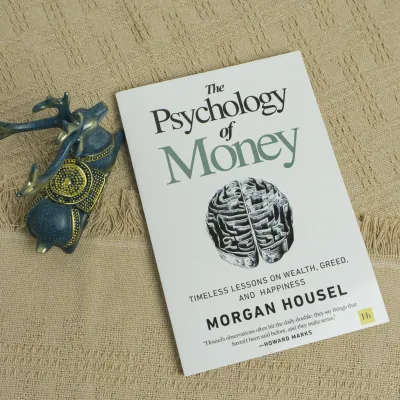
Morgan Housel’s The Psychology of Money is highly worth reading for anyone in the Philippines seeking to build sustainable financial habits. While traditional finance literature often treats money as a math problem to be solved with formulas and spreadsheets, this book argues that doing well with money is actually about how you behave. For readers navigating a unique economic landscape where financial decisions are deeply intertwined with family obligations, social expectations, and community ties, this behavioral approach is incredibly liberating.
Understanding the psychology behind your financial choices is far more valuable than memorizing complex stock market charts. Many people know they should save more and spend less, yet they still struggle to do so because emotions, pride, and social pressures get in the way. By focusing on the human element of finance, the book provides a framework that helps you identify your own behavioral blind spots and build a healthier, more resilient relationship with your wealth.
Whether you are a young professional earning your first salary, a member of the sandwich generation balancing multiple financial responsibilities, or someone looking to transition from basic savings to long-term investing, this book offers timeless wisdom. It does not promise quick riches or complex trading strategies; instead, it delivers a profound shift in mindset that can protect you from costly emotional mistakes and guide you toward genuine financial peace of mind.
Products mentioned in this guide
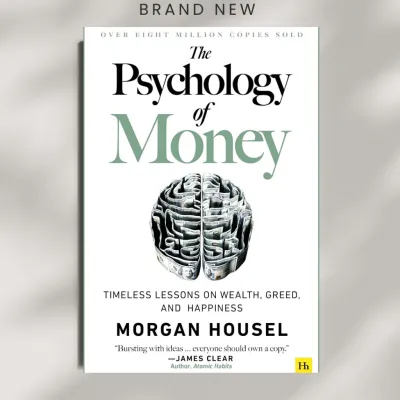
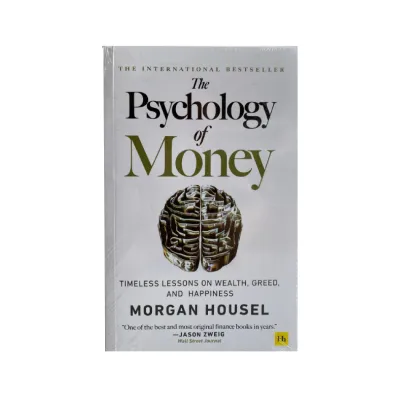
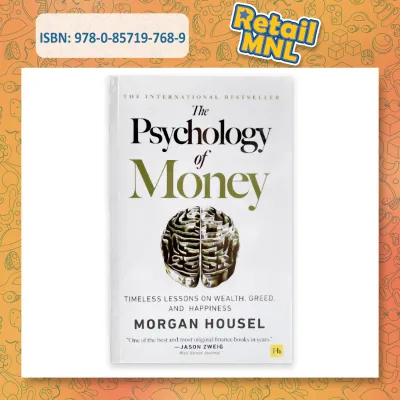

Prices are valid at publication and may change. Please refer to the product page for the latest price.
Core Concepts That Shift Your Financial Mindset
One of the most powerful concepts Housel introduces is the critical distinction between getting wealthy and staying wealthy. Getting money requires taking risks, maintaining an optimistic outlook, and putting yourself out there to seize opportunities. Staying money, however, requires an entirely different set of skills: humility, a healthy fear of how quickly success can be lost, and an acceptance that a portion of your achievements is always tied to luck. Survival—the ability to stay in the game without being forced to liquidate your assets during a downturn—is the ultimate financial strategy.
The book also challenges the traditional view of risk and luck, presenting them as two sides of the same coin. Every financial outcome is shaped by forces other than individual effort, meaning that success is rarely as simple as hard work, and failure is rarely as simple as laziness. Recognizing the role of luck helps cultivate humility during prosperous times, while understanding the role of risk fosters self-compassion when unexpected economic shifts disrupt your plans. This perspective is essential for maintaining emotional stability through the inevitable ups and downs of your financial journey.
Another paradigm shift is the idea of aiming to be “reasonable” rather than strictly “rational.” Modern economic models assume that people make decisions based purely on cold, mathematical logic. In reality, humans are emotional creatures who value security, comfort, and peace of mind. A financial plan that is mathematically perfect but keeps you awake at night with anxiety is bound to fail because you will likely abandon it during a market panic. Designing a reasonable plan that you can consistently stick to, even if it yields slightly lower theoretical returns, is far more effective in the long run.
Finally, Housel emphasizes the quiet power of compounding and the importance of time over raw performance. Building wealth is not about finding a single, high-yielding investment that doubles your money overnight; it is about making consistent, moderate decisions and letting them compound over decades. The most successful investors are not necessarily those who make the highest returns, but those who stay consistently invested over the longest period. This concept shifts your focus away from stressful, short-term market speculation and toward patient, long-term habit building.
Applying the Lessons to the Filipino Financial Context
The universal themes of The Psychology of Money take on a very specific meaning when applied to the cultural and economic realities of the Philippines. For many local readers, personal finance is rarely purely personal; it is a collective family endeavor. The “sandwich generation” dynamic is incredibly common, where working adults find themselves financially supporting both their aging parents and their own growing children. In this context, Housel’s emphasis on building a “room for error” is not just a theoretical recommendation, but a vital survival mechanism to protect the family from unexpected medical emergencies or sudden job losses.

Cultural pressures also play a massive role in how money is spent and perceived locally. The deeply ingrained value of social harmony and the desire to maintain social standing often lead to significant lifestyle inflation. Celebrating milestones with lavish feasts, buying gifts for extended family, and keeping up with the visible consumption patterns of peers can quickly drain a hard-earned salary. The book’s lesson on “knowing when you have enough” serves as a powerful counterweight to these pressures, encouraging readers to define their own financial boundaries rather than letting external expectations dictate their spending.
Furthermore, the traditional financial mindset in many households has historically favored physical cash savings or low-interest traditional bank accounts. While keeping money in cash feels safe and tangible, inflation quietly erodes its purchasing power over time, especially in a developing economy subject to price fluctuations. Applying the book’s lessons means recognizing that true financial security requires transitioning from a mindset of pure capital preservation to one of active wealth building. This involves accepting a reasonable amount of market risk to ensure your savings grow faster than the cost of living.
Navigating local economic volatility also requires a shift in how we view financial progress. In an environment where job security can be unpredictable and social safety nets are limited, having a high savings rate is far more important than having a high income. Housel notes that your savings rate is the one financial variable you have complete control over, regardless of market conditions. For local readers, focusing on increasing the gap between what they earn and what they spend provides a reliable buffer against economic uncertainty, offering a sense of control that external circumstances cannot easily take away.
What the Book Will Not Teach You
While The Psychology of Money is an exceptional tool for reshaping your mindset, it is important to understand its limitations so you can manage your expectations. This book is a philosophical and behavioral guide, meaning it intentionally avoids specific technical instructions. You will not find any concrete recommendations for local investment vehicles, such as Pag-IBIG MP2, Unit Investment Trust Funds (UITFs), or specific mutual funds. It does not explain the tax implications of investing in the local stock market or how to navigate the regulatory framework of the Bureau of Internal Revenue (BIR).
Additionally, readers looking for practical, day-to-day financial tools will need to look elsewhere. The book does not provide step-by-step budgeting templates, debt payoff calculators, or advice on which mobile apps to use for tracking daily expenses. It explains the psychological reasons why you should save and avoid debt, but it leaves the mechanical execution of those goals entirely up to you. If you need a highly structured, tactical guide to getting out of debt or managing a tight monthly budget, you will need to pair this book with more practical local resources.
Finally, the book is not designed for advanced investors seeking quantitative trading strategies, technical analysis charts, or complex real estate valuation formulas. Housel’s writing is deliberately simple and accessible, focusing on timeless behavioral truths rather than short-term market maneuvers. If your goal is to learn how to read candlestick charts, analyze corporate balance sheets, or execute high-frequency trades, the conceptual nature of this book may feel too basic for your current needs.
Actionable Steps to Implement the Book's Advice
To translate the theoretical insights of the book into sustainable daily habits, start by conducting a personal financial behavior audit. Review your bank statements and transaction history from the past few months, but do not just look at the numbers. Instead, try to recall your emotional state during your largest non-essential purchases. Were you feeling stressed after a long work week, celebrating a minor victory, or trying to impress colleagues? Identifying these emotional triggers is the first step toward building a behavioral defense system that prevents impulsive spending.
Next, define your personal “sleep-at-night” factor to guide your investment choices. This involves determining how much cash you need to keep in a highly liquid, low-yield account to feel completely secure, regardless of what the market is doing. For some, a three-month emergency fund is sufficient; for others, a full year of expenses is necessary to maintain peace of mind. Do not let online financial influencers pressure you into investing every single peso into volatile assets if doing so causes you constant anxiety. Your financial plan must prioritize psychological comfort over theoretical mathematical optimization.
Once you have established your comfort zone, leverage modern financial tools to automate your long-term compounding strategy. Many local digital banks and regulated investment platforms offer automated transfer features that allow you to schedule savings deposits or investment purchases on your payday. By automating these transactions, you remove the monthly emotional struggle of deciding whether to save or spend. This hands-off approach ensures that your wealth grows quietly and consistently in the background, allowing you to focus your energy on your career and personal life.
Finally, practice the discipline of keeping your financial goals private to protect yourself from social comparison. When you achieve a financial milestone, such as reaching a specific savings target or paying off a debt, resist the urge to share it on social media or discuss it widely with acquaintances. Keeping your financial progress quiet helps you stay focused on your personal definition of “enough” and shields you from the subtle social pressures that often trigger lifestyle creep and competitive spending.
Final Verdict: Is It the Right Book for You?
Ultimately, The Psychology of Money is an essential read for anyone who wants to build a healthier, more disciplined relationship with their finances. It is particularly valuable for young professionals who are just beginning to manage their own income, individuals who struggle with emotional spending, and anyone who feels overwhelmed by the complex jargon of traditional finance. By focusing on behavior rather than math, the book provides an accessible, highly relatable foundation that makes financial literacy feel achievable for everyone.
However, if you are an experienced investor who already possesses a highly disciplined savings routine and a clear understanding of your behavioral biases, you may find the book’s concepts somewhat familiar. If you are specifically looking for technical stock-picking strategies, real estate formulas, or localized tax advice, this book should not be your primary purchase. It is best viewed as a foundational mindset guide that should be paired with more technical, country-specific resources as your financial journey progresses.
If you decide to add this book to your reading list, consider which format best fits your daily routine and learning style. For those who spend hours commuting through heavy traffic, the audiobook version is an excellent way to turn idle travel time into a productive learning experience. If you prefer to take notes, highlight key passages, and reflect deeply on the concepts, a physical paperback or an e-book on a dedicated e-reader is highly recommended. Whichever format you choose, ensure you purchase from authorized local bookstores or official digital platforms to guarantee an authentic, high-quality copy.
Frequently Asked Questions (FAQ)
Is the book too technical for someone with no finance background?
No, the book is exceptionally accessible and does not require any prior knowledge of finance or economics. Morgan Housel avoids complex mathematical formulas and confusing industry jargon, choosing instead to explain key concepts through engaging historical anecdotes, real-life stories, and simple analogies. It is designed specifically for everyday readers, making it an ideal starting point for anyone looking to improve their financial literacy without feeling overwhelmed by technical details.
Where is the best place to buy the book locally?
You can purchase authentic copies of the book at major local brick-and-mortar bookstores located in shopping malls across the country. If you prefer shopping online, look for the official stores of these established retail chains on major ecommerce platforms, or purchase directly from reputable digital book platforms for e-book and audiobook versions. Be cautious of unusually cheap listings on online marketplaces, as these are often unauthorized, poorly printed counterfeit copies that may have missing pages or illegible text.

Community discussion
Share your experience or ask a question. Comments are reviewed before publication.