
Starting your personal finance journey can feel like trying to learn a new language. For many young Filipinos, the immediate instinct is to look for step-by-step guides on stock trading, cryptocurrency, or high-yield savings accounts. However, managing money is rarely a test of mathematical intelligence; instead, it is a test of behavior. This is why Morgan Housel’s The Psychology of Money is arguably the most valuable book you can read when you are just starting out.
Rather than drowning you in complex formulas or Wall Street jargon, this book focuses on how human emotions, history, and personal biases shape financial decisions. For a young adult navigating the unique economic landscape of the Philippines, establishing this behavioral foundation is far more critical than learning how to read a stock chart. It teaches you how to think about wealth before you begin earning and investing your hard-earned money.
What 'The Psychology of Money' Actually Teaches Beginners
The core premise of the book is that doing well with money has little to do with how smart you are and a lot to do with how you behave. Housel structures the book into short, digestible chapters that use historical anecdotes to illustrate how people interact with wealth.
Products mentioned in this guide
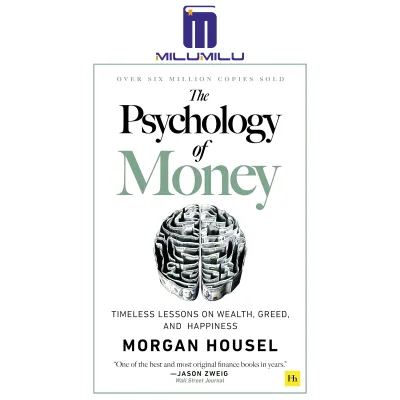
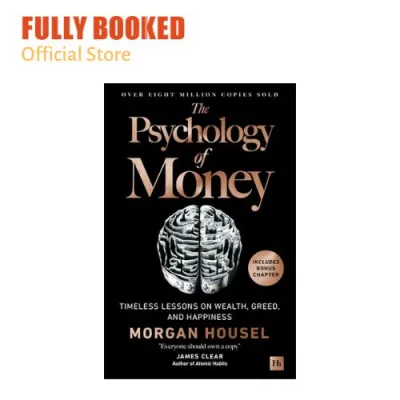
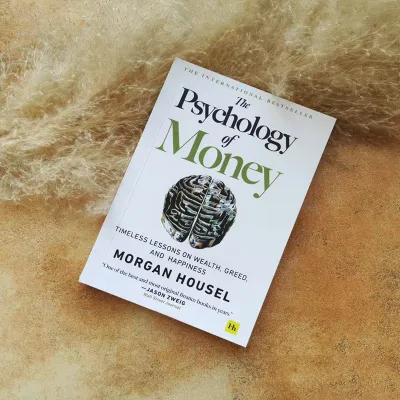
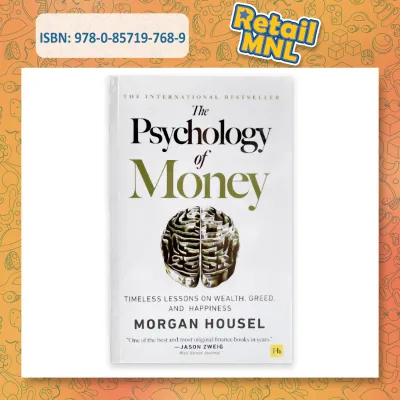
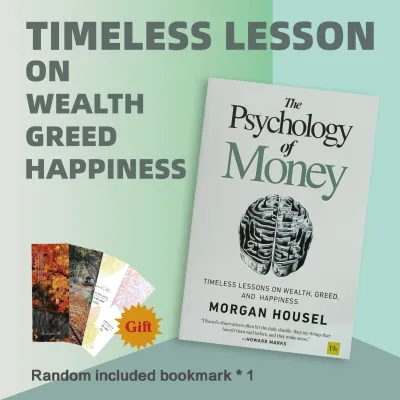

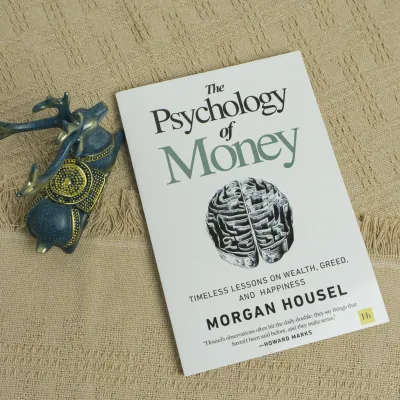
Prices are valid at publication and may change. Please refer to the product page for the latest price.
One of the most vital lessons for beginners is the distinction between getting wealthy and staying wealthy. Getting wealthy requires taking risks, maintaining optimism, and putting yourself out there. Staying wealthy, however, requires a completely different skillset: humility, a healthy fear of losing what you have, and an acceptance that luck played a role in your success. This distinction helps beginners understand that financial success is not a one-time achievement but a continuous practice of preservation.
The book also demystifies the concept of compounding, comparing it to a silent force that yields massive results over time if left undisturbed. Housel emphasizes that the key to compounding is not chasing the highest possible returns, but rather securing pretty good returns that you can sustain uninterrupted for the longest period.
Additionally, Housel explores how our personal histories dictate our financial choices. Someone who grew up during an economic crisis will view financial risk very differently from someone who grew up during a bull market. Recognizing that no one is crazy for how they view money allows you to examine your own financial habits without shame, paving the way for healthier decision-making.
How These Concepts Apply to Young Filipinos
While the book uses global and historical examples, its core principles are highly relevant to the socio-economic realities faced by young adults in the Philippines.

Perhaps the most immediate application is navigating the cultural expectations of the “sandwich generation.” Many young Filipino professionals face immense pressure to support their parents, siblings, or extended family members as soon as they receive their first salary. Whether you are managing a starting salary of ₱25,000 a month or trying to build your first ₱100,000 emergency fund, Housel’s emphasis on building “room for error” and prioritizing financial flexibility over raw optimization is incredibly liberating. It provides a framework for understanding that saving money for an unspecified emergency—or to support family—is not a waste of capital, but a rational strategy for long-term survival.
Furthermore, young Filipinos must constantly battle the temptation of instant gratification. With the rise of digital wallets, easy online shopping platforms, and enticing buy-now-pay-later schemes, spending money has never been easier. When high local inflation threatens the purchasing power of your savings, the urge to spend today rather than save for tomorrow can feel justified. The book’s lessons on compounding serve as a powerful reminder that patience and consistency are your best defenses against economic volatility.
Finally, landing a first corporate job or securing a high-paying freelance client often leads to lifestyle creep. It is easy to justify upgrading your smartphone, dining out at expensive restaurants, or ordering premium coffee daily once you have disposable income. Housel’s chapter on “Enough” challenges you to define your own financial boundaries. By learning to keep your expectations in check even as your income rises, you can prevent lifestyle inflation from consuming your potential savings.
What the Book Misses for the Philippine Context
While The Psychology of Money is an excellent philosophical guide, it is not a step-by-step manual, and it does carry a distinct Western bias that local readers must keep in mind.
The most obvious gap is the complete absence of local investment vehicles. You will not find any mention of the Pag-IBIG MP2 program, which is a highly popular government-backed savings scheme among Filipinos. There is no discussion on voluntary contributions to the Social Security System (SSS), nor will you find guidance on navigating local digital banks, unit investment trust funds (UITFs), or the Philippine Stock Exchange.
Additionally, the book does not cover the practical tax implications or regulatory environments unique to the Philippines. Understanding how withholding taxes affect your salary, how to file taxes as a freelancer, or how local estate planning works are critical steps for building wealth locally, none of which are addressed in these chapters.
Because of these omissions, you cannot rely on this book alone to build your financial portfolio. The behavioral advice is invaluable, but it must be paired with actionable, market-specific execution steps. You will need to look elsewhere to learn the mechanics of opening a local brokerage account or setting up automated savings transfers.
How to Use This Book as Your Financial Foundation
To get the most out of Housel’s insights, you should treat the book as a philosophical foundation rather than a complete roadmap.
A great starting point is to pair your reading with localized personal finance resources. Once you understand the importance of compounding and saving, you can look into local personal finance communities, blogs, or podcasts that explain how to apply these concepts using Philippine financial instruments. For instance, you can take the book’s advice on consistent, low-risk saving and apply it directly by opening a Pag-IBIG MP2 account or utilizing high-yield savings accounts offered by local digital banks.
You can also create a personal financial behavior checklist based on the book’s chapters. Ask yourself hard questions: What is my personal “price of admission” when it comes to investment volatility? Am I saving money just to show off, or am I saving to gain control over my time? Writing down these answers will help you establish clear boundaries before you begin risking your capital in the market.
Lastly, use the book to set realistic expectations for your wealth-building journey. The Philippine financial space is filled with get-rich-quick schemes, unregulated investment promises, and social media influencers claiming to have found the secret to overnight wealth. Remembering Housel’s lessons on the role of luck and the slow, quiet nature of compounding will help you stay grounded, protect your capital, and avoid costly financial traps.
Frequently Asked Questions (FAQ)
Is 'The Psychology of Money' too advanced for someone with zero financial knowledge?
Not at all. The book is written in a highly accessible, story-driven style that completely avoids heavy mathematical formulas and dense financial jargon. Morgan Housel uses engaging historical anecdotes and real-life stories to explain complex economic behaviors. This narrative approach makes it an ideal starting point for absolute beginners, as it focuses on the emotional relationship we have with money rather than technical market analysis.
Should I read this before or after learning about local investing options?
It is highly recommended to read this book before you start exploring specific local investing options. Establishing emotional discipline and a healthy financial mindset first will protect you from making impulsive decisions when you eventually invest your money. Once you have internalized the principles of patience, risk management, and compounding, you will be much better equipped to evaluate local investment vehicles like digital banks, mutual funds, or government-backed savings programs.

Community discussion
Share your experience or ask a question. Comments are reviewed before publication.