
Deciding where to start your business education can feel overwhelming, especially when faced with expensive degree programs or dense academic textbooks. If you are looking for a clear, jargon-free introduction to how businesses actually work, The Personal MBA by Josh Kaufman is widely considered a premier starting point. It acts as a comprehensive map of the business landscape, making it highly attractive for Filipino beginners, young professionals, and aspiring side-hustlers who want to build a solid foundation without the financial burden of a formal graduate school program.
However, before you purchase a copy from an online marketplace, it is essential to evaluate whether this specific book aligns with your current knowledge level, learning style, and immediate career goals. While it offers an excellent bird’s-eye view of universal business principles, it is not a one-size-fits-all solution for every professional path. This self-assessment will help you determine if this book is the right investment for your personal library or if your time and resources would be better spent elsewhere.
What to Expect From The Personal MBA
The core premise of The Personal MBA is that you do not need to spend years in a classroom or take on massive debt to understand the fundamentals of successful businesses. Instead, the book focuses on universal principles that govern every business, from a multinational corporation to a small neighborhood convenience store or a freelance graphic design practice. It strips away academic jargon and replaces it with practical, real-world logic that you can immediately observe in your daily life.
Products mentioned in this guide
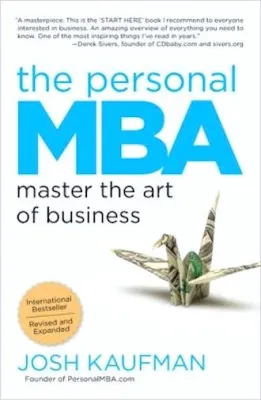
![[Brand New] The Personal MBA 10th Anniversary Edition by Josh Kaufman (Paperback)](https://img.lazcdn.com/g/p/ae7131f3e4c74a9cd71726352cce6209.jpg_400x400q80.jpg_.webp)
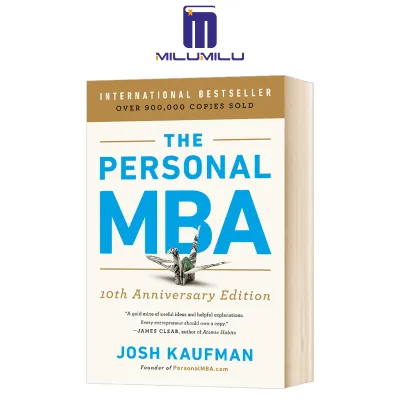
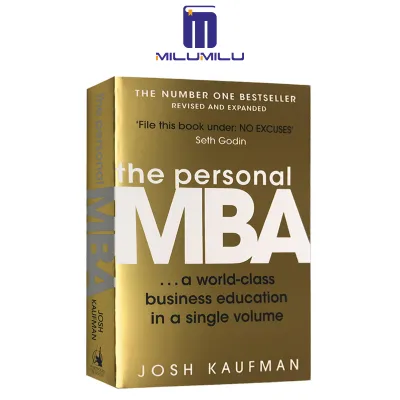
Prices are valid at publication and may change. Please refer to the product page for the latest price.
Rather than presenting long, narrative-driven case studies or complex mathematical proofs, the book is structured around “mental models.” These are short, self-contained concepts that explain specific aspects of business, such as value creation, marketing, sales, value delivery, and finance. Each concept is typically explained in just one or two pages, allowing you to digest complex ideas in bite-sized pieces during a busy commute or a quick lunch break.
This modular format makes the book highly accessible, but it also means the pacing is rapid. You will not find deep, exhaustive chapters on any single topic. Instead, you get a broad, interconnected web of ideas designed to help you think like a business owner. The author’s primary target audience consists of self-starters, early-stage entrepreneurs, and corporate employees who want to understand how different departments within a company interact and function as a cohesive system.
Self-Assessment: Is This Book a Good Fit for Your Current Level?
To determine if this book is the right fit for you, it helps to evaluate your current business knowledge baseline. If you are completely new to the world of commerce and find terms like “value proposition,” “overhead,” or “customer acquisition cost” confusing, this book will serve as an exceptional primer. It defines these terms clearly and places them within a logical framework. However, if you already hold a business degree or have years of experience managing a medium-sized enterprise, you may find many of the chapters too elementary, as they focus on foundational concepts rather than advanced, highly specialized corporate strategies.

Your specific learning goals should also guide your decision. If your objective is to gain a comprehensive, high-level understanding of how all the moving parts of a business fit together, The Personal MBA is an ideal match. It helps you see the big picture, which is incredibly valuable if you are planning to launch a new side hustle or transition into a management role. Conversely, if you have a narrow, immediate problem to solve—such as drafting a legally binding contract, configuring complex digital advertising algorithms, or performing advanced forensic accounting—this book will not provide the granular, step-by-step instructions you need.
Finally, consider your personal reading preferences and study habits. The book’s strength lies in its concise, concept-driven chapters, making it perfect for readers who prefer direct, actionable information over long-winded stories. If you enjoy reading business biographies that focus on the dramatic rise and fall of specific companies, you might find this book’s structured, textbook-adjacent style a bit dry. It is designed to be read slowly, referenced often, and treated more like a practical dictionary of business concepts than a continuous narrative.
When to Choose a Different Business Book Instead
There are several scenarios where The Personal MBA may not be the best choice for your current needs, and recognizing these early can save you both time and money. If your career path requires formal credentials, such as preparing for a certified public accountant exam or applying for a corporate finance role that demands rigorous quantitative analysis, you will need to rely on official academic textbooks and accredited university curricula. Universal business principles cannot substitute for the highly regulated, standardized knowledge required in these specialized fields.
Additionally, if you are looking for immediate, localized execution steps to start a business in the Philippines, you will need to supplement or replace this book with local guides and official resources. While the book explains the universal concept of “Value Delivery,” it cannot teach you how to register a sole proprietorship with the Department of Trade and Industry (DTI), secure a business permit from your local government unit, or navigate the tax filing systems of the Bureau of Internal Revenue (BIR). For these tasks, direct instructions from official government portals or consultations with local business advisors are indispensable.
If your learning style is highly interactive and you learn best by doing, you might also find a practical workbook or a specialized industry guide more useful. For instance, if you are launching a very specific type of business, such as a local café or an e-commerce store, a dedicated industry playbook that covers supply chain logistics, local sourcing, and niche marketing tactics will offer more immediate value than a broad overview of global business theory.
How to Get the Most Out of Your Reading Experience
If you decide that The Personal MBA is the right fit for your goals, adopting an active reading strategy will significantly improve your retention. Because the book contains hundreds of distinct mental models, reading it passively from cover to cover can easily lead to information overload. Consider keeping a dedicated notebook or digital document where you can write down key concepts in your own words, creating a personalized glossary that you can easily refer back to when making business decisions.
To truly internalize these concepts, try to apply them immediately to real-world scenarios in your daily life. If you currently run a small online shop, offer freelance services, or work in a corporate office, use your environment as a practical laboratory. Ask yourself how a concept like “Transaction” or “Value Creation” applies to your current clients or employers, and look for ways to optimize your daily tasks using the frameworks outlined in the book.
Lastly, set realistic expectations for your learning journey. Reading this book is an excellent first step, but it is not a magical shortcut to business success. True business acumen is built over time through a combination of theoretical knowledge and hands-on experimentation. Use the mental models in this book as a guide to minimize mistakes, but remember that real-world trial, error, and adaptation are where the most valuable lessons are truly learned.
Frequently Asked Questions (FAQ)
Is The Personal MBA available in digital and audio formats?
Yes, The Personal MBA is widely available in physical paperback, digital e-book, and audiobook formats across major global online bookstores and digital libraries. For busy professionals navigating long daily commutes or heavy traffic, the audiobook format can be an excellent way to turn travel time into productive learning. However, because the book is structured as a reference manual with hundreds of short, distinct concepts, many readers find that a physical copy or a digital e-book with highlighting and search capabilities is much easier to annotate, study, and reference over time.
Do I need a background in math or economics to understand this book?
No, you do not need any prior background in advanced mathematics or economics to fully understand and benefit from this book. The author intentionally avoids complex calculus, abstract macroeconomic theories, and intimidating financial formulas. Any quantitative concepts introduced, such as basic profit margins or break-even analyses, are explained using simple arithmetic and clear, real-world examples, making the material highly accessible to beginners who want to build their financial literacy from scratch.

Community discussion
Share your experience or ask a question. Comments are reviewed before publication.