
Deciding whether to invest your time and money in The Personal MBA by Josh Kaufman depends entirely on what you hope to learn. If you are a young professional, student, or aspiring entrepreneur in the Philippines looking for a comprehensive, high-level overview of how businesses function, this book is an exceptional resource. It demystifies complex corporate concepts and provides a shared vocabulary that can help you navigate professional environments with confidence.
However, if you are looking for a step-by-step guide to personal budgeting, retail investing, or navigating local financial systems, this is not the book for you. It is a business primer, not a personal finance manual. To determine if it deserves a spot on your bookshelf, you must evaluate how its broad mental models align with your current career stage, your specific learning goals, and the unique economic realities of the Philippine market.
What The Personal MBA Actually Covers (And What It Doesn't)
To get the most value out of The Personal MBA, you must first understand its scope. Josh Kaufman wrote this book to provide a self-directed alternative to traditional business school, focusing on the fundamental principles that drive all successful enterprises. The book is structured around “mental models”—short, conceptual explanations of core business disciplines including value creation, marketing, sales, value delivery, and systems design.
Products mentioned in this guide
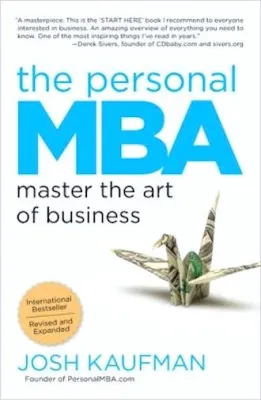
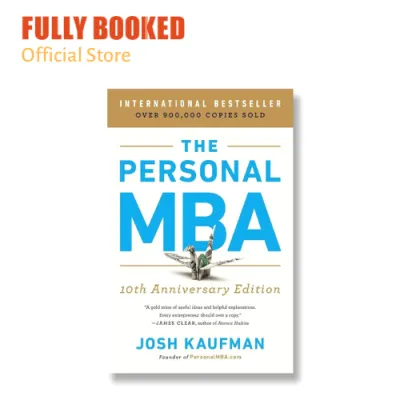
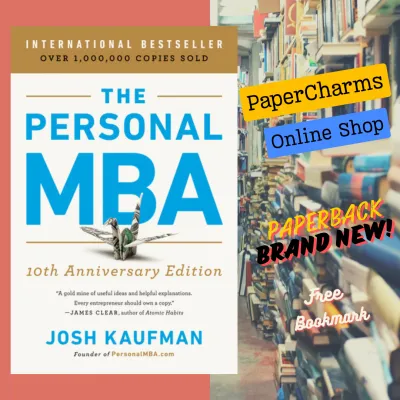
![[Brand New] The Personal MBA 10th Anniversary Edition by Josh Kaufman (Paperback)](https://img.lazcdn.com/g/p/ae7131f3e4c74a9cd71726352cce6209.jpg_400x400q80.jpg_.webp)
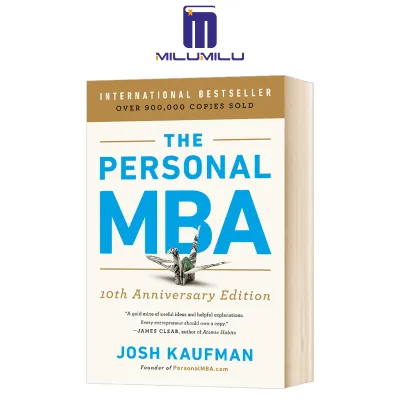
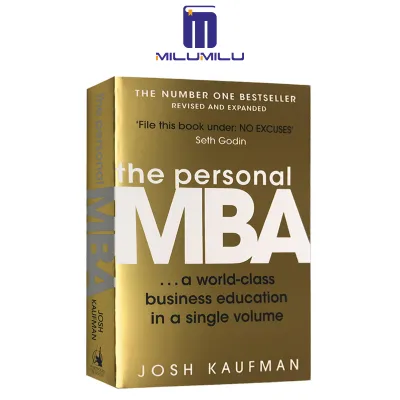
Prices are valid at publication and may change. Please refer to the product page for the latest price.
While the book does include a dedicated section on finance, this coverage is conceptual rather than technical. It explains the underlying logic of financial concepts like profit margins, leverage, cash flow, and compounding. However, it does not provide the deep, quantitative training you would find in a corporate accounting textbook. You will not find step-by-step instructions on how to build complex financial models, conduct advanced statistical analysis, or audit a balance sheet.
Furthermore, because the book is written for a global audience, it does not contain localized financial, legal, or tax advice. It will not teach you how to register a business with the Securities and Exchange Commission (SEC) or the Department of Trade and Industry (DTI). It also lacks information on local tax compliance under the Bureau of Internal Revenue (BIR). Before purchase, verify the edition, language, medium or file format, regional restrictions, device compatibility, and content completeness from an authorized source, as you should never infer specific edition contents from a title or cover alone.
Self-Assessment: Does Your Current Knowledge Level Match the Book?
Evaluating your current level of business literacy is the next step in deciding if this book is right for you. If you are a young professional working in a highly technical or specialized field—such as software development, healthcare, creative design, or engineering—you may find yourself feeling lost during cross-departmental meetings. If corporate jargon feels like a foreign language, this book serves as an excellent translator, helping you understand the broader commercial context of your daily tasks.

The book is also highly beneficial if you are preparing to transition from an individual contributor role into your first managerial position. It provides a foundational framework that helps you think like a generalist rather than a specialist. For university students or recent graduates who did not major in business, it offers a rapid, practical introduction to the commercial world without the dense academic theories often found in traditional university curricula.
Conversely, you may outgrow the book’s utility very quickly if you already possess a formal business degree or have years of hands-on management experience. If you already manage profit and loss statements daily, run a structured department, or understand the nuances of corporate valuation, Kaufman’s explanations may feel overly simplistic. Additionally, if your career path requires advanced, specialized quantitative finance skills—such as investment banking or actuarial science—this book’s high-level overviews will not satisfy your professional requirements.
Aligning the Book with Your Specific Learning and Career Goals
Your choice to read The Personal MBA should align directly with your immediate professional objectives. If your primary goal is to launch a startup, manage a small online shop, or establish a local service business, the book’s emphasis on value creation and customer psychology is incredibly practical. It helps you identify whether your business idea actually solves a market need and how to structure your operations to deliver that value efficiently.
If your goal is to climb the corporate ladder within an established company, the book helps you understand how different departments interact. By learning the basics of marketing, sales, and operations, you can communicate more effectively with colleagues outside your immediate team. This holistic understanding of business systems is often what distinguishes promising junior employees from those ready for leadership roles.
However, if your primary objective is building personal wealth, managing personal debt, or learning how to invest in the stock market or real estate, you should bypass this book entirely. The skills required to manage a business’s finances are fundamentally different from those needed to manage a personal household budget. Before spending ₱1,000 or more on a physical copy, consider that your time and money are better spent on dedicated personal finance literature that covers budgeting, emergency funds, and retail investment strategies.
Applying General Business Concepts to the Philippine Market
Universal business principles are highly valuable, but they must always be adapted to local economic realities. When reading about value delivery and operations in The Personal MBA, a young professional in the Philippines must consider local infrastructure and geographical constraints. For example, managing supply chains and inventory across an archipelagic nation requires navigating unique shipping logistics, port congestion, and seasonal weather disruptions that are not detailed in global business guides.
Consumer behavior also varies significantly across different regions. The book’s concepts of marketing and sales must be viewed through the lens of local purchasing habits, such as the preference for cash-on-delivery, micro-transactions, and the high reliance on social media platforms for direct-to-consumer sales. Understanding these local nuances is critical before attempting to apply Kaufman’s frameworks to a local venture.
To bridge the gap between global theory and local practice, build a low-risk roadmap for application. Start by observing existing local businesses—from neighborhood retail stores to successful local franchises—and analyze how they manage cash flow, customer acquisition, and value delivery. Supplement your reading with local resources, such as official guidelines from the DTI or local business associations, to ensure you comply with domestic regulations. This approach allows you to test the book’s mental models in real-world scenarios without risking significant capital.
Frequently Asked Questions (FAQ)
Is The Personal MBA good for learning personal finance and investing?
No, the book is not designed to teach personal finance or retail investing. Its primary focus is on business operations, systems, and corporate finance concepts. If your goal is to learn how to budget your salary, manage personal debt, or invest in local stocks and mutual funds, you should look for books specifically categorized under personal finance and wealth management.
Should I read this book before or after pursuing an actual MBA?
Reading this book before pursuing a formal Master of Business Administration (MBA) is highly recommended. It serves as a cost-effective primer that allows you to explore core business concepts before committing to an expensive academic program. For many professionals, it also serves as a practical, self-paced alternative, providing sufficient business literacy to advance their careers without the financial burden of formal business school.

Community discussion
Share your experience or ask a question. Comments are reviewed before publication.