
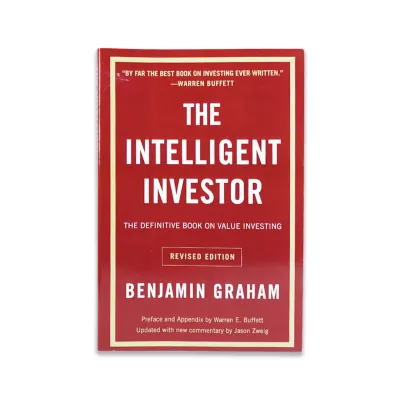
If you are a young beginner in the Philippines looking for your very first personal finance book, The Intelligent Investor by Benjamin Graham is likely not the right place to start. While it is widely regarded as the classic bible of value investing, its dense, academic prose and heavy focus on mid-20th-century American corporate history can easily overwhelm someone who is still learning the basics of budgeting, saving, and debt management.
Instead of serving as an introductory guide, this classic text is better suited as a secondary or tertiary read. It is highly valuable once you have established a stable financial foundation and are ready to transition into serious, long-term stock market investing. For absolute beginners, starting with a more accessible, locally relevant personal finance guide will prevent information overload and help you build practical habits first.
Quick Answer: Who Should Read It First?
Deciding whether to pick up this book depends heavily on your current financial literacy and your ultimate investment goals. The ideal reader for The Intelligent Investor is someone who already understands basic financial terms, possesses a stable income, and is patient enough to study long-term stock market fundamentals. If you are comfortable reading dense, analytical texts and want to build a portfolio based on intrinsic value rather than market hype, this book will provide an invaluable philosophical foundation.
Products mentioned in this guide
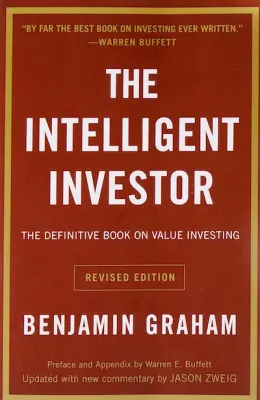
Prices are valid at publication and may change. Please refer to the product page for the latest price.
Conversely, you should put this book on hold if you are looking for quick day-trading strategies, cryptocurrency speculation, or immediate get-rich-quick formulas. It is also not suitable for those who need practical advice on how to pay off personal debts, build an emergency fund, or manage daily household expenses. This text is a rigorous guide to value investing and market psychology, meaning it assumes you already have capital to invest and the emotional discipline to leave that capital untouched for years.
Self-Diagnosis: Assessing Your Current Financial Foundation
Before diving into complex stock market concepts, it is crucial to evaluate your personal financial health. Investing in individual stocks should only occur after you have secured your basic financial prerequisites. This means you have successfully established an emergency fund—ideally worth three to six months of your living expenses—stored in a secure, accessible local bank account. Additionally, any high-interest debts, such as credit card balances or personal loans, should be fully paid off, as their interest rates will likely outpace your investment returns.

You must also assess your familiarity with basic financial terminology. If terms like inflation, dividends, bonds, mutual funds, and compound interest still feel confusing, jumping straight into Graham’s analysis of balance sheets and earnings ratios will be incredibly frustrating. A beginner needs to master these foundational concepts through simpler, more conversational resources before attempting to digest academic investment theories.
Finally, consider your emotional readiness for market volatility. The core of Graham’s philosophy relies on psychological discipline and the ability to remain calm when the market panics. If seeing your investment portfolio temporarily drop in value by 10% or 20% would cause you sleepless nights or tempt you to sell at a loss, you are not yet ready for the stock market. Building emotional resilience and understanding market cycles is a prerequisite that this book explains, but one that you must be willing to practice in real life.
Goal Alignment: Matching the Book to Your Investing Objectives
To get the most out of this book, your personal investing goals must align with the core philosophy of value investing. Value investing is the practice of buying stocks that are trading for less than their intrinsic value, holding them patiently, and waiting for the market to recognize their true worth. This approach is fundamentally different from active day trading, short-term speculation, or chasing volatile market trends in search of rapid profits.
It is also important to recognize the limitations of a book first published in 1949. Graham’s insights focus almost exclusively on traditional stocks and bonds. If your primary interest lies in modern financial instruments—such as digital currencies, real estate crowdfunding, or high-growth tech startups—you will find very little direct guidance here. While the underlying psychological principles of risk management still apply, the practical examples will not match these newer asset classes.
If you do decide to read the book, you will need to choose which investment path fits your lifestyle. Graham divides investors into two distinct categories:
- The Defensive Investor: This individual prioritizes safety and freedom from effort. They aim to avoid serious mistakes or losses, preferring a passive approach that requires minimal ongoing research and monitoring.
- The Enterprising Investor: This individual is willing to devote significant time, study, and effort to selecting individual securities. They actively analyze financial statements in an attempt to achieve better-than-average market returns.
Reading Commitment: Navigating the Book's Style and Editions
Many young readers struggle with The Intelligent Investor because of its demanding writing style. The prose is academic, highly detailed, and filled with historical case studies of American companies from the mid-1900s. It lacks the conversational, highly motivational tone found in modern self-help finance books, which can make reading it feel more like studying for a university exam than enjoying a casual book.
To make the text more digestible, it is highly recommended to purchase the revised edition that features modern commentary and footnotes. Financial journalist Jason Zweig provides end-of-chapter commentary that connects Graham’s historical examples to more recent market events. This added context is incredibly helpful for modern readers who may not be familiar with the corporate crises of the 1950s or 1970s but can easily understand how those same principles played out during the dot-com bubble or the 2008 financial crisis.
If you find the entire book overwhelming, you do not have to read it cover-to-cover immediately. Instead, employ a targeted reading strategy by focusing on the most critical chapters first:
- Chapter 8 (Market Fluctuations): This chapter introduces the famous analogy of 'Mr. Market' and teaches you how to view market volatility as an opportunity rather than a threat.
- Chapter 20 (Margin of Safety): This chapter explains the most important concept in value investing, which is never overpaying for an asset so that you have a buffer against errors or unexpected downturns.
Alternative Paths: What to Do If It Is Not the Right Fit Yet
If you realize that you are not yet ready for the depth of this classic, there is no shame in putting it aside. Your immediate focus should be on building solid personal finance habits within your daily life. Start by tracking your monthly cash flow, optimizing your savings, and learning how to allocate your salary using simple budgeting frameworks.
Look for beginner-friendly books and resources that explain investing concepts in a straightforward, conversational manner. Seek out materials that address the local financial landscape, helping you understand how to utilize accessible investment vehicles in the Philippines. This includes exploring low-risk options like PAG-IBIG MP2, digital bank high-yield savings accounts, or local unit investment trust funds (UITFs) and mutual funds that allow you to start investing with small amounts, such as ₱1,000 or less.
To build your knowledge systematically, consider following this structured progression path:
- Phase 1: Establish a consistent savings habit, build your emergency fund, and eliminate any high-interest consumer debt.
- Phase 2: Read introductory personal finance books that focus on mindset, basic budgeting, and the power of compound interest.
- Phase 3: Learn the basics of passive investing, focusing on index funds and exchange-traded funds (ETFs) that do not require individual stock picking.
- Phase 4: Return to The Intelligent Investor once you have some hands-on experience with passive investing and want to understand the deeper mechanics of market valuation and active stock selection.
Frequently Asked Questions (FAQ)
Do I need to understand complex math to read this book?
No, you do not need to understand advanced mathematics or calculus to read and benefit from this book. The mathematical concepts Graham uses are limited to basic arithmetic, such as addition, subtraction, multiplication, and division, along with simple percentages and ratios. The primary challenge of the book is not the math itself, but rather the conceptual understanding of financial statements and the discipline required to apply those concepts consistently. The modern commentary included in revised editions further simplifies these numerical examples, making them highly approachable for everyday readers.
Is the book still relevant for investing in the Philippine stock market?
Yes, the core psychological and philosophical principles outlined in the book are entirely relevant to the Philippine Stock Exchange (PSE). Concepts like the margin of safety, distinguishing between speculation and investing, and managing your emotions during market swings are universal truths that apply to any stock market in the world. However, you must keep in mind that the specific historical examples, tax laws, and regulatory frameworks mentioned in the book are based on the United States. As a local reader, you will need to focus on the underlying concepts and actively translate them to the local corporate landscape and modern industries in the Philippines.

Community discussion
Share your experience or ask a question. Comments are reviewed before publication.