
Evaluating whether a self-help or business book is worth your time and money requires looking past the marketing hype and assessing its actual utility in your daily life. For Filipino professionals navigating fast-paced corporate environments and students managing heavy academic workloads, The Decision Book: 50 Models for Strategic Thinking by Mikael Krogerus and Roman Tschäppeler offers a highly structured, visual approach to problem-solving. Rather than delivering lengthy narratives or deep philosophical discussions, this book functions as a compact, practical toolkit designed to help you make clearer choices under pressure.
Whether you are trying to prioritize tasks during a hectic workweek in Makati, planning a university thesis, or mapping out a long-term career path, understanding how to structure your thoughts is invaluable. This book does not promise to make decisions for you, nor does it guarantee success in every endeavor. Instead, it provides a curated collection of classic strategic frameworks that you can quickly reference, adapt, and apply to your unique personal and professional challenges.
What to Expect: The Book's Structure and Visual Approach
At its core, the book is designed for rapid consumption and immediate utility. The authors employ a highly minimalist, double-page layout for each of the decision-making models. On the left-hand page, you will find a concise, jargon-free explanation of the model’s origin, its core concept, and how it can be applied to real-world scenarios. On the right-hand page, the book features a simple, hand-drawn diagram, coordinate grid, or matrix that visually represents the framework.
Products mentioned in this guide
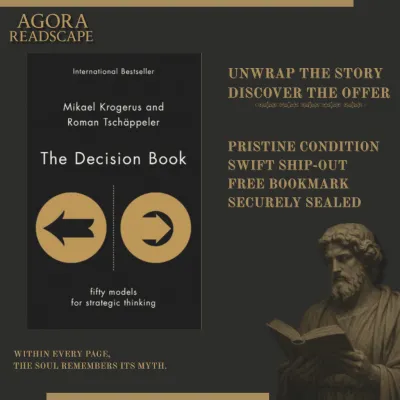
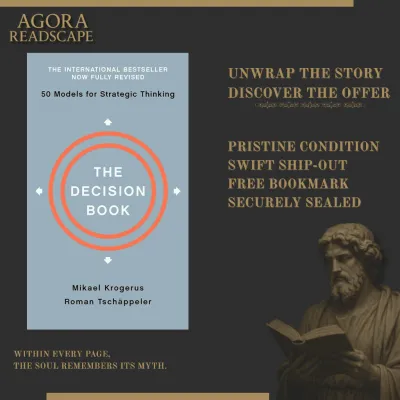
Prices are valid at publication and may change. Please refer to the product page for the latest price.
This visual approach is highly effective for readers who find dense, text-heavy business books overwhelming. By stripping away academic filler, the book presents complex theories—ranging from classic business school staples to psychological concepts—in a format that can be digested in less than five minutes. The hand-drawn style of the diagrams gives the book a notebook-like feel, making the models seem approachable and easy to replicate on a whiteboard or a scrap of paper during a meeting.
Because of this modular design, you do not need to read the book cover-to-cover. It is structured as a diagnostic reference guide. If you are facing a specific challenge, such as resolving a team conflict or analyzing a project’s risks, you can consult the table of contents, flip directly to the relevant model, and immediately begin applying the framework. This makes it an ideal companion for busy individuals who require actionable insights without having to wade through chapters of anecdotal case studies.
How It Helps Professionals Navigate Workplace Challenges
In the competitive Philippine professional landscape, particularly within fast-growing sectors like business process outsourcing (BPO), information technology, marketing, and corporate finance, daily decision-making can feel overwhelming. Mid-level managers and early-career professionals are constantly forced to balance tight deadlines, limited resources, and competing stakeholder interests. The frameworks in this book offer a systematic way to cut through the noise and establish clear priorities.

One of the primary benefits for professionals is the book’s focus on visual models that facilitate team alignment. When leading a project team, explaining a complex strategy verbally can often lead to miscommunication. By utilizing simple quadrant matrices, such as the Eisenhower Matrix (which plots tasks by urgency and importance) or the Boston Consulting Group (BCG) Matrix, you can visually map out your team’s workload on a whiteboard. This shared visual reference helps align team members, clarify responsibilities, and justify resource allocation to upper management.
Furthermore, the book serves as an excellent primer for conflict resolution and negotiation. Models that explore human behavior and team dynamics allow professionals to analyze workplace friction objectively. Instead of reacting emotionally to a difficult colleague or a challenging client, you can use these frameworks to diagnose the root cause of the issue and plan a structured response. This objective approach is crucial for building professional maturity and navigating corporate hierarchies effectively.
For early-career professionals who may not have an MBA or formal management training, the book acts as a practical cheat sheet. It introduces essential strategic concepts in a highly accessible format, allowing you to speak the language of senior leadership. When presenting a proposal or pitching a new initiative, framing your arguments using established decision-making models can significantly increase your credibility and help you secure executive buy-in.
How It Supports Students in Academic and Career Planning
Students in the Philippines face a unique set of pressures, from maintaining high grades in rigorous university programs to preparing for competitive board examinations and securing internships. The sheer volume of choices—such as selecting a major, choosing a thesis topic, or deciding which career path to pursue after graduation—can easily lead to analysis paralysis. The structured models in this book provide students with a clear framework for making these critical life choices.
Using decision matrices can take the emotion out of overwhelming academic decisions. For instance, when deciding between multiple internship offers or research topics, students can construct a simple grid to score each option against key criteria, such as long-term career relevance, skill development, and personal interest. This systematic evaluation helps students make deliberate, well-reasoned choices rather than relying solely on gut feeling or peer pressure.
In addition to long-term planning, the book offers immediate value for daily academic productivity. Balancing heavy coursework, extracurricular activities, and personal commitments requires exceptional time management. By applying productivity frameworks like the Pareto Principle (the 80/20 rule), students can identify which study habits and tasks yield the highest academic returns, allowing them to study smarter rather than simply working longer hours.
Finally, the visual and simplified nature of the diagrams aids significantly in information retention and conceptual structuring. When preparing for exams or writing research papers, students can use the book’s visual models to organize their arguments and synthesize complex information. Learning how to present ideas visually is also a highly transferable skill that will serve students well when they transition into the professional workforce and begin delivering corporate presentations.
Limitations: Who Should Skip This Book
While the book is an excellent introductory tool, it is not suitable for everyone. If you are an advanced researcher, a data scientist, or a seasoned corporate executive with years of strategic planning experience, you will likely find the content too basic. The book’s strength—its extreme conciseness—is also its primary limitation. By condensing complex academic theories and psychological models into two-page summaries, the authors naturally omit historical context, empirical nuances, and critical limitations of each framework.
Readers who are looking for step-by-step implementation guides, detailed case studies, or rigorous statistical backing will be disappointed. The book explains what the models are and how they are structured, but it does not provide deep instructions on how to execute them in complex, multi-million-peso corporate projects. It assumes the reader has the analytical capability to adapt these highly simplified models to their specific, real-world situations.
If your primary goal is to gain a deep understanding of behavioral economics, cognitive biases, or advanced data analytics, you should skip this book in favor of more comprehensive resources. Books like Thinking, Fast and Slow by Daniel Kahneman or academic textbooks on strategic management offer the depth and empirical rigor that this introductory toolkit lacks. This book is a starting point, not a definitive authority on strategic decision-making.
Buying Guide: Formats, Editions, and Pre-Purchase Checks
If you decide that this book aligns with your learning goals, selecting the right format and verifying the edition before purchasing is essential to ensure a good reading experience. The book is widely available in physical formats (hardcover and paperback) as well as digital formats (e-books). Each format has distinct advantages and trade-offs depending on your lifestyle and reading preferences.
Physical editions are highly recommended for this specific title due to its visual nature. Having a physical copy on your desk allows you to flip through the pages quickly, bookmark key models for easy reference, and even sketch notes directly onto the diagrams. However, if you choose a physical copy, keep in mind that the tropical climate and high humidity in the Philippines can cause pages to yellow or warp over time. To preserve your book, store it in a dry, well-ventilated area away from direct sunlight.
Digital editions offer unmatched portability, making them ideal for reading during long commutes on public transit or while traveling. However, because the book relies heavily on visual diagrams, charts, and hand-drawn matrices, reading it on a small smartphone screen or a basic e-ink e-reader without robust zoom capabilities can be highly frustrating. If you prefer the digital format, ensure your device has a sufficiently large screen and supports color or high-contrast rendering so that the detailed diagrams remain legible.
Before making a purchase, perform the following pre-purchase checks:
- Verify the Edition and Publication Year: Ensure you are purchasing the most recent edition. Revised editions often feature updated models, clearer translations, and corrected diagrams that improve the overall utility of the book.
- Check the Language: Since the book was originally written in German, double-check that you are buying the authorized English translation.
- Confirm the Source: When shopping on online marketplaces or at local retail bookstores, watch out for unauthorized, low-quality reprints. These bootleg copies often suffer from blurry diagrams, missing pages, and poor binding that falls apart quickly in humid conditions. Always purchase from reputable, authorized book dealers to guarantee content completeness and print quality.
Frequently Asked Questions (FAQ)
Do I need a background in business or psychology to understand the models?
No, you do not need any prior background in business, economics, or psychology to fully understand and use the models in this book. The authors have specifically designed the book for a general audience, using plain language and avoiding dense academic jargon. Each model is explained from scratch, focusing on practical application rather than theoretical complexity. This accessibility makes it an excellent starting point for students and professionals from any field of study or industry.
Is the e-book version suitable for reading on standard e-readers?
The suitability of the e-book version depends heavily on your specific device’s specifications. Because the book contains numerous hand-drawn diagrams, flowcharts, and coordinate grids, standard e-ink e-readers with small screens (under 6 inches) or low resolutions may struggle to display the visual elements clearly. If you plan to read the digital version, it is best experienced on a tablet or a larger e-reader that allows you to zoom in on images without losing clarity, ensuring you can read the labels on the diagrams easily.
How long does it typically take to read and apply the frameworks?
Because of its modular, reference-style structure, you can begin applying individual frameworks almost immediately. Reading a single model and understanding its basic concept takes less than five minutes. However, mastering the application of these models to your personal or professional life is an ongoing process. Rather than trying to memorize all 50 models at once, it is highly recommended to select two or three frameworks that address your current challenges and practice using them consistently before moving on to others.

Community discussion
Share your experience or ask a question. Comments are reviewed before publication.