
Deciding whether to invest your time and money in Robert Greene’s The Laws of Human Nature requires a realistic look at what this massive volume actually demands from its readers. This is not a light, weekend read designed to give you a quick burst of morning motivation. Instead, it is a dense, analytical exploration of the psychological forces that drive human behavior, spanning over six hundred pages of historical biographies and deep psychological breakdowns. For those willing to commit to its slow pace, the book offers a profound framework for self-awareness and social intelligence, but for readers seeking immediate, actionable habits, it can easily feel like an overwhelming academic chore.
What to Expect: Content Density and Reading Commitment
To appreciate this book, you must first understand its sheer scale and deliberate pacing. Robert Greene does not simply state a psychological principle and move on; he constructs elaborate historical narratives to illustrate how these laws manifest in real life. Each chapter follows a rigid, immersive structure that begins with a detailed biography of a historical figure, ranging from ancient leaders to modern artists, demonstrating a specific human vulnerability or strength. Only after this narrative journey does Greene dissect the underlying psychology and offer strategies for managing these traits in yourself and others.
This narrative-heavy approach means you must be prepared to digest pages of historical context before reaching the practical takeaways. The prose is highly analytical, demanding active mental engagement rather than passive reading. If you attempt to rush through the chapters, you will likely experience information fatigue, as the sheer volume of historical details and psychological terms can quickly blend together.
Products mentioned in this guide

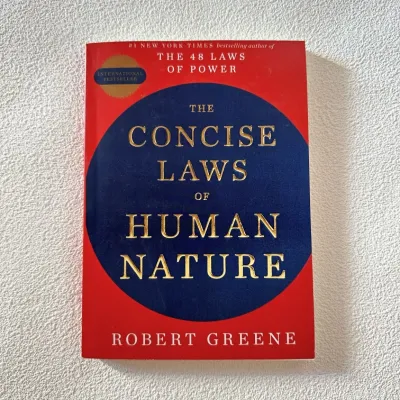



Prices are valid at publication and may change. Please refer to the product page for the latest price.
To navigate this density successfully, a structured pacing strategy is highly recommended. Rather than trying to read the book cover-to-cover in a few sittings, treat it as a study guide by tackling just one chapter per week. This allows you to absorb the historical lessons and observe how the specific “law” plays out in your daily interactions before moving forward. Additionally, utilizing the book’s detailed subheadings and summary sections can help you map out the core concepts before diving into the longer historical case studies.
Core Themes and Personal Growth Value
At its heart, The Laws of Human Nature aims to dismantle our illusions of conscious control and rational behavior. The book is built around several core themes, beginning with the law of irrationality, which argues that our decisions are continually governed by deep-seated emotions rather than logic. By learning to recognize these emotional biases, you can cultivate a state of high self-awareness, allowing you to pause and think critically before reacting to stressful situations.

Another major pillar of the book is the development of deep empathy. Greene encourages readers to shift their perspective outward, transforming their social interactions from reactive struggles into observational studies. By understanding the hidden motivations, insecurities, and defensive mechanisms of those around you, you can navigate complex social landscapes with much greater ease. The text also dives into the concept of the “shadow” self—the repressed, less desirable traits we hide from the world—and explains how acknowledging these hidden forces can prevent them from unconsciously sabotaging our lives.
Unlike traditional self-help books that rely on upbeat, highly optimistic messaging, Greene’s work adopts a more clinical, observational, and occasionally cynical tone. It does not promise an easy path to happiness or instant success. Instead, it offers a realistic, sometimes uncomfortable mirror to our shared human flaws. Applying these insights to your daily life can significantly improve your leadership skills, help you identify toxic dynamics in the workplace, and foster healthier, more resilient personal relationships.
Who Should Read It and Who Should Skip It
This book is exceptionally well-suited for individuals who possess a genuine curiosity about behavioral psychology, history, and sociology. If you enjoy slow, reflective reading and appreciate books that challenge your preconceptions about your own goodness and rationality, you will find immense value in Greene’s work. It is an excellent resource for leaders, managers, and professionals who must navigate complex organizational politics and require a deeper understanding of group dynamics.
Conversely, if your current personal development goals center around quick lifestyle changes, simple habit-building techniques, or immediate productivity hacks, you should skip this book for now. Readers who prefer lighthearted, highly encouraging self-help will likely find the dense historical anecdotes tedious and the analytical tone overly clinical. If you are currently experiencing reading burnout or have very limited free time, forcing yourself through this volume may feel more like a chore than a growth experience.
For those who are intrigued by the concepts but cannot commit to the full text, alternative approaches can bridge the gap. You might consider starting with high-quality chapter summaries or audio companions to grasp the core ideas. Alternatively, exploring shorter, more focused behavioral psychology books can introduce you to these concepts without requiring the massive time investment that Greene’s work demands.
Formats, Editions, and Investment Considerations
When deciding to purchase The Laws of Human Nature, choosing the right format can greatly impact how much value you extract from the text. The book is widely available in physical formats (hardcover and paperback), e-book editions, and audiobooks, each offering distinct advantages depending on your lifestyle.
For a book of this density, a physical copy is often the most practical investment. Having a tangible book allows you to easily flip back to historical references, highlight key passages, and write notes in the margins—an essential practice for active study. However, if you choose a physical edition, keep in mind that the tropical humidity in the Philippines can cause pages to yellow or warp over time. Storing your books in a dry, well-ventilated space away from direct sunlight will help preserve the paper quality.
If portability is your priority, the e-book format is an excellent alternative. It allows you to carry this massive volume effortlessly during long daily commutes, and digital highlighting tools make it simple to compile your favorite passages for future reference. The audiobook format is also highly engaging, especially for those who spend hours navigating traffic, though it can be more challenging to pause and reflect on the complex psychological concepts presented.
In terms of financial investment, physical copies of the book in local bookstores or online marketplaces generally range from approximately ₱600 for mass-market paperbacks to over ₱1,500 for trade paperbacks or hardcovers. E-book versions are often more budget-friendly and eliminate shipping wait times. Before purchasing, it is wise to verify current listings, stock availability, and potential discounts across reputable local retailers and digital platforms to ensure you get the best value.
Frequently Asked Questions (FAQ)
Is 'The Laws of Human Nature' too academic for casual readers?
While the book deals with complex psychological theories, it is designed to be accessible to a general audience. Robert Greene balances his deep analytical insights with vivid, dramatic historical storytelling, which prevents the text from feeling like a dry academic textbook. However, casual readers may still find the sheer volume of historical detail challenging. If you find yourself bogged down by the lengthy biographies, you can focus on the analytical sections and practical strategies at the end of each chapter without losing the core lessons.
How does this book compare to Robert Greene's 'The 48 Laws of Power'?
While both books analyze human behavior, they serve very different purposes and adopt distinct tones. The 48 Laws of Power focuses heavily on external strategy, competitive dynamics, and how to navigate power structures, sometimes leaning into manipulative tactics. In contrast, The Laws of Human Nature is a much more introspective, empathy-driven work. It encourages self-reflection, emotional intelligence, and understanding the shared vulnerabilities of all human beings, making it a more constructive tool for long-term personal growth and healthy relationships.

Community discussion
Share your experience or ask a question. Comments are reviewed before publication.