
Starting your financial journey can feel overwhelming, especially when confronted with dense textbooks filled with complex mathematical formulas and dry economic jargon. For young Filipinos entering the workforce or trying to build their first savings pot, Morgan Housel’s “The Psychology of Money” offers a refreshing and highly accessible alternative. Instead of focusing on spreadsheets, the book centers on how human behavior, emotions, and personal history shape financial decisions.
This behavioral approach makes it an excellent foundational read for beginners who want to correct emotional money habits before diving into technical investing. However, because the book is written for a global audience, it does not contain step-by-step instructions for local Philippine banking, tax compliance, or specific investment accounts. To build a complete financial plan, you will eventually need to pair its universal wisdom with localized, actionable guides.
What to Expect From The Psychology of Money
When you pick up “The Psychology of Money,” you are not opening a traditional textbook on accounting or stock valuation. Instead, you are entering the realm of behavioral finance, which explores the psychological triggers behind how people manage, spend, and save their earnings. The book argues that doing well with money has little to do with how smart you are and a lot to do with how you behave.
Products mentioned in this guide


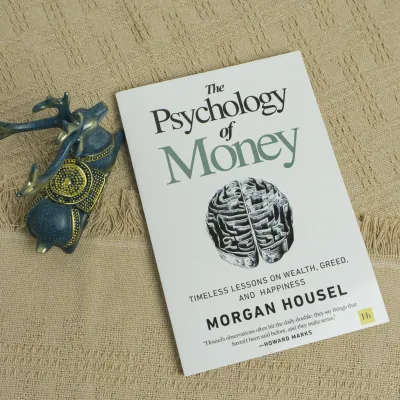
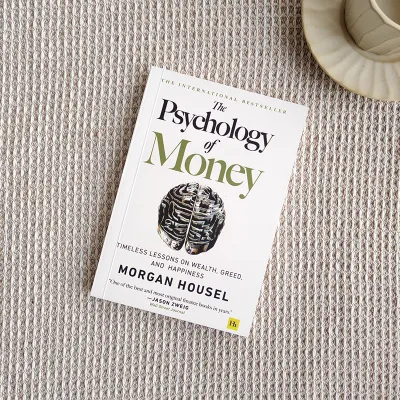
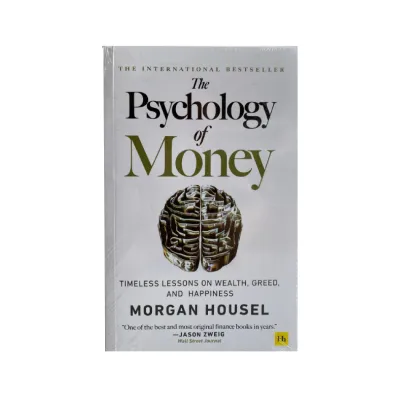
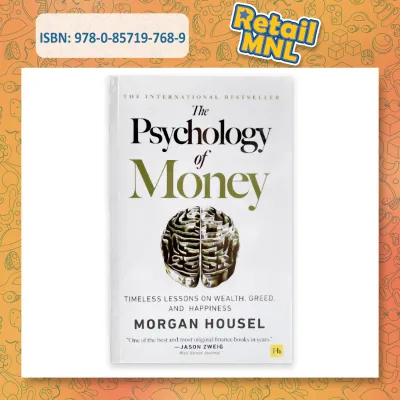
Prices are valid at publication and may change. Please refer to the product page for the latest price.
Morgan Housel presents these concepts through a series of short, highly engaging stories rather than dry academic theories. This narrative style is particularly beneficial if you have no prior background in finance, as it translates complex economic behaviors into relatable human experiences. You will learn about the role of luck, the danger of greed, and the immense power of patience, all told through historical anecdotes and real-world examples.
However, it is equally important to understand what the book does not cover. You will not find any mentions of Philippine financial institutions, local tax codes, or step-by-step instructions on how to open a local bank account. The book provides the mental framework for making sound financial decisions, but it leaves the technical execution and country-specific logistics entirely up to the reader.
Signs This Book Matches Your Financial Starting Point
If you find yourself struggling with emotional spending or the constant urge to upgrade your lifestyle every time you receive a salary increase, this book is highly relevant to your situation. Lifestyle creep—where your expenses rise to meet your growing income—is a common challenge for young professionals. Housel’s insights can help you understand the emotional drivers behind these habits and teach you how to find contentment with “enough.”

This book is also an ideal match if you prefer understanding the underlying “why” of financial habits over memorizing rigid budgeting templates. If the thought of tracking every single ₱100 on a complex spreadsheet makes you want to avoid personal finance altogether, starting with a behavioral guide is a much gentler approach. It allows you to build a healthy relationship with money before you worry about the exact mechanics of budgeting.
Furthermore, if you are feeling anxious about the volatility of the market or unsure of your own risk tolerance, this book offers essential calibration. Before you commit your hard-earned money to any investment, you must understand how you react to losses and market fluctuations. Developing this psychological resilience early on prevents you from making panic-driven decisions that could derail your long-term financial security.
When to Look for a Different Personal Finance Book
While “The Psychology of Money” is an exceptional starting point, it is not the right tool for every financial need. If your immediate priority is learning the exact steps to open a Pag-IBIG MP2 account, register for a Personal Equity and Retirement Account (PERA), or file your income taxes as a freelancer in the Philippines, this book will not provide those answers. You will need to look for localized guides or official government resources to navigate these specific systems.
Similarly, if you already possess a disciplined financial mindset and are looking for advanced wealth-building formulas, debt-payoff calculators, or strict envelope-budgeting frameworks, you might find Housel’s work too conceptual. At this stage of your journey, your time is better spent reading technical manuals, investment textbooks, or books that focus entirely on mathematical portfolio optimization.
If actionable, country-specific instructions are your absolute priority, consider seeking out books by local Filipino finance authors or updated local market guides. These resources can provide the necessary context on local interest rates, inflation trends, and domestic investment platforms that a global book simply cannot replicate.
How to Apply the Book's Lessons to the Philippine Context
To get the most out of this book, you must translate its universal concepts into the daily realities of living and working in the Philippines. For instance, Housel discusses the dangers of “keeping up with the Joneses.” In the local context, this often manifests as intense social pressure to participate in expensive social gatherings, buy the latest gadgets, or fund lavish family celebrations.
Additionally, many young Filipinos face unique family financial dynamics, such as navigating the expectations of being part of the “sandwich generation” where they support both their parents and their own siblings. Applying the book’s lessons means learning to set healthy financial boundaries while still honoring your cultural values.
Another critical concept is the “room for error,” which Housel highlights as the single most important part of any financial plan. In an economy characterized by variable inflation, sudden out-of-pocket healthcare costs, and unpredictable weather events, having a robust emergency fund is vital.
Instead of relying on a minimal safety net, young Filipinos should aim to build a buffer that accounts for these localized systemic risks. This ensures that a single medical emergency or job transition does not wipe out their progress.
Finally, the book emphasizes the power of long-term compounding. In the Philippines, this mindset can help you resist the temptation of high-risk speculative trends, unverified online schemes, or get-rich-quick programs that promise unrealistic returns.
Instead, you can focus on accessible, low-barrier local savings vehicles, such as high-yield digital bank accounts or cooperative savings programs. This allows your money to grow steadily and safely over time.
Frequently Asked Questions (FAQ)
Is The Psychology of Money too basic for someone who already invests?
Even if you already have an active investment portfolio, this book remains highly valuable. It focuses on the behavioral pitfalls and emotional discipline that affect investors of all experience levels, not just beginners. While advanced investors might find the technical depth lacking, the psychological frameworks serve as an excellent reminder to prevent costly emotional mistakes, such as panic-selling during market downturns or overextending during bull markets.
Do I need to read it in English, or is there a Tagalog translation?
The original and most widely available version of the book is written in English, which is generally accessible for young Filipino professionals and students. Before purchasing, make sure to verify the edition, language, medium or file format, and authorized source to ensure you are getting a complete and legitimate copy. If reading in English presents a barrier, you can check major local bookstores or authorized online platforms for official translated editions, but be sure to avoid unauthorized digital summaries or incomplete bootleg copies.

Community discussion
Share your experience or ask a question. Comments are reviewed before publication.