
For a young Filipino professional or student looking to navigate the complexities of modern money management, choosing the right first book is crucial. You might have heard of Karl Marx’s Das Kapital in academic circles or online discussions and wondered if it holds the key to understanding wealth. However, the short answer is no: Das Kapital is not the right first finance book for young Filipinos seeking practical financial literacy.
While it is one of the most influential academic works in history, it is a dense critique of political economy rather than a guide to managing your personal finances. If your immediate goals are to stretch a starting salary, build an emergency fund, or start investing in the local market, this text will not provide the actionable steps you need. Understanding why this book is mismatched for beginners can help you redirect your time and energy toward resources that will actually improve your financial well-being.
What Das Kapital Actually Covers vs. Modern Finance
To understand why Das Kapital is unsuitable for financial beginners, it is important to clarify what the book actually covers. Written in the 19th century during the height of the Industrial Revolution in Europe, the text is a systemic critique of capitalist production. It does not look at wealth through the lens of individual success, but rather analyzes how capital functions on a societal scale.
Products mentioned in this guide
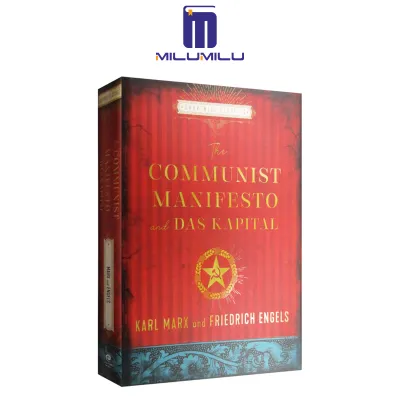
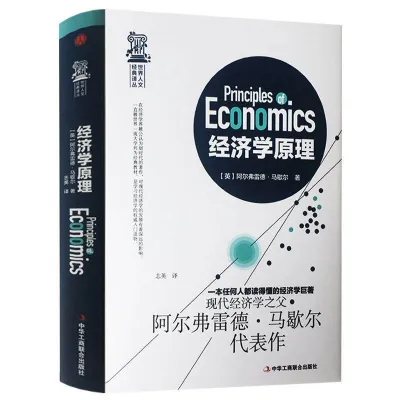
Prices are valid at publication and may change. Please refer to the product page for the latest price.
The core themes of the book revolve around concepts like the labor theory of value, surplus value, and commodity production. Marx explores how goods are produced, how value is generated through human labor, and how the relationship between workers and owners shapes society. These are macro-level, historical, and philosophical arguments aimed at understanding the structural mechanics of an entire economic system.
In contrast, modern personal finance is highly practical and individualistic. It focuses on immediate, actionable skills such as budgeting, saving, managing debt, and investing. Das Kapital will not teach you how to open a high-yield savings account, how to allocate your monthly income, or how to analyze a company’s financial statements. Reading it to learn personal finance is like studying the history of metallurgy when you simply want to learn how to drive a car.
Self-Diagnosis: Is Your Goal Personal Finance or Economic Theory?
Before purchasing any book, it is helpful to diagnose your current learning objectives. Young adults often confuse personal finance, general economics, and political theory. Identifying which of these areas aligns with your immediate needs will save you time and prevent frustration.

If you are currently struggling to make your salary last until the next payday, pay off credit card balances, or save for a rainy day, your goal is personal finance. You need resources that address daily financial habits, local banking options, and basic wealth-building strategies. At this stage, your focus should be on practical guides that offer step-by-step frameworks for managing your own money.
If you want to understand broader market forces—such as why inflation is rising, how interest rates affect your loans, or how supply and demand dictate prices—your goal is introductory economics. This field explains the day-to-day mechanics of the modern market. While it is less hands-on than personal finance, it provides essential context for making informed economic decisions.
Finally, if you already have a stable financial foundation and want to explore a deep, historical critique of how global economic systems operate, you may be ready for advanced political economy. This is where Das Kapital fits. It is a reading journey for those who want to challenge their assumptions about labor, wealth distribution, and systemic structures, rather than those looking for a personal investment strategy.
Reading Readiness: Assessing Your Academic and Time Commitment
Even if you are interested in the theoretical aspects of economics, Das Kapital presents significant practical barriers for the average reader. The book is not a light read; it is a massive, multi-volume academic treatise that requires a serious commitment of time and mental energy.
The writing style is notoriously dense, academic, and deeply philosophical. Because it was originally written in 19th-century German, modern English translations can be challenging to parse. The author uses complex logical structures and abstract concepts that require slow, deliberate reading. Many academic students spend entire semesters analyzing just a few chapters.
Furthermore, fully grasping the arguments requires a solid foundation in classical economics, history, and philosophy. To appreciate the critique, you ideally need some familiarity with the works of earlier economists like Adam Smith and David Ricardo. Without this background, much of the context and debate in the text may feel confusing or irrelevant.
For a busy young professional balancing long commutes, demanding work hours, and daily responsibilities, dedicating months to deciphering a dense theoretical text is rarely practical. Your limited reading time is far better spent on accessible, modern books that deliver immediate value to your daily life and financial security.
Alternative Starting Points for Financial and Economic Literacy
If you decide that Das Kapital is not the right fit for your current level, there are excellent alternative paths to building your financial and economic literacy. The key is to select books that match your specific goals and offer clear, accessible guidance.
When looking for personal finance books, prioritize those tailored to the local context. A good local finance book should address the specific financial instruments available in the Philippines, such as Pag-IBIG MP2 savings, retail treasury bonds, and local digital banks. It should also account for local tax laws, employment benefits, and cultural money habits, such as the social pressures of supporting extended family. Look for recent editions to ensure the advice reflects current economic conditions and interest rates.
For those interested in general economics, seek out modern primers that use real-world examples and clear, jargon-free language. Look for books that explain microeconomics and macroeconomics through everyday scenarios, making the concepts intuitive and easy to apply to your understanding of current events.
If you are still curious about Marxist economic theory but want to avoid the dense primary text, start with modern introductions or companion guides. Look for highly rated introductory books, graphic guides, or even free online university lecture series. These resources break down the core concepts of surplus value and capital accumulation into digestible, structured lessons, allowing you to understand the theory without getting lost in 19th-century academic prose.
Frequently Asked Questions (FAQ)
Do I need to read Das Kapital to understand the stock market?
No, you do not need to read it to understand the stock market. Das Kapital is a structural critique of industrial capitalism and labor value, not a guide to modern financial markets. It does not cover stock valuation, corporate balance sheets, market analysis, or trading strategies. To understand the stock market, you should look for books specifically focused on value investing, corporate finance, and market mechanics.
Are there easier books to understand Marxist economic theory?
Yes, there are many accessible alternatives. Beginners interested in this school of thought should look for modern introductory guides, companion books, or shorter pamphlets written by the same author, such as Wage Labour and Capital. When selecting these books, check the publication details and the author’s academic credentials to ensure you are getting an accurate, objective, and well-structured representation of the theory.
What is the best first book for personal finance in the Philippines?
The best first book is one written by a local financial educator that directly addresses the Philippine economic landscape. Look for authors who explain budgeting, saving, and investing using local currency and familiar cultural scenarios. Ensure the book covers local investment options like digital banks and government-backed savings programs, and verify that you are reading a recent edition that aligns with current financial regulations.

Community discussion
Share your experience or ask a question. Comments are reviewed before publication.