
To match an adjustable piano bench height to your digital piano or keyboard setup, you must align your body mechanics with the height of your instrument’s keybed so that your forearms sit parallel to the floor and your wrists remain neutral. Because digital pianos and portable keyboards sit on stands or cabinets of varying heights, a fixed-height stool often forces players into awkward angles. Using a piano bench adjustable mechanism allows you to customize your seating height to compensate for these differences, ensuring your feet rest flat on the floor and your arms move freely across the entire keybed.
Assessing Your Current Keyboard and Playing Posture
In tropical climates, where long practice sessions can quickly become physically demanding, fatigue sets in even faster if your posture is compromised. Before making adjustments, pay close attention to how your body feels after fifteen minutes of playing. If you experience a dull ache in your lower back, tightness across your shoulders, or forearm fatigue, your bench height is likely mismatched. These symptoms indicate your muscles are overcompensating for an improper angle relative to the keys.
Next, examine your instrument’s physical foundation. A digital piano in a traditional wooden cabinet has a fixed keybed height, whereas a portable keyboard on a metal stand may sit slightly higher or lower depending on stand configuration. This height serves as your absolute reference point. Sit on your bench and observe your lower body. Your feet must rest fully flat on the floor to provide a stable foundation. If you must stretch your toes to reach the sustain pedal, or if your heels lift, your seating position is unstable, placing unnecessary strain on your calves.
Products mentioned in this guide
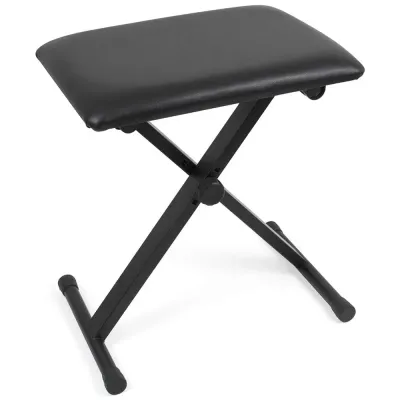
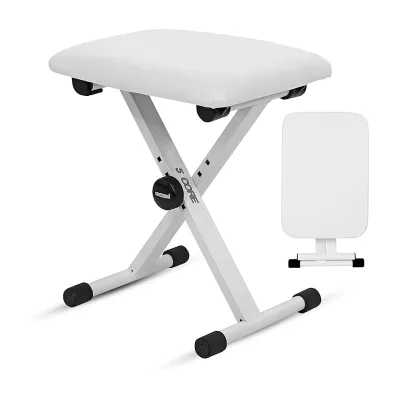
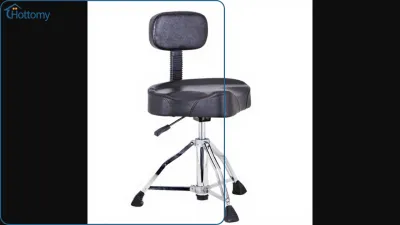
Prices are valid at publication and may change. Please refer to the product page for the latest price.
Step-by-Step Guide to Adjusting Your Piano Bench Height
Setting up your piano bench adjustable height requires a systematic approach to align your joints naturally. Begin by sitting on the front half of the bench. Adjust the height until your thighs are parallel to the floor, or sloping just slightly downward toward your knees. This position distributes your body weight evenly across your sit bones, preventing pressure points that can restrict circulation. Your feet should feel firmly planted, providing the leverage needed to press the pedals without shifting your hips.

With your lower body stabilized, let your arms hang naturally from your shoulders, then bring your hands up to rest on the keys. Your forearms should form a straight line parallel to the floor, or angle slightly downward toward the keybed. If your elbows drop significantly below the level of the keys, you will be forced to bend your wrists upward to play, which pinches the nerves and tendons in your wrists.
Keep your wrists in a neutral, straight position—neither sagging downward nor arching excessively upward. To verify this alignment, adjust the bench height incrementally, turning the adjustment knobs or shifting the lever in small steps. Once you find a comfortable height, test your posture by playing a scale that spans the entire keyboard. Reach for the lowest bass notes and the highest treble notes; your arms should glide smoothly across the keybed without forcing your shoulders to shrug or your torso to lean awkwardly.
Pairing Considerations for Different Keyboard Types
The type of digital instrument you own dictates how you coordinate your seating. For fixed-height digital pianos, the keybed height is non-negotiable. In this setup, your sole variable is the piano bench adjustable height. When adjusting the bench upward to accommodate shorter players, always verify that there is still adequate leg clearance beneath the wooden keybed cabinet. Your knees should not press against the underside of the piano structure, as this restricts movement.
If you use a portable keyboard paired with an adjustable stand, such as an X-style or Z-style stand, you have more flexibility but also more potential for instability. X-stands change their top height as they narrow, which can push the keyboard higher while reducing the legroom underneath. When pairing your bench with an X-stand, adjust both components in tandem to ensure your knees have clear space and do not collide with the metal support bars. Z-stands generally offer superior knee clearance and stability, making them easier to pair with a standard adjustable bench.
Additionally, consider the physical depth of your keyboard and the weight of its key action. Fully weighted hammer-action keys require more physical downward force from your arms than light, unweighted synth keys. To transfer your arm weight effectively into a weighted keybed, you may need to sit slightly higher than you would for a basic keyboard. Take note of where your music rest sits as well; if it is positioned deeply behind a thick keyboard chassis, you may need to adjust your bench position to maintain a comfortable reading distance without slouching forward.
Fine-Tuning Distance and Posture for Long Sessions
The horizontal distance between your adjustable bench and the keyboard is critical for long-term comfort. Position the bench so that only its front third to half is supporting your body. Slide the bench forward until your knees extend slightly under the front edge of the keyboard. This spacing allows your elbows to swing freely in front of your torso, giving you the physical range of motion needed to reach the extreme ends of the keybed without twisting your spine.
Next, test your distance relative to the pedals. Place your right foot on the sustain pedal. You should be able to depress the pedal fully while keeping your heel firmly grounded on the floor and your ankle completely relaxed. If you have to stretch your leg straight to keep your foot on the pedal, the bench is too far back. Conversely, if your knee is bent at an acute angle, you will experience rapid muscle fatigue in your shins.
Finally, focus on your spine. Maintain an upright torso with a gentle, natural curve in your lower back. Instead of sitting perfectly vertical, allow a very slight forward lean originating from your hips, not your waist. This active posture engages your core muscles, prevents slouching, and allows you to use the natural weight of your upper body to press the keys rather than relying solely on finger strength.
Common Setup Mistakes and How to Fix Them
Many keyboard players fall into predictable ergonomic traps. The most common error is setting the bench too high. When you sit too high, your wrists naturally drop below the level of the keybed to compensate. This angle forces your fingers to flat-out and limits your control, leading to rapid tension in the top of your forearms. To fix this, lower your bench until your forearms return to a level plane.
Conversely, setting the bench too low is equally damaging. This setup forces you to shrug your shoulders upward to reach the keys, which restricts the natural transfer of arm weight and causes severe fatigue in your upper back and neck. If you find yourself constantly lifting your shoulders while playing, raise your bench immediately.
Distance mistakes also disrupt your playing. Sitting too close to the keyboard traps your elbows against your ribs, restricting your lateral movement. Sitting too far away forces you to overreach, putting immense strain on your lower back and shoulders as your body fights to stay balanced. Lastly, do not ignore the height of your pedal board. If your digital piano sits on a raised platform, the pedals may be higher than normal. If your bench is too low relative to these raised pedals, your ankles will be forced into an extreme upward bend, resulting in painful calf cramps. Always adjust your bench height to accommodate both the keys and the pedal plane.
Frequently Asked Questions (FAQ)
Does an adjustable piano bench need a backrest for proper posture?
Traditional piano pedagogy emphasizes active sitting, relying on core muscle engagement and a slight forward lean. A backrest is generally unnecessary for standard practice because relying on one can encourage slouching and restrict the free lateral movement of your torso when reaching for distant octaves. However, an adjustable piano bench with a backrest can be highly beneficial during casual playing sessions, when reading sheet music between exercises, or for players with chronic lower back conditions who require intermittent support. If you choose a bench with a backrest, ensure it does not interfere with your active playing posture or force your spine into an unnatural curve.
How do I match the bench height if two players of different heights share the same digital piano?
When multiple players share a single digital piano, a fixed seating height can lead to poor habits and physical strain. The best solution is to use a high-quality piano bench adjustable model with clear height markings or an easily operable hydraulic or dual-knob mechanism. Each player should take a moment to adjust the bench to their personal ergonomic baseline before they begin playing. For younger children or shorter players, the bench must often be raised significantly to align their arms with the keys. If this adjustment leaves their feet dangling in the air, place a sturdy, non-slip footstool beneath the piano so they can rest their feet flat, maintaining stability and proper posture.

Community discussion
Share your experience or ask a question. Comments are reviewed before publication.