
Finding the right books on persuasion requires looking beyond generic bestseller lists to find strategies that actually translate to your daily life. In the Philippines, where personal relationships, workplace hierarchies, and subtle social cues heavily influence decision-making, a book’s cultural adaptability is just as important as its psychological theories. To choose the best guide, you must align the author’s methodology with your specific goals—whether that means navigating corporate negotiations or building trust with local clients—while verifying the physical or digital edition’s authenticity before making a purchase.
Why Cultural Context Matters in Persuasion Books
Many global bestsellers on influence and negotiation are written from a highly individualistic, Western perspective. These frameworks often champion directness, assertive self-advocacy, and transactional exchanges where individual goals are prioritized. However, in a collectivist society like the Philippines, communication is deeply high-context and relational. Persuasion here relies heavily on non-verbal cues, indirect phrasing, and the preservation of social harmony, often referred to locally as smooth interpersonal relations or pakikisama. An overly aggressive or blunt approach, even if backed by Western behavioral science, can easily be misconstrued as disrespectful, arrogant, or confrontational, instantly shutting down any chance of mutual agreement.
To persuade effectively in local environments, one must understand how concepts like utang na loob, which represents a sense of reciprocal obligation, and amor propio, or face-saving self-esteem, govern interpersonal dynamics. When evaluating a self-help book, look for authors who emphasize empathy, relationship-building, and long-term trust over quick, transactional wins. If a book focuses entirely on high-pressure sales tactics or dominant negotiation stances, you will need to critically adapt those lessons. The goal is to translate assertive principles into a softer, more collaborative tone that respects local hierarchies and values collective consensus. For instance, instead of demanding a direct concession, a culturally adapted approach might involve framing the request as a collaborative effort that protects the other party’s dignity and strengthens the professional relationship.
Products mentioned in this guide

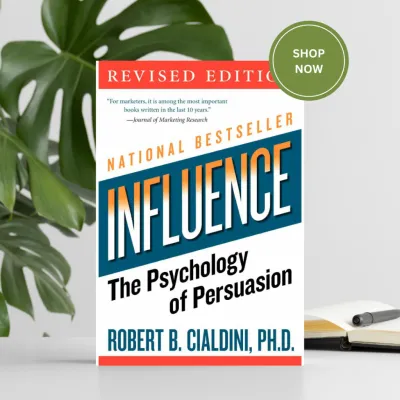
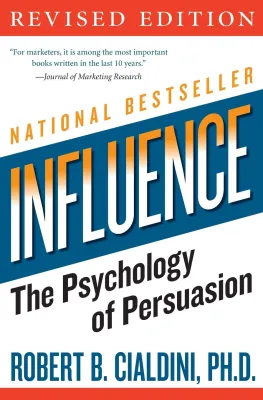
Prices are valid at publication and may change. Please refer to the product page for the latest price.
How to Match Persuasion Books to Your Specific Goals
Persuasion is not a one-size-fits-all skill; it spans a wide spectrum of disciplines, from cognitive behavioral psychology to tactical sales methodologies. To avoid wasting time on advice that does not apply to your situation, you must first identify your primary objective. Narrowing your focus helps you choose between books designed for formal, structured environments and those tailored for fluid, everyday interactions.

For Workplace Negotiation and Leadership
In a professional corporate setting, persuasion is closely tied to leadership, conflict resolution, and organizational politics. If your goal is to secure a promotion, pitch projects to stakeholders, or manage a team, look for books that focus on ethical influence and structured negotiation frameworks. These books teach you how to analyze interests, prepare alternative options, and build consensus across different departments without relying on formal authority.
In Philippine workplaces, which often feature distinct hierarchical structures, persuading a superior requires a delicate balance of respect and clarity. Books that advocate for collaborative, interest-based negotiation are highly valuable here. They provide tools to present your ideas as win-win solutions that benefit the entire team or organization, rather than individualistic demands. When presenting to upper management, persuasion often involves showing how your proposal aligns with the company’s long-term stability and the well-being of the team. Conversely, you should avoid literature that promotes manipulative psychological tricks or adversarial tactics. In close-knit professional communities, such methods quickly erode trust, damage your professional reputation, and can lead to long-term friction with colleagues and management. Instead, prioritize books that teach you how to build credibility through competence, reliability, and transparent communication.
For Daily Interpersonal Communication and Sales
If you work in customer-facing roles, run a local micro-enterprise, or simply want to improve your daily interactions with neighbors and acquaintances, your needs are different. You require books that focus on conversational psychology, active listening, and rapid rapport-building. These resources help you connect with people on an emotional level, making your daily transactions and casual conversations much smoother.
Look for books that offer practical exercises on reading body language, matching communication styles, and showing genuine empathy. In informal settings, persuasion is less about presenting a structured business case and more about making the other person feel heard and valued. For instance, a small-business owner negotiating with local suppliers or chatting with regular customers relies heavily on personal warmth and mutual trust. Books that break down the mechanics of small talk, storytelling, and emotional intelligence are highly adaptable to these everyday scenarios. They teach you how to validate the other person’s feelings before introducing your perspective, which is a highly effective way to disarm resistance. By focusing on books that teach these soft skills, you can build a loyal network through authentic connection rather than transactional pressure.
Key Features to Check Before Buying
Once you have identified the right category of persuasion literature, you must verify the physical or digital specifications of the book to ensure a high-quality reading experience. First, check the edition and publication year. Behavioral science and social psychology evolve rapidly; newer editions often contain updated research, revised case studies, and modern examples that account for digital communication channels like email and instant messaging.
Next, consider your preferred format and language options. If you choose a physical copy, decide between a durable hardcover for your home library or a lightweight paperback that is easy to carry during daily commutes. Pay attention to the paper quality, as some local prints use lighter newsprint while others use premium cream paper. In tropical climates with high humidity, the binding and paper quality of a book are crucial; low-quality paper can yellow quickly, and cheap glue can degrade, causing pages to fall out. For digital readers, ensure the e-book format is compatible with your specific e-reader or tablet, and check if the layout preserves diagrams and tables. If you prefer audiobooks, listen to a sample first to ensure the narrator’s tone, pacing, and accent are engaging and easy to understand over long listening sessions.
Finally, always review the table of contents and the index before finalizing your purchase. Look for books that include practical worksheets, chapter summaries, or action steps. A well-structured index allows you to quickly reference specific techniques, such as framing or active listening, when you need to prepare for a real-life conversation. Checking these details beforehand ensures you invest in a book that is both intellectually valuable and practical to use.
Where to Source and Verify Authentic Copies
With the rise of online marketplaces, finding authentic books requires extra vigilance. Pirated copies and unauthorized reprints are common, often featuring blurry text, missing pages, poor binding that falls apart in high-humidity environments, and a strong chemical smell from cheap ink. To ensure you receive a high-quality, complete edition, always source your books from official publisher websites, established physical bookstores, or verified flagship stores on major e-commerce platforms.
Be highly skeptical of listings with prices that seem too good to be true. While an authentic paperback of a popular self-help book typically ranges from ₱400 to ₱900 depending on the publisher, counterfeit copies are often sold for a fraction of that price. Read customer reviews carefully, looking for photos of the actual book pages and comments regarding print clarity and paper thickness. Additionally, if you are ordering international editions, verify the regional distribution rights and shipping conditions to ensure the book is authorized for sale and will arrive undamaged by tropical weather or rough transit. Purchasing from authorized sellers not only guarantees a complete and readable text but also supports the authors and publishers who produce these valuable educational resources.
Frequently Asked Questions (FAQ)
Are audiobooks as effective as physical books for learning persuasion?
Both formats have distinct advantages depending on your learning style. Audiobooks are excellent for absorbing general concepts during commutes or daily chores, and they allow you to hear the narrator’s vocal inflections, which is highly useful for learning tone and pacing in persuasion. However, physical books are generally better for deep study, as they make it easier to highlight key passages, write notes in the margins, and quickly flip back to reference specific frameworks during real-world practice.
How long does it take to see results from reading influence books?
Seeing tangible results depends entirely on how consistently you apply the concepts in real life. Reading a book provides theoretical knowledge, but developing persuasion skills requires active practice, self-reflection, and gradual adjustment. Instead of trying to implement an entire book’s worth of advice at once, focus on practicing one or two core techniques—such as active listening or strategic framing—in low-stakes daily interactions before moving on to more complex negotiation strategies.

Community discussion
Share your experience or ask a question. Comments are reviewed before publication.