
Choosing the right rechargeable piano depends entirely on where and how you plan to play. A musician performing at an outdoor venue in Manila has vastly different needs than a hobbyist practicing in a compact condominium or a traveler packing a keyboard into a suitcase for an inter-island flight. To find the ideal instrument, you must balance battery capacity, weight, key action, and connectivity. By matching these technical specifications to your primary playing environment, you can enjoy the freedom of cordless music without sacrificing performance quality or instrument longevity.
Identifying Your Core Scenario Requirements
Before comparing specific keyboard models, you must define the non-negotiable specifications for your primary use case. Battery life expectations often differ from actual playing conditions. For instance, running a keyboard at maximum volume through its built-in speakers drains the battery much faster than practicing with headphones at a moderate volume level. You should estimate your typical session length and add a safety margin to ensure the instrument does not lose power mid-performance.
Weight and physical dimensions are equally critical, especially when navigating public transport, narrow stairwells, or crowded streets. A heavy 88-key digital piano might offer an authentic feel, but it can quickly become a burden if you frequently move it between locations. Conversely, an ultra-lightweight model might lack the structural stability required for vigorous playing.
Products mentioned in this guide
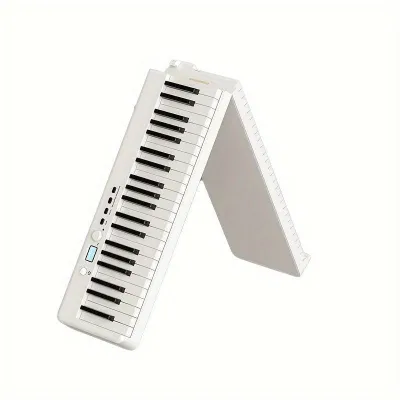
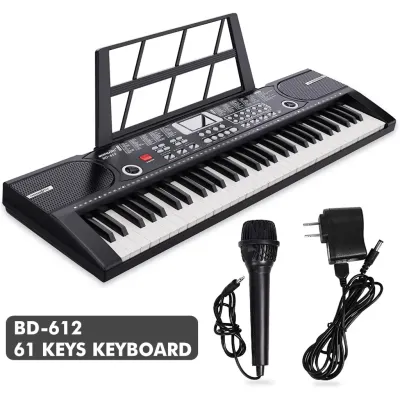
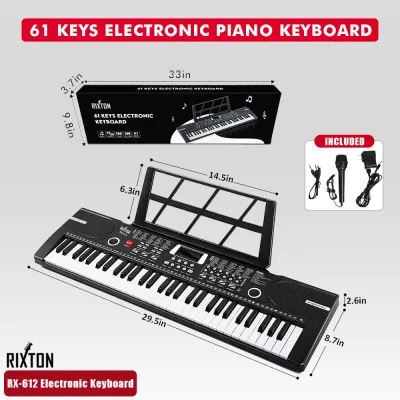
Prices are valid at publication and may change. Please refer to the product page for the latest price.
Finally, prioritize key action and sound engine quality based on your acoustic environment. If your goal is classical piano practice, semi-weighted or fully weighted keys are essential for developing proper finger strength. If you primarily play synthesizer leads or organ parts in a loud outdoor setting, a lighter synth-action keyboard with strong projection might serve you better.
Choosing a Rechargeable Piano for Outdoor Gigs
Performing outdoors presents unique challenges, from unpredictable weather to a complete lack of electrical outlets. When selecting a rechargeable piano for outdoor gigs, start by evaluating the battery capacity indicators. Look for models with clear LED displays or multi-stage battery meters so you can monitor remaining power during a set. Relying on a single low-battery light can lead to unexpected shutdowns during a performance.

Physical build quality is paramount when exposing an instrument to the elements. In tropical climates, high humidity and intense sunlight can affect both the internal electronics and the external chassis. Check the manufacturer’s specifications for environmental operating limits, particularly temperature and humidity ranges. Additionally, ensure the onboard display screen remains highly visible under direct sunlight; high-contrast or backlit LCD screens are generally easier to read outdoors than glossy, reflective panels.
Audio connectivity is another critical factor for live performances. Verify that the keyboard features dedicated line-out ports (such as standard 1/4-inch jacks) rather than just a headphone output. Dedicated line-outs provide proper impedance matching for connecting to external amplifiers, mixing boards, or PA systems, ensuring a clean signal without unwanted distortion or hiss. If you must perform in areas with high ambient noise, check if the keyboard’s internal sound engine can deliver sufficient output level without clipping.
Selecting a Travel-Friendly Keyboard for On-the-Go Practice
For musicians who travel frequently, portability and convenience are the top priorities. You must carefully weigh the trade-offs between foldable, ultra-compact designs and standard 88-key layouts. Foldable keyboards are incredibly easy to pack into standard luggage or backpacks, making them ideal for casual practice during hotel stays. However, they often feature non-weighted keys and a split hinge in the middle, which can affect the overall playing feel and stability on uneven surfaces.
Silent practice is essential when traveling, so ensure the keyboard has a reliable headphone output with low self-noise. Many modern travel keyboards also offer Bluetooth audio or MIDI capabilities. Bluetooth MIDI allows you to connect the keyboard wirelessly to a tablet or smartphone, enabling you to use interactive learning apps or music production software without a tangle of cables. Keep in mind that Bluetooth audio can sometimes introduce minor latency, so a wired headphone connection remains the gold standard for real-time monitoring.
Power compatibility is another crucial consideration for travel. Look for keyboards that support USB-C charging, as this allows you to use the same charger and power bank you carry for your phone or laptop. If the keyboard uses a dedicated AC adapter, verify that the adapter supports a universal voltage range (100V to 240V) so you can safely plug it into local outlets wherever your travels take you.
Picking a Rechargeable Keyboard for Home Practice
When choosing a rechargeable keyboard primarily for home use, you can prioritize playability, ergonomic setup, and an acoustic-like experience over extreme portability. The key action is the most critical factor for developing and maintaining proper playing technique. Look for keyboards with weighted or semi-weighted keys that simulate the resistance of an acoustic piano. This resistance allows for greater dynamic control, helping you practice subtle variations in volume and expression.
The quality of the built-in speakers is also highly important for home practice. Unlike travel models that rely heavily on headphones, a home keyboard should have a robust speaker system capable of filling a room with rich, resonant sound. Look for models that feature multi-directional speakers or dedicated bass reflex ports, which help replicate the natural acoustic projection of a traditional piano cabinet.
Finally, consider how the keyboard integrates into your living space. Ensure the model is compatible with sturdy, adjustable keyboard stands that allow you to maintain an ergonomic playing height. A dedicated input for a sustain pedal is essential for advanced pieces, so verify that the keyboard supports standard 1/4-inch pedal jacks. Having a stable, comfortable setup encourages longer, more productive practice sessions.
Evaluating Cross-Scenario Compatibility
If you need a single keyboard to handle multiple roles—such as home practice, occasional travel, and outdoor gigs—you must evaluate the practical compromises of a dual-purpose instrument. An ultra-portable travel keyboard might be easy to carry, but using it as your primary home practice instrument can hinder your technical development due to its lighter key action. Conversely, a heavy, fully weighted digital piano will provide an excellent home experience but will be difficult to transport to outdoor gigs or pack for travel.
Mid-tier models often strike a balance by offering removable stands, flexible power options, and a manageable weight of around 5 to 10 kilograms. These hybrid models frequently feature semi-weighted keys, providing a reasonable compromise between portability and playability. They allow you to practice comfortably at home while remaining light enough to carry to a local gig or community event.
Be realistic about battery performance when switching between scenarios. Using the keyboard’s built-in speakers at high volume during an outdoor gig will drain the battery much faster than practicing at home with headphones. If you plan to use the instrument for both indoor and outdoor settings, look for models that allow you to toggle power-saving modes or adjust the speaker output to conserve battery life when away from an outlet.
Essential Pre-Purchase Verification Checklist
Before making your final purchase, go through this checklist to ensure the rechargeable piano meets all your technical and practical requirements:
- Battery Type and Charging: Confirm whether the keyboard uses a built-in lithium-ion battery or replaceable rechargeable cells (such as AA NiMH batteries). Check the charging port type (USB-C is highly recommended for modern convenience) and verify the estimated charging time.
- Included Accessories: Review the product description carefully to see what is included in the box. Some models bundle a sustain pedal, music rest, and power adapter, while others require you to purchase these items separately, which can add an extra ₱1,500 to ₱3,000 to your total investment.
- Warranty and Support: Check the manufacturer's warranty terms, paying close attention to how battery degradation is handled. Since rechargeable batteries naturally lose capacity over time, understanding the replacement policy or professional service options is crucial for long-term ownership.
Frequently Asked Questions (FAQ)
Can I leave my rechargeable keyboard plugged in all the time?
Most modern rechargeable keyboards feature built-in battery management systems designed to prevent overcharging once the battery reaches full capacity. However, keeping the instrument constantly plugged into a power source can still generate minor heat, which may accelerate battery aging over several years. To maximize battery health, it is generally recommended to unplug the charger once the battery is full, or consult your specific user manual for the manufacturer’s recommended storage and continuous charging protocols.
Do rechargeable keyboards lose battery life over time?
Yes, all rechargeable keyboards that use lithium-ion or nickel-metal hydride batteries will experience natural capacity degradation over time. Factors such as high ambient temperatures, frequent deep discharges, and storing the keyboard with a completely flat battery can accelerate this process. To ensure your instrument remains reliable, check the product specifications before buying to see if the battery is user-replaceable or if it requires professional service when it eventually reaches the end of its lifespan.

Community discussion
Share your experience or ask a question. Comments are reviewed before publication.