
To find the right piano bag size, you must match the exact physical dimensions of your keyboard to the internal dimensions of the bag, rather than relying solely on the key count. Keyboards with 61, 76, or 88 keys vary significantly in chassis size due to built-in speakers, pitch bend wheels, and control panels. A proper fit ensures your instrument remains secure during transport, preventing internal components from shifting and protecting delicate keys from impact. Whether you are commuting to a gig, heading to a music lesson, or storing your instrument at home, taking the time to measure your keyboard prevents the hassle of returning an ill-fitting bag.
Measure Your Keyboard's True Dimensions
Physical measurements are the only reliable way to shop for a piano bag. To begin, place your keyboard on a flat surface and use a tape measure to find the total length from the outermost left edge to the outermost right edge. Next, measure the width from the front of the keys to the very back of the chassis. Finally, measure the height from the flat base to the highest point of the instrument.
When measuring, pay close attention to protruding elements. Knobs, sliders, pitch bend wheels, and integrated music rests add crucial centimeters to the overall footprint. If you measure only the keybed itself, the bag will be too tight, putting constant, damaging pressure on these fragile controls during transit.
Products mentioned in this guide
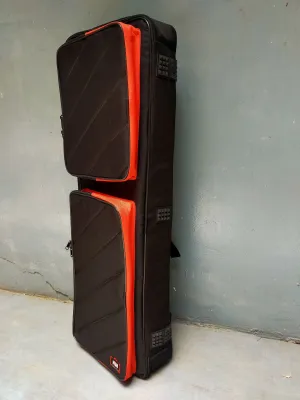
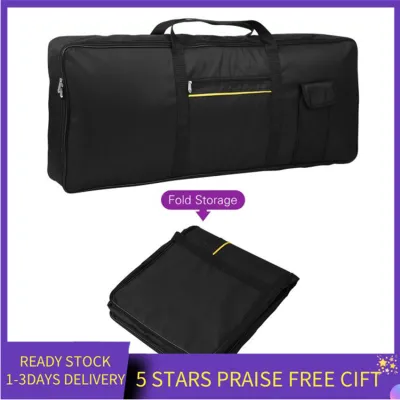
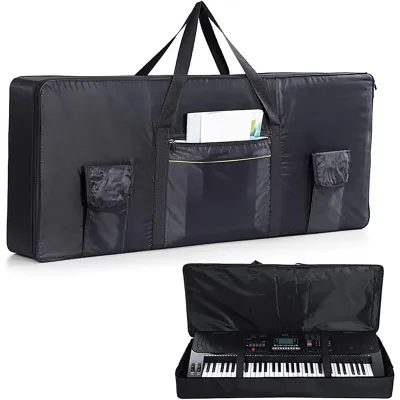
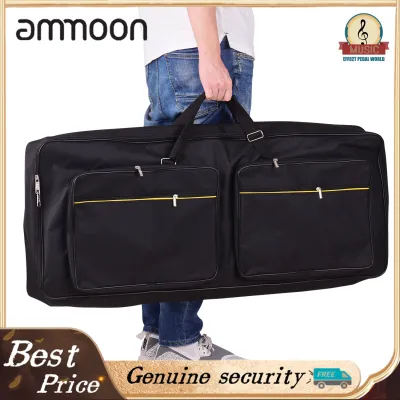
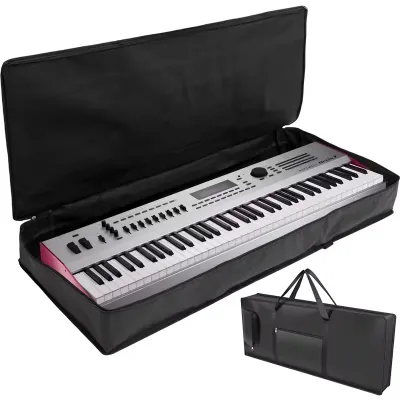
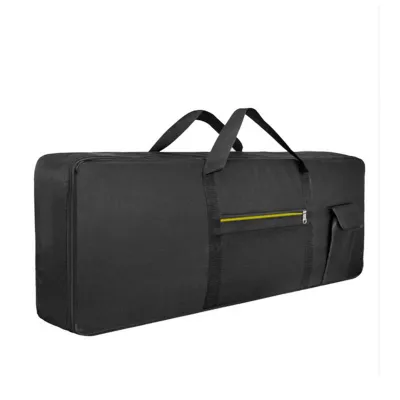

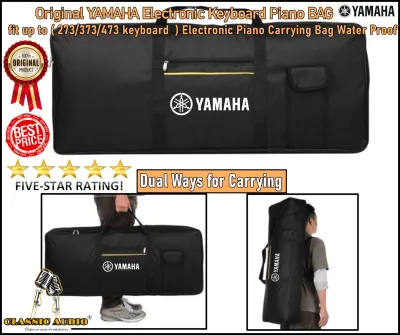
Prices are valid at publication and may change. Please refer to the product page for the latest price.
If you do not have the keyboard physically available—perhaps because it is still shipping or stored in another location—consult the manufacturer’s official specification sheet online. Look for the physical dimensions of the unit itself, making sure not to mistake the shipping box dimensions for the actual instrument size.
Additionally, note the total weight of your keyboard. A heavy 88-key digital piano with weighted hammer-action keys requires a bag with reinforced stitching, heavy-duty metal zippers, and thick shoulder straps. Checking the instrument’s weight ensures you select a bag rated to support it safely without risking a sudden strap failure.
Understand Piano Bag Sizing and Padding
Understanding how manufacturers list bag specifications is critical to finding a secure fit. Always distinguish between external dimensions and internal dimensions. The external dimensions represent the overall footprint of the bag, while the internal dimensions indicate the actual usable space available for your keyboard.

Padding thickness and density play a major role in how a bag fits. Thick foam padding, such as 15mm or 20mm high-density foam, offers excellent impact protection but reduces the usable internal space. If a bag’s external length is 100 centimeters and it features thick padding, the actual internal length may be several centimeters shorter.
In humid tropical climates like the Philippines, choosing a bag with a water-resistant nylon exterior is highly beneficial. This material helps protect the internal electronics from sudden rain showers and ambient moisture, which can corrode delicate circuitry over time.
Look for bags that feature adjustable interior security straps. These nylon straps use hook-and-loop fasteners to hold the keyboard firmly in place, preventing it from sliding around. Snug-fit designs and reinforced rubber or plastic corners on the outside of the bag also help absorb shock if the bag is set down too hard on concrete or tile floors.
Match Keyboard Keys to Standard Bag Categories
Using the key count of your instrument is a helpful starting point to filter your options on online marketplaces, but you must always verify the final fit. Standard bag categories generally align with 61, 76, or 88-key configurations, but the physical variations within each category are vast.
For 61-key keyboards, the designs range from ultra-slim MIDI controllers to bulky arranger workstations. A slim synthesizer might easily slip into a lightweight gig bag, whereas an arranger workstation with built-in speakers and a wide control panel requires a much deeper and taller bag.
The 76-key keyboard category is less common and lacks a single standardized size. Some 76-key instruments are semi-weighted performance keyboards with wide end-cheeks, while others are slim, compact synthesizers. Because dedicated 76-key bags are harder to find, you must carefully compare your measurements against the bag’s internal dimensions, as some models may require a slightly larger bag customized with extra padding.
For 88-key keyboards, the size differences are the most extreme. A slim, modern digital piano designed for home use might be narrow and lightweight, whereas an 88-key professional stage synthesizer or workstation is incredibly deep, tall, and heavy. Always verify the maximum length and depth limits of the bag to ensure it can accommodate these professional-grade instruments.
Account for Accessories and Transport Needs
A keyboard is only part of your setup, so your bag must accommodate your entire gear kit. Look for a piano bag with spacious external zippered pockets to store sustain pedals, power adapters, and connection cables. Some bags offer dedicated compartments for sheet music or a folding music stand, keeping all your gear organized in one place.
Your transport routine should dictate the carrying features you choose. If you commute via public transit or walk long distances, backpack-style shoulder straps are essential for hands-free mobility. Ensure these straps are heavily padded and feature metal clasps rather than plastic ones, which can crack under heavy loads. For short trips from the car to the venue, sturdy, padded side handles are usually sufficient.
Finally, consider whether a soft gig bag or a hard flight case is more appropriate. Padded soft bags are perfect for local travel, rehearsals, and light gigging. However, if you are touring in a vehicle where heavy gear is stacked on top of your instrument, or if you need to check your keyboard as airline luggage, a hard flight case with a rigid exterior and custom foam inserts is mandatory to prevent catastrophic damage.
Common Sizing Mistakes to Avoid
One of the most common mistakes is assuming all keyboards with the same key count share the exact same physical dimensions. A vintage synthesizer and a modern digital piano might both have 61 keys, but their physical footprints can differ by several inches in every direction. Always measure your specific model rather than relying on generic labels.
Another frequent error is buying a bag based solely on its external measurements. This is a common pitfall when shopping on ecommerce platforms. If the listing does not explicitly state the internal dimensions, contact the seller or check the manufacturer’s website to verify the interior clearance before making a purchase.
Lastly, do not ignore the weight capacity of the bag. Heavy-weighted action keyboards can weigh upwards of 15 to 25 kilograms. Placing a heavy instrument into a cheap, unreinforced gig bag will quickly lead to torn seams, broken zippers, or snapped shoulder straps, risking a costly drop that could ruin an instrument worth ₱20,000 or more.
Frequently Asked Questions (FAQ)
Can I use an 88-key piano bag for a 76-key keyboard?
Yes, you can use an 88-key bag for a 76-key keyboard, but you must take precautions to prevent the instrument from sliding around inside. A loose keyboard can suffer damage to its keys, knobs, and jacks during transport. If you must use a larger bag, use the internal securing straps to hold the keyboard tight, and fill any empty space at the ends with dense foam blocks or rolled-up towels to keep the instrument centered and secure.
Do I need a hard case or a padded piano bag?
The choice depends on your transport environment and how often you travel. A padded piano bag is lightweight, easy to carry, and ideal for local rehearsals, music lessons, and personal storage where you control how the instrument is handled. A hard case is necessary for professional touring, air travel, or any situation where the keyboard will be packed tightly into a vehicle trunk alongside heavy amplifiers, drum hardware, and speaker stands.

Community discussion
Share your experience or ask a question. Comments are reviewed before publication.