
Selecting the right bass guitar padded bag is a critical decision for protecting your instrument from physical damage, dust, and environmental hazards. Unlike standard electric guitars, bass guitars are significantly longer, heavier, and more varied in body shape, meaning a generic “one-size-fits-all” approach rarely provides adequate protection. To find the perfect fit, you must measure your instrument’s exact physical dimensions and match them against the internal specifications of the bag. Additionally, you need to evaluate your daily transport habits to determine the appropriate padding thickness and structural reinforcement required to keep your bass secure.
In tropical climates like the Philippines, choosing a bag involves more than just cushioning against bumps. High relative humidity can soften wood glues over time, and sudden, intense downpours can quickly saturate a cheap fabric bag, exposing your electronics and hardware to moisture damage. Whether you are commuting via public transit, walking to local rehearsals, or loading gear into a shared vehicle, understanding how to balance size, padding density, and weather resistance ensures your bass remains safe and playable.
Measure Your Bass Guitar for the Perfect Fit
To guarantee your bass guitar fits securely inside a padded bag, you must rely on precise physical measurements rather than generic marketing labels. Many musicians make the mistake of purchasing a bag based solely on the number of strings or the scale length of their instrument. However, a 34-inch scale length refers only to the distance from the nut to the bridge, not the total physical length of the bass. To avoid buying a bag that is too short or too tight, grab a tape measure and record the exact dimensions of your instrument.
Products mentioned in this guide
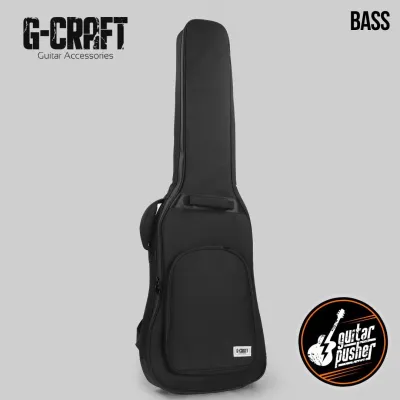
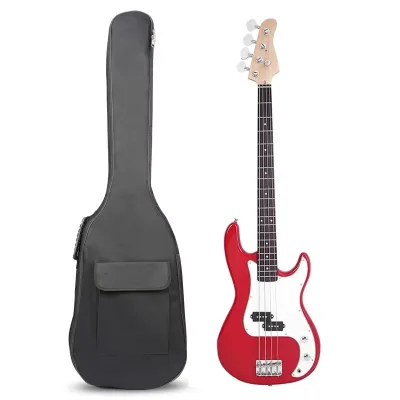
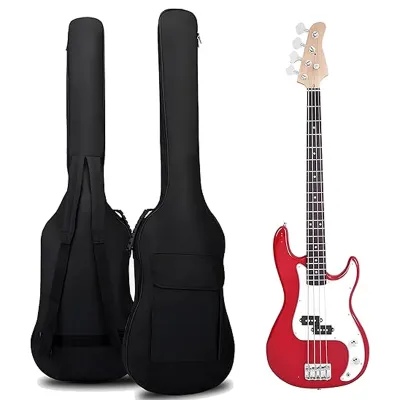
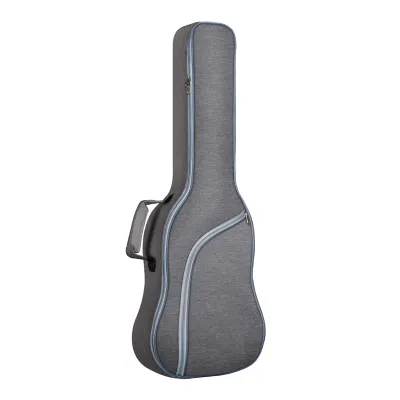
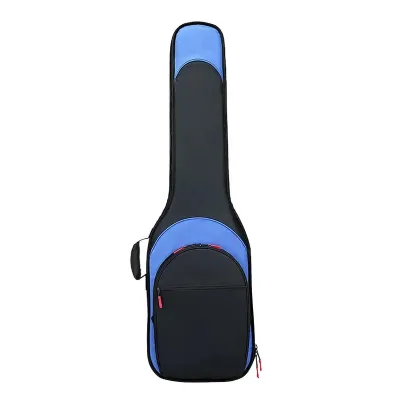
Prices are valid at publication and may change. Please refer to the product page for the latest price.
Start by measuring the overall length of the bass guitar. Lay the instrument flat on a secure surface and measure from the very top of the headstock, including the tip of the tuning pegs, down to the bottom edge of the body, including the strap button. This total length is the most critical dimension, as a bag that is even slightly too short will put dangerous pressure on the headstock and neck joint, or prevent the zippers from closing entirely.
Next, measure the width of the body at its widest points. This requires measuring both the lower bout (the wider bottom half of the body) and the upper bout (the narrower top half near the neck joint). Many modern bass guitars feature asymmetrical body shapes, offset curves, or extended horns that require extra lateral space. Knowing these exact widths prevents you from forcing an offset body into a symmetrical bag, which can compress the foam padding and reduce its impact-absorbing capabilities.
Do not forget to measure the body depth, taking into account any protruding hardware. Measure from the back of the body to the highest point on the front, which typically includes the bridge, pickups, or control knobs. If your bass has a thick body or tall control knobs, a shallow bag will press these components tightly against the fabric, potentially damaging the electronics or scratching the finish during transport.
Once you have these measurements—overall length, lower bout width, upper bout width, and depth—compare them directly to the internal dimensions listed by the bag manufacturer. Always look for the internal dimensions rather than the external dimensions, as thick padding can make the outside of the bag appear much larger than the actual space available inside. Aim for a bag that offers a snug fit with just a few millimeters of clearance to prevent the instrument from shifting while you walk.
Determine the Right Protection Level for Your Needs
The level of protection your bass guitar requires depends heavily on how you transport it and the environments you navigate. Padding thickness is generally measured in millimeters, and understanding the protective capabilities of different thicknesses will help you choose a bag that matches your lifestyle. If your instrument rarely leaves your home or is only moved occasionally in a private car, a lightweight bag with 5mm to 10mm of soft foam padding may suffice to keep off dust and prevent minor surface scratches.

For active musicians who commute regularly, a medium-density padding of 15mm to 20mm is highly recommended. This thickness provides a reliable buffer against the typical bumps, knocks, and crowded conditions encountered on public transport, such as jeepneys, tricycles, or commuter trains. High-density foam is superior to soft open-cell foam because it absorbs and disperses impact energy much more effectively, preventing the force of a bump from transferring directly to your bass guitar’s wooden body.
If you travel frequently for gigs, load your gear into shared band vans, or walk long distances with your instrument, you should look for premium bags featuring 25mm or more of high-density foam, often combined with rigid internal panels. These hybrid bags offer structural rigidity similar to a hard case while retaining the lightweight portability of a gig bag. Rigid plastic or EVA foam inserts along the sidewalls prevent the bag from collapsing under external pressure, offering crucial protection if another piece of gear accidentally falls onto your bag.
Heavy bass guitars are particularly vulnerable to headstock damage from vertical drops. When a bag is set down roughly on the ground, the shock travels up the neck, which can cause the headstock to crack or snap. To mitigate this risk, look for bags equipped with dedicated neck support systems, such as padded neck cradles or suspension blocks that secure the neck in place. Additionally, reinforced bottom panels made of heavy-duty rubber or thick plastic bumpers help absorb the vertical shock of setting the bag down on hard concrete surfaces.
Check Essential Features Beyond Size and Padding
While size and padding are the primary factors in protecting your bass, several secondary features significantly affect daily usability, carrying comfort, and long-term durability. Carrying a heavy bass guitar can quickly cause shoulder and back strain if the bag lacks ergonomic support. Look for wide, heavily padded backpack straps that distribute the weight evenly across your shoulders. Adjustable chest or waist straps are also highly beneficial for stabilizing the load when walking long distances or navigating busy streets.
The quality of the grab handles is equally important for quick maneuvers, such as lifting your bag out of a car trunk or off a luggage rack. Ensure the main side handle is securely stitched, reinforced with rivets, and padded to prevent it from cutting into your hand. A secondary handle located on the back or front of the bag near the headstock is incredibly useful for holding the bag upright in crowded spaces like elevators or trains.
Storage capacity is another practical consideration for the gigging bassist. Evaluate the layout and size of the exterior pockets to ensure they can accommodate your essential gear, such as thick instrument cables, a strap, a tuner, spare strings, and sheet music or a tablet. Some bags feature specialized compartments with organizer pockets for smaller items like picks and tools, reducing the need to carry an extra accessory bag to your rehearsals.
Given the unpredictable tropical weather, the exterior material of your bag must offer robust protection against moisture. Look for high-denier polyester or nylon fabrics, such as 600D or 1680D ballistic nylon, which provide excellent water resistance and tear durability. Water-resistant zippers with rubber seals or an included pull-out rain cover offer an extra layer of security, ensuring that a sudden downpour does not result in water seeping through the seams and reaching your instrument’s electronics.
Inside the bag, look for protective patches made of heavy-duty material near the headstock and bridge areas. The sharp, clipped ends of bass strings and metal bridge components can easily tear soft nylon linings over time. These reinforced interior panels prevent the hardware from wearing through the fabric, preserving the integrity of the bag’s interior and keeping your instrument scratch-free.
How to Test the Fit and Security Before You Commit
When your new padded bag arrives or when you test one in a local music store, performing a systematic fit check will ensure you do not end up with an incompatible or unsafe setup. Begin by placing your bass guitar gently inside the main compartment. The instrument should slide in smoothly without requiring you to stretch or force the fabric around the body or headstock.
Once the bass is inside, secure any internal neck straps or cradles. Zip the bag completely and lift it by the handle, then gently tilt it from side to side. Pay close attention to whether you feel the weight of the instrument shifting or sliding within the compartment. A bag that is too loose allows the bass to slide back and forth, which can lead to finish scratches or impact damage if the bag is dropped.
Next, inspect the headstock area carefully. Press gently on the top of the bag where the headstock rests; there should be a noticeable gap of at least a couple of centimeters between the tip of the headstock and the outer seam of the bag. If the headstock is pressing tightly against the zipper or the top wall, any impact to the top of the bag will transfer directly to the neck of your bass, defeating the purpose of the padding.
Test the operation of the zippers along the entire length of the bag. The zippers should glide smoothly around the curves of the body without catching on the internal lining or requiring excessive force to close. If you have to pull hard on the zipper fabric to get it to close over the widest part of the bass, the bag is too tight, and the constant tension will eventually cause the zipper teeth to fail or split open.
Finally, pack your usual accessories into the exterior pockets while the bass is inside the bag. Ensure that stuffing the pockets with cables, pedals, or straps does not create internal pressure that pushes hard against the face of the bass guitar. If the pockets bulge inward, they can press your control knobs or pickups dangerously hard, potentially damaging the internal wiring or pots over time.
Frequently Asked Questions (FAQ)
Can I use a standard electric guitar bag for a short-scale bass?
No, you should avoid using a standard electric guitar bag for a short-scale bass guitar. Although short-scale basses have a shorter neck than standard 34-inch scale basses, their overall physical length is still significantly longer than that of a standard electric guitar. Additionally, short-scale basses often feature wider headstocks, thicker necks, and deeper bodies to accommodate the heavier bass strings. Forcing a short-scale bass into an electric guitar bag will put extreme tension on the zippers, compress the protective padding, and leave the headstock pressed dangerously tight against the top seam, increasing the risk of structural damage.
Is a hard case always better than a heavily padded bag?
A hard case is not universally better than a heavily padded bag; rather, each serves a different primary purpose. Hard cases offer unmatched crush resistance and structural protection, making them absolutely essential for air travel, cargo holds, or when gear is stacked tightly in a touring van. However, for daily commuting, local rehearsals, and gigging, a heavily padded bag is often much more practical. High-quality gig bags are significantly lighter, feature comfortable backpack straps for hands-free carrying, and provide convenient exterior storage pockets for your accessories, offering an ideal balance of portability and protection for the active bassist.

Community discussion
Share your experience or ask a question. Comments are reviewed before publication.