
Selecting the right keyboard bag for a 61-key instrument in the Philippines requires balancing physical dimensions, material durability, and local environmental factors. Because a “61-key” designation refers only to the number of keys and not the physical footprint of the chassis, instruments can vary by several inches in length, depth, and height. A synthesizer with extensive control knobs, pitch wheels, and a raised rear panel demands a significantly different interior volume than a slim, entry-level arranger keyboard or a compact MIDI controller. To protect your investment from the high humidity, sudden tropical downpours, and transit challenges typical of local travel, you must look beyond generic labels and focus on precise measurements, robust padding, and moisture-resistant materials.
A high-quality bag serves as the primary line of defense against physical impacts, dust accumulation, and environmental degradation. Whether you are a student commuting to music lessons, a gigging musician navigating public transportation, or a hobbyist storing your gear at home, the right bag preserves both the functionality and resale value of your instrument. Investing time in understanding the structural differences between various bag styles ensures that you do not end up with a bag that is either too tight, putting dangerous pressure on the keys, or too loose, allowing the keyboard to slide around and suffer internal damage.
Understanding Size and Style Options for 61-Key Keyboards
When shopping for a keyboard bag, the first critical distinction to make is between internal and external dimensions. External dimensions include outer pockets, carrying handles, backpack straps, and the thickness of the protective padding itself. Internal dimensions represent the actual usable space available for your instrument. Manufacturers always list both, but your primary point of comparison must be the internal measurements. A bag with thick padding might look large from the outside but have a surprisingly snug interior, so always cross-reference your keyboard’s physical dimensions with the bag’s internal specifications before making a purchase.
Products mentioned in this guide
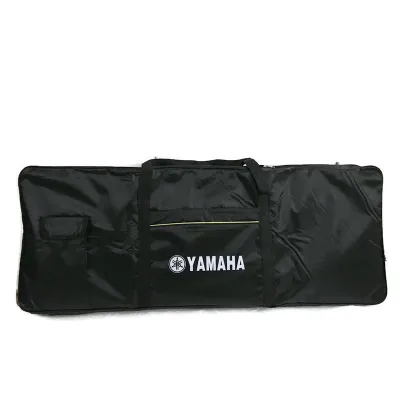
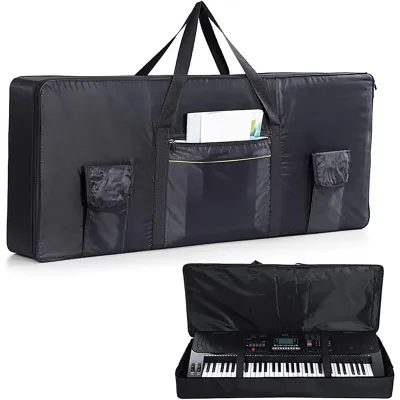
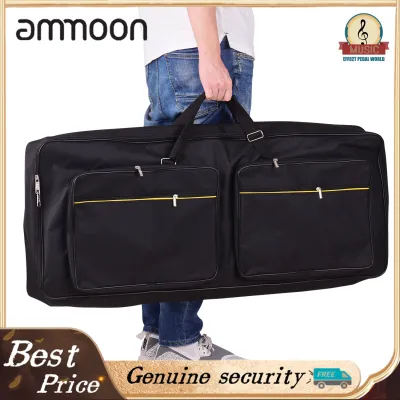
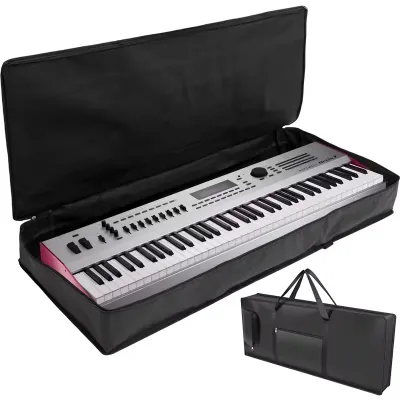
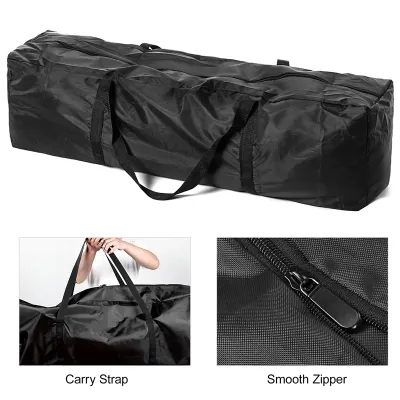
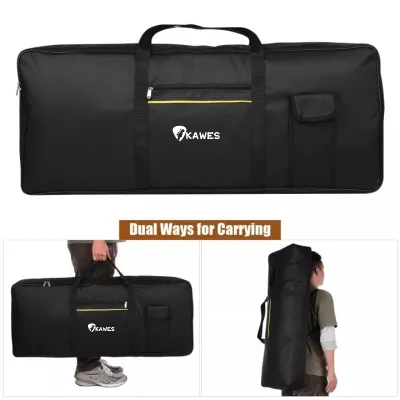
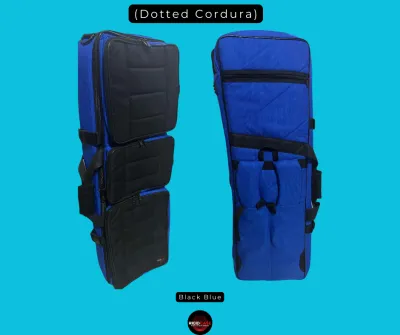
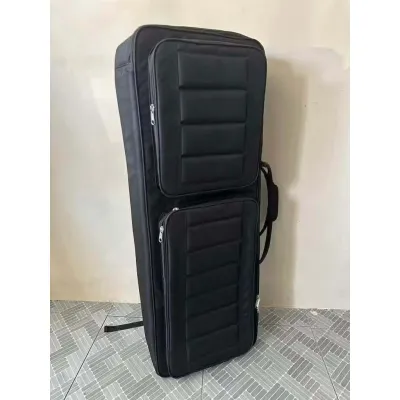
Prices are valid at publication and may change. Please refer to the product page for the latest price.
The choice between a soft gig bag and a hard-shell case depends heavily on your lifestyle, budget, and how you plan to transport your instrument. Soft gig bags are constructed from flexible fabrics like nylon or polyester and are reinforced with varying thicknesses of foam padding. They are lightweight, relatively inexpensive, and highly portable, making them the preferred choice for musicians who travel by foot, tricycle, jeepney, or private car. Hard-shell cases, on the other hand, feature rigid outer walls made of wood, plastic, or aluminum, lined with dense foam. While they offer superior protection against heavy impacts and crushing forces, they are significantly heavier, more expensive, and awkward to carry without a private vehicle.
Weight distribution and carrying configurations play a massive role in daily comfort, especially during long commutes in warm weather. Look for bags that offer multiple carrying options to suit different travel scenarios. Padded shoulder straps should be adjustable and feature a non-slip surface to prevent them from sliding off your shoulder while walking. Backpack-style straps are incredibly beneficial for active commuters, as they distribute the weight of the keyboard evenly across both shoulders and keep your hands free to carry other gear or hold onto handrails. Additionally, a reinforced main grab handle with a padded wrap is essential for quick lifts, such as loading the instrument into the trunk of a car or moving it around a studio space.
Evaluating Protection Levels and Material Durability
The level of protection a keyboard bag offers is directly tied to the thickness and density of its internal padding. Entry-level bags often feature minimal padding, sometimes as thin as 5mm, which only protects against dust and minor scratches. For reliable transport, look for bags with at least 15mm to 20mm of high-density foam padding. This thicker padding acts as a shock absorber, cushioning the instrument against accidental bumps, drops, and vibrations. Pay close attention to the padding around the corners and the bottom of the bag, as these areas are most likely to make contact with the ground when you set the bag down.

In the Philippines, weather resistance is a non-negotiable feature due to sudden tropical downpours and high year-round humidity. The exterior fabric of the bag should be made of a heavy-duty, water-resistant material such as high-denier polyester or nylon, often labeled as 600D or 1200D. The “D” stands for denier, which measures the thickness of the individual threads; a higher number indicates a thicker, more durable, and more water-resistant weave. While these fabrics can easily repel light rain, keep in mind that very few gig bags are completely waterproof. Water can still seep through the seams and zipper teeth during a heavy storm, so look for bags that feature rubberized zipper guards or water-resistant zipper tracks for added security.
The durability of a bag’s hardware determines its overall lifespan and the safety of your instrument. Heavy-duty metal zippers with large, easy-to-grip pull tabs are much less likely to split or jam than cheap plastic alternatives. Inspect the stitching at high-stress areas, such as where the carrying handles and shoulder straps are anchored to the main body of the bag; look for double-stitching, cross-stitching, or metal rivets that reinforce these connections. Inside the bag, adjustable Velcro security straps are a highly valuable feature. These straps wrap around the keyboard chassis to hold it firmly in place, preventing it from shifting side-to-side or banging against the zipper line while you are walking.
Measuring Your Keyboard and Verifying the Perfect Fit
To ensure a secure fit, you must measure your keyboard manually rather than relying on the manufacturer’s spec sheet, which sometimes excludes protruding parts. Use a reliable tape measure to record three primary dimensions: length, depth, and height. Measure the length from the outermost edge of the left side panel to the outermost edge of the right side panel. For the depth, measure from the front edge of the keys to the very back of the chassis, making sure to include any protruding volume knobs, pitch bend wheels, or rear-panel jacks. For the height, measure from the flat surface the keyboard rests on to the highest point on the control panel, which is often the top of a rotary dial or a raised display screen.
Relying solely on a generic “61-key” label when buying a bag is a common mistake that often results in a poor fit. A slim, minimalist 61-key MIDI controller designed for studio use has a vastly different footprint compared to a 61-key arranger keyboard equipped with built-in stereo speakers, a wide control panel, and a music rest attachment. For example, some professional synthesizers feature deep, blocky chassis designs to accommodate complex internal circuitry, requiring a bag with much more depth and height than a standard budget keyboard. Always compare your manual measurements against the internal dimensions listed by the bag manufacturer to confirm compatibility.
When evaluating the fit, aim for a small amount of clearance to allow for easy packing without sacrificing security. An ideal fit leaves about 1 to 2 centimeters of clearance on all sides of the keyboard. If the bag is too tight, you will have to stretch the fabric and force the zippers closed, which puts constant, damaging pressure on the keys, knobs, and the zipper teeth themselves, leading to premature failure. Conversely, if the bag is excessively loose, the keyboard will slide around inside, causing the keys to rub against the interior fabric and increasing the risk of cosmetic scuffs or structural damage if the bag is bumped. If you must buy a slightly larger bag, you can fill the extra space by placing clean, soft microfiber cloths or foam blocks around the ends of the instrument.
Navigating Local Purchases and Post-Delivery Inspections
When deciding where to buy your keyboard bag, consider the trade-offs between physical music stores and online marketplaces. Visiting a physical music retail store in a local mall allows you to bring your keyboard along to test the fit in person, or you can ask the staff to let you try the bag on a matching floor model. This hands-on approach eliminates any guesswork regarding size, padding quality, and zipper smoothness. However, physical stores may have limited stock and higher prices. Online marketplaces and local e-commerce platforms offer a much wider selection of brands, styles, and price points, often at lower rates, but you must rely entirely on written specifications and customer reviews to gauge quality.
If you choose to purchase your keyboard bag online, performing a thorough post-delivery inspection immediately upon arrival is essential. Start by unboxing the bag and inspecting the exterior fabric for any tears, frayed seams, or loose threads. Test every single zipper by opening and closing it multiple times; the movement should be smooth and free of catches or resistance. Open the bag and check the interior for any strong chemical odors, dampness, or signs of mold, which can sometimes occur during storage or transit in humid climates. Finally, place your keyboard inside the bag to verify the fit, ensuring that the corners align properly and that the bag closes easily without putting strain on the zippers.
Before finalizing any online purchase, always verify the seller’s return and exchange policies. Because sizing discrepancies are common with instrument bags, you want to ensure that you can easily return or exchange the product if it does not fit your specific keyboard model. Look for reputable local sellers who offer a clear return window, preferably one that covers change-of-mind or sizing issues. Keep all original packaging, tags, and protective plastic intact until you have fully inspected the bag and confirmed that it fits your instrument perfectly. This precaution protects you from being stuck with an unusable bag and ensures a smooth, hassle-free return process.
Frequently Asked Questions (FAQ)
Can I use a 61-key bag for a 76-key or 88-key keyboard?
No, you cannot use a 61-key bag for a 76-key or 88-key keyboard. Keyboards with 76 or 88 keys are physically much longer and wider to accommodate the additional octaves, and they will not fit into a bag designed for a 61-key instrument. Attempting to force a larger keyboard into a smaller bag will cause immediate zipper failure, split seams, and can put excessive pressure on the keys and chassis, potentially cracking the casing or damaging the internal keybed mechanism. Always purchase a bag that matches the specific key count and physical dimensions of your instrument.
Do I need a hard case instead of a gig bag for local travel?
Whether you need a hard case or a soft gig bag depends entirely on your primary mode of transportation and how often you travel. If you are commuting via public utility vehicles like jeepneys, buses, or trains, or if you plan to check your instrument as baggage on domestic flights, a rigid hard-shell case is highly recommended to protect against heavy impacts, crushing, and rough handling. However, if you primarily transport your keyboard in a private car, use ride-hailing services, or only need a bag for home storage and occasional light travel, a well-padded soft gig bag offers excellent protection while being much lighter and easier to carry.
How should I clean and maintain my keyboard bag?
To extend the life of your keyboard bag in a tropical climate, regular maintenance is key. For cleaning, spot-clean the exterior fabric using a soft cloth, lukewarm water, and a mild detergent; never submerge the bag in water or put it in a washing machine, as this can break down the internal foam padding and ruin the water-resistant coatings. Keep the zippers operating smoothly by applying a small amount of zipper wax or silicone lubricant to the teeth once or twice a year. To prevent mold and mildew growth caused by high humidity, always store the bag in a dry, well-ventilated area, and place a few silica gel packets inside the main compartment when the keyboard is not in use.

Community discussion
Share your experience or ask a question. Comments are reviewed before publication.