
Selecting the right guitar pick maker tool is the first step toward crafting custom plectrums that match your exact playing style, grip preferences, and tonal desires. Whether you want to recycle old plastic cards or carve intricate designs out of exotic hardwoods, the tool you choose determines the quality of your final product. A basic manual punch cutter is highly convenient for casual, low-volume projects using soft plastics. However, if your goals involve working with thicker, denser materials like acrylic, bone, or metals, you will need to invest in more robust rotary or milling equipment to achieve clean results without damaging your tools.
In the tropical climate of the Philippines, high relative humidity can accelerate the rusting of untreated steel blades and affect the stability of organic pick materials like wood. Therefore, understanding the mechanical limits, material compatibility, and maintenance needs of these tools is essential before making a purchase. By evaluating these factors upfront, you can avoid common pitfalls and build a custom pick making setup that lasts.
What to Look for When Evaluating Pick Maker Tools
The fundamental difference between pick making tools lies in how they separate the pick from the host material. Manual punch tools rely on shearing force. This process works like a heavy-duty paper punch, where a male die pushes the material through a female die with tight clearances. While incredibly fast, shearing puts immense localized stress on the material. Brittle plastics may crack or craze along the cut line, requiring extensive sanding to salvage. In contrast, rotary tools and milling machines use material removal. A high-speed spinning bit grinds away the surrounding material. This method exerts far less structural stress on the blank, allowing you to cut brittle or highly structured materials without fracturing them, though it takes significantly longer per pick.
Products mentioned in this guide
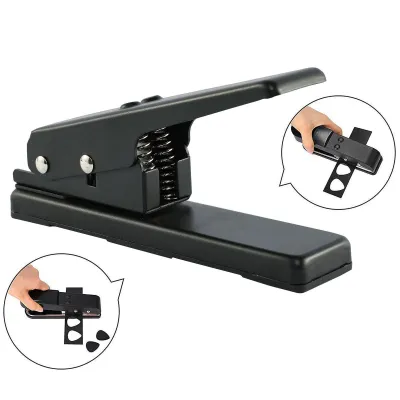
Prices are valid at publication and may change. Please refer to the product page for the latest price.
Every manufacturer specifies a maximum material thickness and hardness rating for their tools. For manual punch cutters, this limit is typically around 1.0 mm to 1.2 mm, which corresponds to standard heavy guitar picks. Attempting to punch through thicker sheets, or harder plastics like polycarbonate, can permanently deform the cutting dies, dull the edges, or bend the handle mechanism. Rotary tools are limited instead by the length and diameter of the cutting bit and the power of the motor. When evaluating a tool, always cross-reference its stated limits with the exact thickness of the blanks you intend to use.
If you plan to produce custom picks in larger quantities, ergonomics become a primary concern. Manual punch tools require significant physical force. Tools with short handles or poor leverage designs concentrate this pressure on your palm, leading to rapid hand fatigue and potential bruising. Look for designs featuring extended, ergonomically curved handles with non-slip rubber grips. A high-quality internal spring-return mechanism is also vital, as it automatically resets the tool for the next cut, saving you the effort of manually prying the handles apart.
No cutting edge stays sharp forever. When evaluating a pick maker, consider how you will maintain it over its lifespan. Many entry-level manual punches feature integrated, non-replaceable blades. Once these blades dull or chip, the entire tool must be discarded. Higher-end models may offer replaceable die sets, though availability can vary. Rotary tools offer a distinct advantage here: they use standard, interchangeable bits that are widely available. When a bit dulls, you simply swap it out for a new one, ensuring the primary motorized tool remains functional for years.
Pick Maker Tool Categories and Their Ideal Use Cases
Manual punch cutters are the most accessible and popular category of pick makers. Shaped similarly to a desktop stapler or a pair of heavy-duty pliers, these tools are designed for quick, on-the-go cutting. They are highly portable, require no electricity, and are perfect for casual players who want to turn expired credit cards, gift cards, or plastic packaging into functional picks. Because they are limited to soft plastics and thin gauges, they are best suited for low-volume hobbyists who prioritize convenience and low upfront costs over material variety.

For those who want to move beyond recycled plastics, desktop rotary and milling tools offer a significant step up in capability. These setups typically involve a motorized rotary tool mounted in a plunge router attachment or a small drill press workstation. By using a template or a guiding jig, you can carve out picks from thick acrylic sheets, dense hardwoods, bone, or even soft metals like brass and copper. This category is ideal for intermediate makers who want to experiment with custom thicknesses, asymmetrical shapes, and premium materials that cannot be sheared with a manual punch.
At the top tier of custom pick production are computer numerical control (CNC) routers and hobbyist laser cutters. These automated machines use digital design files to cut out picks with absolute precision. A CNC router uses a spinning bit to carve the material, while a laser cutter uses a concentrated beam of light to melt or vaporize the excess material. These systems are ideal for small-scale commercial operations, guitar shops, or highly dedicated makers who need to produce large batches of identical picks with intricate engraved logos or complex multi-material inlays. However, they require a dedicated workshop space, computer literacy, and robust safety measures, including active ventilation to exhaust toxic fumes generated by laser-cutting certain plastics.
Checking Material Compatibility and Edge Finishing Needs
Material compatibility is not universal. Different plastics react uniquely to cutting forces. Celluloid, the traditional material for guitar picks, shears beautifully in manual punches, leaving a relatively clean edge. Delrin (polyacetal) is highly durable and slick, but its toughness means it requires a very sharp punch to avoid tearing or leaving a ragged fringe. Acrylic is highly brittle; attempting to punch it manually will almost certainly shatter the blank. For acrylic, wood, and bone, you must use rotary or milling tools. Always read the manufacturer’s documentation to confirm that the tool is rated for the specific material family you plan to use.
A common misconception is that a pick maker tool delivers a finished, playable pick. In reality, any cutting process leaves a raw, square edge. Playing with a square-edged pick produces an unpleasant scratching noise as the plastic drags across the strings, and it can cause the pick to catch, disrupting your playing rhythm. To get a professional feel, the edges must be beveled and polished. While some manual punch kits include a small piece of sandpaper or a basic abrasive strip, these are rarely sufficient for a high-quality finish. You must plan for a secondary finishing workflow, which typically involves sanding the edges with progressively finer grits of sandpaper and finishing with a polishing compound or a buffing wheel.
Safety should never be an afterthought when making custom picks. Manual punches are relatively safe, but they can still pinch fingers or cause brittle plastics to splinter. When using rotary tools, CNC machines, or laser cutters, the safety risks increase significantly. High-speed spinning bits can throw sharp debris, making impact-resistant safety glasses mandatory. Furthermore, cutting materials like wood, bone, and certain plastics generates fine, airborne dust that can cause respiratory irritation or long-term health issues. Always work in a well-ventilated area, use a dust collection system or vacuum attachment, and wear a properly fitted dust mask or respirator to protect your lungs.
Final Pre-Purchase Checklist for Your Pick Making Setup
If you decide to purchase a powered tool, such as a rotary tool, a mini sander, or a CNC machine, you must verify its electrical specifications before checking out. In the Philippines, the standard electrical grid operates at 220V and 60Hz. Many tools sold on international ecommerce platforms are designed for the North American market, which uses 110V. Plugging a 110V tool directly into a Philippine outlet will destroy the motor and create a serious fire hazard. Ensure the product listing explicitly states 220V compatibility, or be prepared to purchase a heavy-duty step-down transformer rated for the tool’s wattage.
When budgeting for your pick making hobby or business, look beyond the price tag of the primary tool. Calculate your total investment in ₱ by factoring in all necessary accessories and consumables. A manual punch tool may have a low initial cost, but you will also need to buy plastic sheets, sandpaper of various grits, and potentially replacement dies. For rotary or CNC setups, you must account for the cost of cutting bits, safety gear, dust masks, and polishing wheels. Summing these costs beforehand ensures you do not end up with a tool you cannot afford to run or finish picks with.
Because pick makers are mechanical tools subjected to repetitive stress, they are prone to wear and eventual failure. When shopping on online marketplaces, prioritize authorized brand stores or highly rated specialty music retailers. Check the warranty terms carefully; a reputable seller should offer at least a basic warranty against manufacturing defects. Avoid listings with vague return policies, as a misaligned punch die or a faulty rotary motor can render the tool useless right out of the box. Reading customer reviews specifically for feedback on build quality and seller responsiveness can save you from a frustrating purchase experience.
Frequently Asked Questions (FAQ)
Can standard punch tools cut thick or hard materials like metal or wood?
No, standard manual punch tools are not designed to cut through hard or thick materials such as metal, wood, bone, or heavy acrylic. These tools rely on manual shearing force, which is only effective on thin, flexible plastics up to about 1.2 mm in thickness. Attempting to punch harder materials will exceed the mechanical limits of the tool. This can result in chipped or misaligned cutting dies, bent handles, or structural failure of the tool itself. Additionally, brittle materials like thick acrylic or wood can shatter under the sudden pressure of a punch, sending sharp fragments flying and posing a significant safety risk. For these materials, always use a rotary tool or a specialized saw.
Is a separate beveling tool necessary for a professional pick feel?
Yes, a separate beveling and polishing process is absolutely necessary if you want your custom picks to have a professional, comfortable feel and a clean tone. Any pick maker tool—whether a manual punch or a rotary cutter—leaves a sharp, 90-degree edge on the cut pick. If you play with this raw edge, it will scrape against the guitar strings, creating unwanted friction and a harsh, scratchy sound. To achieve a smooth release from the strings, you must bevel the edges. This can be done manually by sanding the edges with medium-grit sandpaper to shape the bevel, refining it with fine-grit sandpaper, and finishing with a polishing wheel or abrasive pad to restore a smooth, glossy surface.

Community discussion
Share your experience or ask a question. Comments are reviewed before publication.