
Choosing the right guitar pick thickness is one of the simplest ways to transform your tone and playing comfort. The thickness of your pick dictates how much it bends against the strings, directly influencing your speed, accuracy, and the brightness of your sound. Rather than searching for a single universal option, finding the ideal pick involves matching its physical flexibility to your specific playing style, whether you are strumming acoustic chords or executing rapid electric guitar solos.
Understanding Guitar Pick Thickness Categories
Guitar picks are generally grouped into four main categories based on their thickness, which is typically measured in millimeters. Thin or light picks usually range from 0.38 mm to 0.60 mm, offering maximum flexibility and a bright, snappy sound. Medium picks, spanning from 0.60 mm to 0.80 mm, provide a balanced middle ground that blends flexibility with enough stiffness for basic lead work. Thick or heavy picks range from 0.80 mm to 1.20 mm, offering minimal flex for precise control, while extra-heavy picks exceed 1.20 mm and are virtually rigid.
Because manufacturers use slightly different millimeter boundaries and materials, it is best to focus on the relative flex and physical feedback of the pick rather than strict numerical measurements. A pick that bends easily between your fingers will absorb much of the impact when striking a string, while a rigid pick transfers all of your hand’s energy directly into the instrument. Understanding this physical feedback is the key to selecting a pick that works with your technique rather than against it.
Products mentioned in this guide
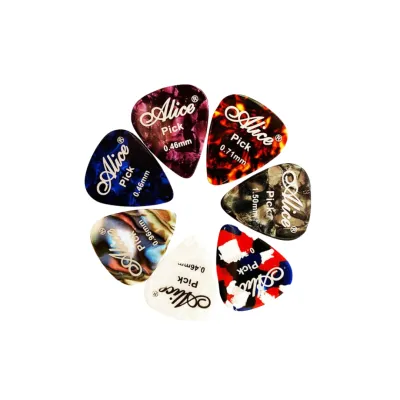


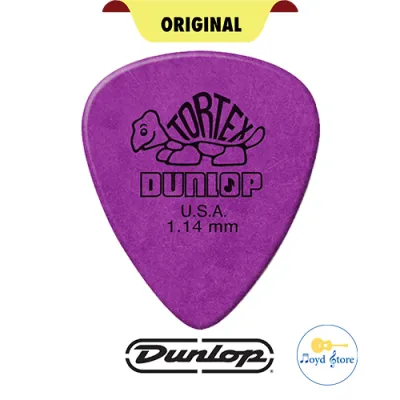
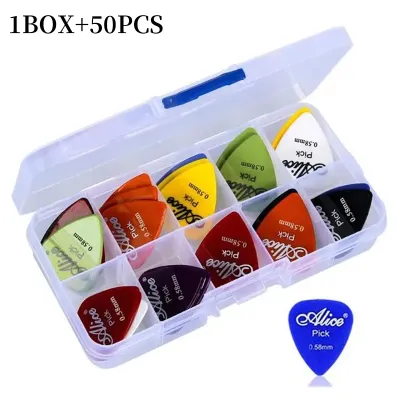
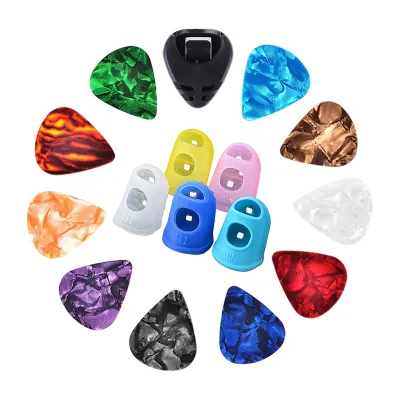

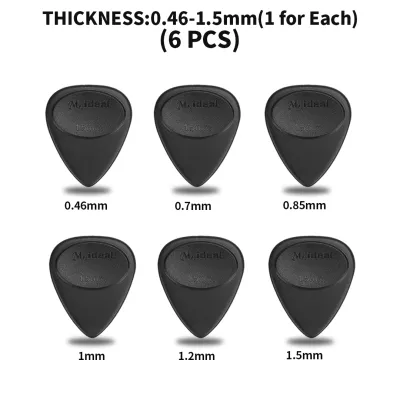
Prices are valid at publication and may change. Please refer to the product page for the latest price.
Best Thickness for Strumming and Rhythm Playing
For rhythm guitarists who primarily focus on strumming open chords, thin to medium picks are generally the most comfortable and effective choices. When you sweep a thin pick across the strings, its natural flexibility allows it to glide smoothly over the metal or nylon without catching. This flexibility acts like a built-in compressor, evening out the volume of your downstrokes and upstrokes to create a smooth, cohesive rhythm track.

Tonal characteristics also make thin picks highly desirable for acoustic strumming. They produce a bright, shimmering sound with a distinct, percussive “pick click” that adds high-end definition to your chords, which is especially useful when playing in a band mix. However, the trade-off is a loss of low-end warmth and overall volume. If you try to play fast, precise single-note runs with a very thin pick, the excessive bending can make your playing feel sloppy and unresponsive, as the pick takes a fraction of a second to snap back into its original shape.
Ideal Thickness for Lead Playing and Soloing
Lead guitarists and soloists almost always favor thick and extra-thick picks because they offer the rigidity required for speed, accuracy, and articulation. When executing advanced techniques like alternate picking, sweep picking, or rapid arpeggios, you cannot afford any delay caused by a bending pick. A rigid pick ensures that the instant you move your hand, the string vibrates, giving you immediate physical feedback and maximum control over your dynamics.
In addition to physical precision, thicker picks produce a noticeably warmer, darker, and fuller tone. The increased mass of a heavy pick drives the strings harder, resulting in a stronger fundamental note attack and greater sustain, which is highly beneficial for electric guitar solos. The primary challenge with a rigid pick is that it requires a more refined technique; if you attempt aggressive rhythm strumming with a heavy pick, it can easily catch on the strings, disrupting your timing and potentially causing you to drop the pick entirely.
Versatile Options for Hybrid and Mixed Techniques
If your playing style involves a mix of rhythm strumming and occasional lead fills, medium picks serve as the ultimate compromise. They offer enough give to allow for smooth chord transitions while retaining sufficient stiffness to handle single-note melodies without feeling overly sluggish. Many gigging musicians keep a stash of medium picks on hand because they adapt easily to different song sections and musical genres.
Beyond thickness, the shape of the pick and the design of its edges play a significant role in how it feels and performs. For instance, a standard teardrop shape with a rounded tip provides a softer attack, whereas a smaller, pointed jazz-style pick with a beveled edge can make a thick pick feel even faster and more articulate. For players who transition between fingerstyle and flatpicking, incorporating a dedicated thumb pick or individual fingerpicks can provide the best of both worlds, allowing you to pluck bass lines with your thumb while keeping your fingers free to pluck the higher strings.
How to Test and Find Your Perfect Pick
Because picks are relatively inexpensive accessories, the most practical way to find your ideal match is to purchase a multi-thickness variety pack rather than buying single picks blindly. These packs usually contain a range of light, medium, and heavy options, allowing you to compare different thicknesses side by side on your own instrument. You can find these variety packs easily at local music stores or through online marketplaces for around ₱150 to ₱400.
When testing your new picks, make sure to play through both clean and overdriven amplifier settings, as the tonal differences and pick noise will change dramatically depending on your signal chain. Pay close attention to how the pick feels in your hand during long practice sessions, especially in warm, humid tropical climates where sweaty fingers can cause smooth picks to slip. Look for options with textured grip patterns, and observe how quickly the edges wear down after a few hours of playing to assess their long-term durability.
Frequently Asked Questions (FAQ)
Does pick material matter as much as thickness?
Yes, the material of a pick is just as important as its thickness because it directly influences the grip, attack, and overall durability. While thickness dictates flexibility, materials like celluloid offer a traditional feel with a bright attack, whereas nylon is flexible and often features a molded grip that is excellent for humid conditions. Delrin provides a smooth release and excellent wear resistance. Lock in your preferred thickness first, then experiment with materials to fine-tune your tone.
Can I use a thick pick for strumming if I hold it loosely?
Yes, you can strum with a thick pick by relaxing your grip and angling the pick slightly so it glides over the strings. This technique allows you to enjoy the warm, robust tone of a heavy pick without the harsh snagging that usually occurs during rhythm playing. However, maintaining this loose grip requires practice; if you hold the pick too loosely, it may spin in your fingers or fly out of your hand, and trying to maintain this balance during long rhythm sessions can lead to hand fatigue.
Community discussion
Share your experience or ask a question. Comments are reviewed before publication.