
Starting a self-help journey with the personal journal of a Roman emperor can feel intimidating, but finding the right edition of Marcus Aurelius’ Meditations makes this ancient philosophy highly accessible. For Filipino readers who are new to Stoicism, the ideal edition is one that balances a clear, modern English translation with robust contextual notes, printed in a format that fits your daily routine and budget. Because Meditations was never intended for publication—it was simply a collection of private reminders written to maintain mental clarity during military campaigns—the way those thoughts are translated into English completely changes how easily you can absorb and apply them to modern life.
When selecting your first copy, you must look beyond the cover design and focus on the translator’s approach, the physical durability of the book in tropical climates, and the authenticity of the publication. A well-chosen edition serves as a practical guide for navigating daily stressors, whether you are dealing with a long commute in heavy traffic or looking for a structured way to reflect at the end of a busy day. By understanding what to look for in translation styles, book formats, and retail sources, you can make an informed decision that supports a long-term reading habit.
Decoding Translation Styles for First-Time Readers
The translation of Meditations is the single most important factor in determining whether you will finish the book or leave it on your shelf. Because Marcus Aurelius wrote his journal in Koine Greek, translators must make choices about how to render his thoughts into English. These choices generally fall into two categories: classical, literal translations and modern, conversational translations.
Products mentioned in this guide
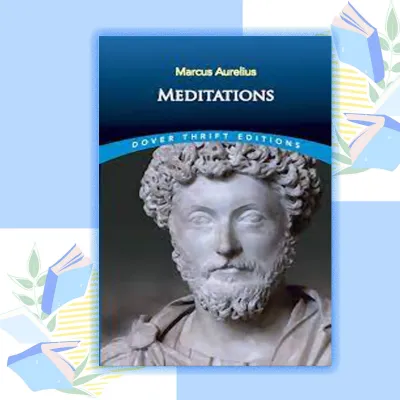
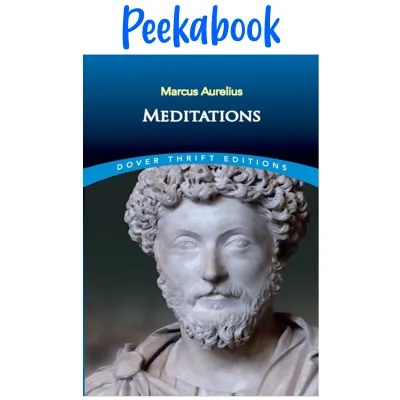

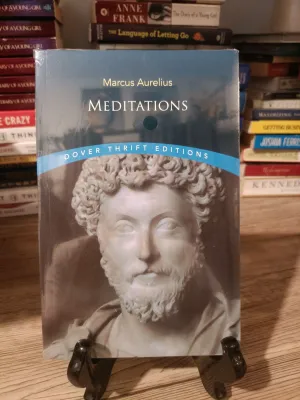


Prices are valid at publication and may change. Please refer to the product page for the latest price.
Classical translations, many of which were produced in the 19th or early 20th centuries, tend to use formal, archaic English. You will frequently encounter words like “thee,” “thou,” and complex, winding sentence structures. While some readers appreciate the historical, almost poetic tone of these older versions, they can create an unnecessary barrier for beginners. Trying to decipher archaic vocabulary while simultaneously trying to grasp profound philosophical concepts often leads to mental fatigue. For most first-time readers, these literal translations require constant rereading just to understand the basic meaning of a sentence.
In contrast, modern translations prioritize clarity and directness. These translators translate the ancient Greek into contemporary English, using sentence structures that feel natural to a modern reader. Instead of formal prose, you get crisp, punchy sentences that read like a modern self-help book or journal. This style allows you to immediately connect with the emperor’s thoughts on resilience, duty, and emotional control. If your goal is to apply Stoic principles to your daily life right away, a modern, conversational translation is highly recommended.
Beyond the translation of the core text, look closely at the supplementary materials included in the edition. A high-quality beginner’s edition should feature an introductory essay that explains who Marcus Aurelius was, the historical context of his reign, and the core tenets of Stoic philosophy. Because the author wrote these notes to himself, he did not stop to explain basic Stoic terms like hegemonikon (the ruling center of the mind) or logos (the rational order of the universe). Contextual notes, footnotes, or a glossary at the back of the book are incredibly valuable for bridging these historical and philosophical gaps.
Finally, always verify whether the edition you are considering is unabridged. Meditations is traditionally divided into 12 distinct “books,” which are actually short chapters or sections. Some budget editions or thematic compilations may abridge the text, selecting only the most famous quotes and omitting the rest. To get a complete understanding of the philosophy, ensure the edition contains all 12 books in their entirety. This guarantees you do not miss the repetitive, raw, and deeply personal passages that reveal the true struggle of practicing Stoicism.
Choosing the Right Format for Your Reading Habits
Once you have decided on a translation style, the physical or digital format of the book will dictate how easily you can integrate it into your daily routine. In the Philippines, where daily commutes can be long and tropical weather conditions affect physical media, your choice of format requires careful consideration.

Mass-market paperbacks are highly popular due to their affordability and portability. They are lightweight enough to slip into a backpack or tote bag, making them excellent companions for long transits on public transport or waiting in lines. However, mass-market editions typically feature small fonts, narrow margins, and lower-quality paper. If you prefer to actively study the text by highlighting passages, writing notes in the margins, or flagging pages, a larger trade paperback or a hardcover edition is a much better choice. Trade paperbacks offer wider margins and sturdier paper that can handle ink without bleeding through.
For readers who want to use Meditations as a tool for active self-reflection, specialized formats like journal editions or annotated layouts are worth exploring. Some editions are designed with blank pages adjacent to the text, specifically intended for reader reflections. Others include guided prompts that help you apply Marcus Aurelius’ lessons to your personal challenges. While these editions are generally larger and more expensive, they transform reading from a passive activity into an interactive practice.
Digital formats, such as e-books, offer unparalleled convenience and durability. An e-book allows you to carry the entire text on your smartphone or e-reader, adjust the font size for comfortable reading, and easily search for specific keywords or passages. Furthermore, digital books do not suffer from the environmental challenges of tropical climates. High humidity can cause physical book pages to yellow quickly, develop foxing (brown spots), or attract bookworms and mold. If you choose physical books, you must store them in well-ventilated areas away from direct sunlight and moisture. Digital editions completely bypass these preservation worries.
Audiobooks are another excellent option, particularly for multitasking or commuting. Listening to a professional narration of Meditations during a long drive or a crowded commute can turn stressful travel time into a period of calm reflection. However, because Stoic philosophy is dense and thought-provoking, you may find yourself needing to pause the audio frequently to digest the ideas. Many readers find that a combination of formats—such as listening to the audiobook during a commute and reviewing a physical copy at home—provides the most effective learning experience.
A Pre-Purchase Checklist for Verifying Editions
Because Meditations is a public-domain text, hundreds of publishers have released their own versions. This has resulted in a market flooded with poorly formatted reprints, outdated translations, and low-quality editions. To ensure you are purchasing a high-quality, authorized edition that will support your learning, use this practical pre-purchase checklist before checking out your cart or heading to the cashier.
First, verify the translator’s name. If a listing or book cover does not clearly state the translator’s name, it is highly likely a reprint of an expired, 19th-century public-domain translation. While these editions are often very cheap, they are also the most difficult for beginners to read. Look for recognized modern translators who are known for their clarity and scholarship. Checking the publication date of the translation itself—not just the reprint date of the physical book—will help you identify whether the language is modern or historical.
Second, utilize online preview features or read sample pages in-store. Most online book retailers offer a preview feature that allows you to read the first few pages of a book. Use this to read a few passages from Book 2 or Book 3. Pay close attention to the sentence flow and vocabulary. If you find yourself stumbling over the words or needing to look up multiple terms in a single paragraph, that particular translation may not be the right fit for your current reading level. The prose should feel natural and engaging, encouraging you to keep reading.
Third, inspect the table of contents and supplementary features. A comprehensive edition should include more than just the raw text of the 12 books. Look for a detailed introduction, a biographical sketch of Marcus Aurelius, explanatory notes for difficult passages, and an index of key terms. These tools are not mere academic filler; they are essential guides that help you understand the practical application of the philosophy. If the table of contents only lists “Books 1-12” with no other resources, you may want to look for a more robust edition.
Finally, check the physical specifications of the book if you are buying a print copy. Look at the dimensions, page count, and binding type. Some very cheap editions use glued bindings that crack easily, causing pages to fall out after only a few reads. If you plan to carry the book with you daily, investing slightly more in a reputable publisher’s trade paperback with a flexible, durable binding will save you from having to replace a damaged book later on.
Finding Authentic Copies in the Philippines
Acquiring a genuine, high-quality copy of Meditations in the Philippines requires some selectivity, especially when shopping online. The local market has seen a rise in counterfeit books, which are unauthorized, low-quality reproductions of popular titles. These counterfeits not only violate copyright laws but also offer a poor reading experience.
To ensure you are buying an authentic copy, prioritize established local bookstore chains and official brand stores on major online marketplaces. Reputable physical bookstores carry curated selections from international publishers, ensuring that the translation and printing quality meet global standards. When shopping on online marketplaces, look for sellers with verified mall badges, official distributor status, or high ratings with detailed customer reviews that include photos of the actual book.
Be vigilant against the red flags of counterfeit books. The most obvious indicator is an unusually low price. If a brand-new paperback edition of Meditations is priced significantly lower than the standard retail price of established bookstores—such as under ₱150—it is highly likely a counterfeit. Other common red flags include blurry or pixelated cover art, misaligned text on the spine, thin paper that allows text from the reverse side to show through, and frequent typographical errors. Counterfeit books also tend to use cheap glue that degrades rapidly in the humid Philippine climate, leading to loose pages within weeks of purchase.
If you cannot find your preferred translation or edition locally, consider ordering from international online bookstores that offer shipping to the Philippines. While this option may involve longer shipping times and higher delivery costs, it gives you access to a much wider range of editions, including specialized study guides and high-quality hardcovers. When calculating the total cost, factor in the shipping fees to ensure the purchase fits within your budget. Investing in a genuine, well-produced book ensures that your introduction to Stoicism is comfortable, engaging, and built to last.
Frequently Asked Questions (FAQ)
Do I need to read other Stoic philosophers before starting Meditations?
No, you do not need to read other Stoic philosophers before starting Meditations. Because the book consists of Marcus Aurelius’ private journal entries rather than a structured academic textbook, it serves as an excellent, highly personal entry point to Stoicism. You are reading a real person trying to apply philosophy to his daily struggles, which makes the concepts feel immediate and practical. However, because the text lacks a formal structure, reading a modern introductory book on Stoicism or choosing an edition of Meditations with a comprehensive introduction can help you understand the broader philosophical framework. Once you are comfortable with his writings, you can expand your reading to other prominent Stoics like Seneca or Epictetus to deepen your understanding.
Is it better to read Meditations all at once or in small daily sections?
It is generally much better to read Meditations in small, daily sections rather than trying to read it all at once. The book is not a narrative with a plot; it is a collection of aphorisms, reflections, and mental exercises. Reading just one or two passages a day gives you the time to contemplate the ideas and observe how they apply to your own life. You might read a passage in the morning and use it as a guiding principle for your interactions throughout the day. This slow, reflective approach aligns perfectly with how Marcus Aurelius wrote the text—as a daily practice of self-examination and mental alignment.

Community discussion
Share your experience or ask a question. Comments are reviewed before publication.