
Navigating the early stages of a professional career in the Philippines requires a diverse set of skills, but few are as universally impactful as a solid understanding of basic financial accounting. Whether you are a newly hired corporate analyst in Bonifacio Global City, an aspiring entrepreneur launching an e-commerce venture, or a non-finance professional looking to understand your department’s budget, financial literacy is your primary tool for strategic decision-making. The challenge lies in selecting the right educational resources from a vast sea of academic textbooks, international bestsellers, and local study guides.
Choosing the ideal basic financial accounting book is not a one-size-fits-all endeavor. The right book must align with your specific career trajectory, match your current level of technical comprehension, and accurately reflect the regulatory environment of the Philippine market. By evaluating books based on their structural clarity, practical exercises, and local relevance, you can build a personalized reading list that accelerates your professional growth without causing unnecessary cognitive overload.
Define Your Accounting Learning Objectives
Before purchasing any financial literature, you must clearly define why you need to learn accounting. Young professionals often fall into the trap of buying highly technical, academic textbooks when their actual goal is simply to interpret financial statements for managerial roles. Conversely, some select overly simplified personal finance books that fail to explain the mechanics of double-entry bookkeeping required for corporate compliance. Identifying your primary objective prevents you from wasting time on materials that are either too complex or too superficial.
Products mentioned in this guide
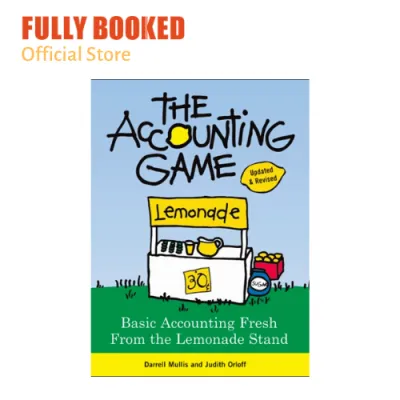
![[Brand New] The Accounting Game: Learn the Basics of Financial Accounting - As Easy as Running a Lemonade Stand by Darrell Mullis and Judith Orloff (Paperback)](https://img.lazcdn.com/g/p/5b813e7517c14c021c32837ba30dff43.jpg_400x400q80.jpg_.webp)
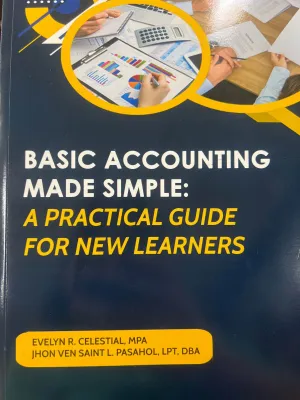
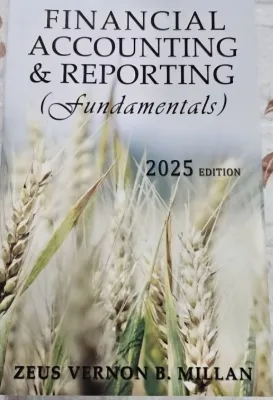
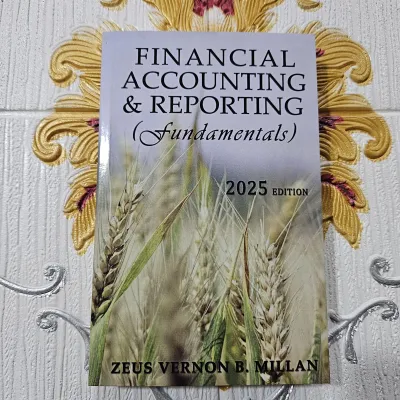
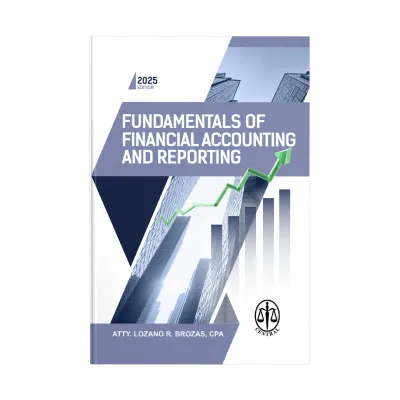
Prices are valid at publication and may change. Please refer to the product page for the latest price.
If your goal is corporate career advancement, you will need a book that emphasizes the preparation and analysis of standard financial statements. This path requires a structured understanding of how daily business transactions flow into the balance sheet, income statement, and cash flow statement. You must learn to speak the language of corporate auditors and internal finance teams, which demands a book with a formal, systematic approach to accounting principles.
For entrepreneurs, freelancers, and small business owners, the focus shifts from theoretical compliance to practical cash management. Your objective is to understand how transactions affect your daily liquidity, how to manage accounts receivable and payable, and how to prepare basic records for tax filing. Books tailored for this audience should bypass dense academic debates and focus heavily on operational bookkeeping, cash flow tracking, and basic internal controls.
Finally, if you are an accounting graduate preparing for the Certified Public Accountant (CPA) licensure exam, your objectives are highly structured and strictly regulated. You require comprehensive textbooks that align directly with the syllabus prescribed by the Professional Regulation Commission and the Board of Accountancy. These books must offer rigorous problem sets, detailed theoretical explanations, and strict adherence to local accounting standards.
Core Criteria for Selecting a Beginner-Friendly Book
A beginner-friendly accounting book must possess specific structural qualities to make complex financial concepts digestible. The first criterion is a clear, logical explanation of the fundamental accounting equation: Assets equal Liabilities plus Equity. A high-quality introductory book will spend ample time unpacking this equation, demonstrating how every single business transaction maintains this balance. If a book rushes through this foundation to get to advanced topics, beginners will quickly find themselves lost in subsequent chapters.

Another essential criterion is the systematic breakdown of double-entry bookkeeping. The book should clearly explain the rules of debits and credits, using practical, relatable examples rather than abstract jargon. Look for texts that guide you step-by-step through the entire accounting cycle, from analyzing source documents and recording journal entries to posting to the general ledger, preparing a trial balance, and executing adjusting and closing entries.
Practical utility is just as important as conceptual clarity. A book that only discusses theory without offering hands-on practice is of limited value to a beginner. Prioritize books that feature comprehensive practice exercises, real-world case studies, and, crucially, an answer key or detailed solution guide. Working through problems manually is the only way to internalize accounting mechanics, and having a reliable way to verify your answers is vital for self-study.
Visual aids play a significant role in simplifying complex transaction cycles. Look for books that make extensive use of T-accounts, flowcharts, and sample financial statements. Visualizing how money moves from a journal entry into a ledger account, and eventually onto a financial report, helps bridge the gap between abstract numbers and concrete business activities. Well-designed tables that compare different accounting methods, such as cash versus accrual accounting, are also highly beneficial.
Match the Book Category to Your Career Trajectory
Selecting the right book requires matching its specific sub-genre with your professional roadmap. Accounting literature is broadly categorized to serve different audiences, and choosing the wrong category can lead to frustration. By filtering books through the lens of your immediate career targets, you can ensure that every hour spent reading directly contributes to your professional development.
Corporate Roles and Financial Reporting
For those aiming for corporate finance, auditing, or management roles within established enterprises, the ideal book must focus heavily on financial statement analysis and corporate governance. These texts should teach you not just how to record transactions, but how to interpret the resulting data to assess a company’s liquidity, solvency, and profitability. Look for books that cover standard adjusting entries, depreciation methods, and inventory valuation techniques used in larger corporate environments. The material should prepare you to collaborate effectively with internal audit teams and understand the financial implications of corporate decisions.
Entrepreneurship and Small Business Management
If you are managing your own business or working as a freelancer, you need a book that translates accounting jargon into actionable business metrics. The focus here should be on practical cash management, payroll basics, and the integration of manual bookkeeping with modern accounting software. Look for guides that explain how to set up a chart of accounts tailored to small businesses, how to manage vendor payments, and how to track customer invoices. The best books for this path emphasize keeping clean records for tax compliance while using financial data to drive business growth and maintain healthy cash reserves.
CPA Licensure and Advanced Academic Prep
For aspiring CPAs, the selection process is governed by academic rigor and exam alignment. You need comprehensive, university-level textbooks that cover the entire spectrum of financial accounting and reporting. These books must feature challenging problem sets that mimic the complexity of the board exams, including multi-step adjustments and theoretical questions on accounting standards. Ensure the authors are recognized local educators or practitioners who understand the specific testing patterns and emphasis areas of the Philippine CPA licensure examinations.
Verify Local Relevance, Editions, and Formats
One of the most critical steps for young professionals in the Philippines is verifying the local relevance of the book’s content. Accounting is not entirely universal; it is heavily influenced by local tax laws and national reporting standards. In the Philippines, corporate reporting must comply with the Philippine Financial Reporting Standards (PFRS), which are closely aligned with the International Financial Reporting Standards (IFRS). If you accidentally purchase a book based strictly on US GAAP, you may learn terminology and rules—such as LIFO inventory valuation—that are not permitted under PFRS.
Furthermore, local tax regulations significantly impact how businesses record transactions and prepare financial statements. The introduction of tax reforms directly affects corporate tax rates, withholding taxes, and value-added tax (VAT) computations. Therefore, you must check the publication date and edition of any local accounting book to ensure it incorporates the most recent tax laws. Using an outdated textbook can lead to learning obsolete practices that will have to be unlearned later in your career.
The choice between physical and digital book formats also deserves careful consideration, especially given the local environment. Physical textbooks are highly advantageous for deep, focused study. They allow you to easily flip back and forth between a problem description, a T-account diagram, and an answer key, which is often cumbersome on a screen. Additionally, physical books do not require an internet connection or battery power, making them reliable during power outages or long commutes.
On the other hand, digital formats offer unmatched portability and searchability. Carrying multiple heavy accounting textbooks during a daily commute on the MRT or bus can be physically exhausting. E-books allow you to carry an entire library on a single tablet or e-reader. They also enable you to search instantly for specific terms, highlight key passages, and sometimes access interactive spreadsheets or online practice portals. Consider your daily routine, study habits, and budget when deciding which format will best support your learning journey.
Sourcing Books and Avoiding Counterfeit Copies
Acquiring legitimate, high-quality copies of accounting books is essential for a productive learning experience. The market in the Philippines is unfortunately flooded with counterfeit textbooks and unauthorized photocopies. These illegal reproductions often suffer from poor print quality, blurry text, missing pages, and weak bindings that quickly fall apart in the country’s high humidity. Investing in an authorized, original copy ensures that you receive complete, accurate content while supporting the authors and publishers who create these educational resources.
To guarantee authenticity, purchase your books directly from reputable sources. Established local brick-and-mortar bookstores and university presses are the safest options. Many local universities operate their own publishing houses or bookstores that sell official textbooks directly to the public. When shopping on online marketplaces or major ecommerce platforms, look for official brand stores or verified preferred sellers. Avoid third-party listings that offer textbooks at suspiciously low prices, as these are almost always unauthorized reprints.
Before making an online purchase, carefully inspect the seller’s ratings, customer reviews, and product descriptions. Look for reviews that mention print clarity, paper quality, and the presence of any accompanying digital access codes. Authentic textbooks often include scratch-off codes for online study portals, practice quizzes, or supplementary digital materials, which are rarely functional in counterfeit copies. If a listing has multiple complaints about blurry text or pages falling out, look for another seller.
If you are on a tight budget, the second-hand market can be an excellent source of affordable, legitimate books. Many accounting students and young professionals sell their used textbooks after passing their university courses or board exams. You can find these through local online classifieds, student social media groups, or second-hand bookshops. When buying second-hand, verify that the book is an original print and check which edition it is. Older editions are perfectly acceptable for learning core, unchanging principles like double-entry bookkeeping, provided you supplement your study with updated materials to cover any recent changes in local tax laws or reporting standards.
Frequently Asked Questions (FAQ)
Do I need a Philippine-specific accounting book as a beginner?
For absolute beginners, the core conceptual framework of accounting—such as the accounting equation, the double-entry system, and the general structure of financial statements—is universal across the globe. You can certainly use highly rated international textbooks to build a strong conceptual foundation. However, as you progress to practical application, tax computations, and formal financial reporting, you will absolutely need Philippine-specific books. Local resources are essential for understanding the nuances of the Philippine Financial Reporting Standards (PFRS), value-added tax (VAT), withholding taxes, and compliance requirements set by the Bureau of Internal Revenue and the Securities and Exchange Commission.
Are digital formats better than physical books for accounting?
Neither format is universally superior; the best choice depends on your study environment and learning style. Physical books are generally preferred for active, analytical study because they allow you to write notes in the margins, easily reference multiple pages simultaneously, and work through complex ledger problems without screen fatigue. This tactile experience is highly beneficial when learning how to construct financial statements manually. Conversely, digital formats are ideal for young professionals who study during their daily commutes or travel frequently. The ability to search for specific terms instantly and access interactive digital spreadsheets can significantly enhance your study efficiency, making a hybrid approach—using a physical book at home and a digital copy on the go—often the most effective strategy.

Community discussion
Share your experience or ask a question. Comments are reviewed before publication.