
Finding the right guitar when you have smaller hands or a smaller frame is about matching specific physical dimensions to your reach. In the Philippines, where high humidity can affect wood and playability, choosing a slim guitar with a comfortable neck profile and manageable body depth makes all the difference between a frustrating struggle and a rewarding musical journey. Beginners often make the mistake of buying a standard dreadnought acoustic, only to find their fingers aching and their arms strained. By focusing on key specifications like nut width, neck profile, and body depth, you can find an instrument that feels natural to hold and play.
The journey of learning an instrument should be defined by progress, not physical discomfort. When a guitar is too large or thick, a beginner must fight against the physical dimensions of the instrument before they can even begin to practice correct finger placement. This physical barrier often leads to early abandonment of the hobby. Selecting an instrument designed with a slimmer profile removes these unnecessary obstacles, allowing you to focus entirely on building muscle memory, strength, and coordination.
Understanding Slim Guitar Designs for Small Hands
When guitar players use the term “slim,” they are usually referring to a combination of three distinct design elements: neck thickness, nut width, and body depth. A slim neck profile means the distance from the front of the fretboard to the back of the neck is relatively shallow, allowing your thumb and fingers to wrap around the wood with minimal effort. Nut width refers to the span of the fretboard at the very top of the neck, near the tuning pegs, which dictates how closely the strings are spaced. Body depth is the thickness of the guitar’s soundbox, which determines how far your strumming arm must reach over the instrument to strike the strings.
Products mentioned in this guide


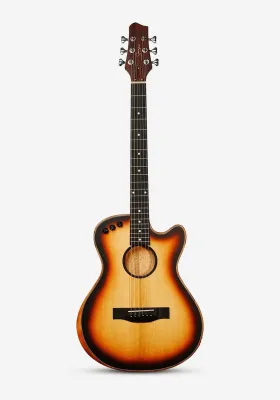


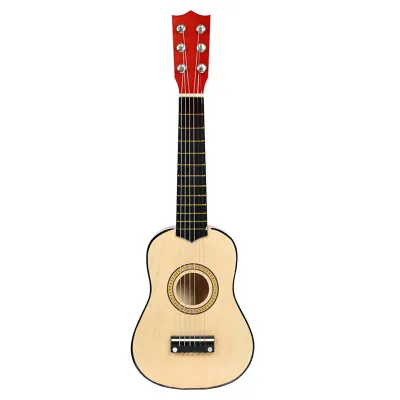


Prices are valid at publication and may change. Please refer to the product page for the latest price.
Standard acoustic guitars, particularly the traditional dreadnought shape, are built to maximize volume and bass resonance. To achieve this, they feature deep bodies that often exceed 100 millimeters in depth, along with wide, thick neck profiles designed to withstand high string tension. For a beginner with smaller hands, shorter fingers, or a smaller physical frame, these dimensions present significant challenges. Reaching over a deep body can force your shoulder into an unnatural, elevated position, while a thick neck profile requires your fingers to stretch to their absolute limits just to form basic open chords.
This physical strain is not just uncomfortable; it can actively hinder your technique. When your hand is stretched to its limit, your fingers naturally flatten out, causing them to accidentally touch and mute adjacent strings. To compensate, you might bend your wrist at an extreme, unhealthy angle, which increases the risk of strain or repetitive motion injuries over time. A slim guitar design addresses these issues by bringing the fretboard closer to your hand and allowing your arm to rest in a relaxed, natural position.
While a slimmer body does reduce the physical space inside the soundbox, resulting in a slightly quieter acoustic projection with less low-end bass, the trade-off is highly beneficial for beginners. A comfortable instrument encourages longer, more frequent practice sessions, which is the single most important factor in a beginner’s development. Furthermore, modern acoustic engineering and bracing patterns allow compact guitars to produce remarkably balanced, clear tones that are excellent for home practice, recording, or casual playing.
Essential Specifications to Check for Playability
To find a guitar that truly fits your hands, you must look beyond marketing terms and examine the actual measurements provided on manufacturer specification sheets. The first specification to evaluate is the neck profile, which describes the cross-sectional shape of the neck. Beginners with smaller hands generally find the most comfort with a “modern C” or “shallow U” profile. These shapes are rounded but thin, providing a supportive surface for your thumb without adding unnecessary bulk that your fingers must reach around.

Equally important is the nut width, which directly influences string spacing. For acoustic guitars, a standard nut width is often 43 millimeters (about 1.69 inches) or wider. For smaller hands, searching for a guitar with a narrower nut width of 41 to 42 millimeters (1.61 to 1.65 inches) can make a massive difference. This slight reduction in width brings the strings closer together, meaning your fingers do not have to stretch as far laterally to press down clean chords, such as a traditional C major or G major.
Scale length is another critical factor that determines both fret spacing and string tension. The scale length is the distance between the nut and the bridge saddle. Standard guitars typically feature a scale length of 25.4 inches (645 millimeters) or more. Shorter scale lengths, ranging from 22.75 to 24.75 inches (578 to 628 millimeters), bring the frets physically closer together. This makes reaching across multiple frets much easier and reduces the overall tension of the strings, making them softer and easier to press down against the frets.
Body depth and the size of the lower bout also dictate how comfortable the guitar feels against your torso. A standard dreadnought body depth can make you feel as though you are hugging a large box, forcing your right elbow high into the air. Choosing a body depth of 80 to 95 millimeters allows your arm to drape naturally over the top of the guitar, keeping your shoulder relaxed. A smaller lower bout—the widest part of the guitar body—ensures the instrument sits securely on your thigh without sliding or forcing you to hunch forward.
Finally, the string action and gauge play a vital role in how easy the guitar is to play. Action refers to the height of the strings above the frets; high action requires significant finger pressure to produce a clean note. When paired with a heavy string gauge, high action can quickly cause finger fatigue and soreness. Beginners should seek out instruments set up with low action and light-gauge strings, such as .010 or .011 sets for acoustic guitars, or .009 sets for electric guitars, to minimize the physical effort required to play.
Types of Slim and Compact Guitars to Consider
If you are looking for the slimmest possible neck and body profiles, electric guitars are an outstanding option that many beginners overlook. Because electric guitars rely on electronic pickups rather than a hollow wooden chamber to produce volume, their bodies are solid and incredibly thin, usually measuring between 35 and 45 millimeters. Their necks are engineered for speed and ease of movement, featuring very narrow nut widths and thin profiles. Additionally, electric guitars use lighter steel strings under lower tension, and their bridges allow for precise adjustments to achieve incredibly low string action.
For those who prefer the acoustic experience, parlor, concert, and travel guitars offer excellent alternatives to bulky dreadnoughts. Parlor guitars feature a small, narrow body shape that dates back to the late 19th century, making them incredibly comfortable to hold while seated. Concert and Grand Concert models are slightly larger than parlor guitars but still feature a tight waist and a shallow body depth, offering a comfortable compromise between physical playability and a balanced, articulate acoustic tone. Travel-sized acoustic guitars are also highly suitable, offering scaled-down bodies and short scale lengths that fit smaller hands well.
Classical guitars are often recommended to beginners because their nylon strings are much softer on uncalloused fingers than steel strings. However, traditional classical guitars feature very wide, flat necks with nut widths of 52 millimeters or more, which can be incredibly difficult for small hands to navigate. To solve this problem, look for “crossover” classical guitars. These specialized instruments combine the soft feel of nylon strings with a narrower, slightly curved fretboard and a slimmer neck profile, giving you the physical benefits of a classical guitar without the hand strain.
You may also want to consider 3/4 size or short-scale models, which are scaled-down versions of standard instruments. While these are often marketed for children, they are highly effective for petite adults who find standard-sized instruments physically overwhelming. A 3/4 size guitar reduces both the body size and the scale length proportionally, making every fret easy to reach. However, if you prefer a full-sized sound, a standard-sized guitar designed specifically with a slim body and a thin neck profile can offer an excellent balance of comfort and acoustic performance.
How to Evaluate Comfort Before and After Purchase
When shopping for a slim guitar in the Philippines, visiting a local music store in person is a highly reliable way to evaluate comfort. Whether you are budgeting ₱5,000 or ₱15,000 for your first instrument, sitting down with the guitar on your lap without a strap is essential. Pay close attention to your left hand: wrap your fingers around the neck and check if your thumb can rest comfortably on the back of the neck without forcing your wrist into a sharp bend. Try playing a basic chord progression, and pay attention to whether your fingers naturally crowd each other or if you can stretch across the frets with ease.
If you are purchasing your guitar online through a local e-commerce platform or a distributor’s website, physical testing is not an option, making careful research essential. Always look for a detailed specification sheet that lists the exact nut width, scale length, and body depth. If these measurements are not listed, contact the seller directly to ask for clarification. Additionally, prioritize online sellers that offer a clear return or exchange policy, allowing you to return the instrument if you find the neck profile uncomfortable once you hold it in your hands.
It is also important to remember that no matter where you buy your guitar, a professional setup can dramatically improve its playability. In the tropical climate of the Philippines, high humidity can cause the wooden neck of a guitar to swell and bow, which naturally raises the string action and makes the instrument harder to play. Taking your guitar to a professional luthier or guitar technician for a setup is a highly recommended step. The technician can adjust the truss rod inside the neck, file down the nut slots, and lower the bridge saddle to achieve the lowest possible action without string buzz.
This professional adjustment can make a standard guitar feel significantly slimmer and more comfortable, as it reduces the physical effort required to press down the strings. Regular maintenance is especially important in humid environments, so storing your guitar in a padded gig bag or hard case with silica gel packets or a specialized guitar humidifier can help maintain its setup and playability over time. By combining the right physical specifications with a proper setup, you can ensure your slim guitar remains a joy to play for years to come.
Frequently Asked Questions (FAQ)
Are slim guitars only for children or younger beginners?
No, slim guitars are highly beneficial for players of all ages and physical builds. While they are excellent for younger beginners, many adults with smaller hands, shorter fingers, or conditions like arthritis find that slim guitars allow them to play comfortably without pain. Additionally, experienced guitarists often choose slim or compact guitars as travel instruments or for casual playing on the couch, as their smaller size makes them incredibly convenient and easy to handle.
Will a thinner acoustic guitar body sound too quiet?
A thinner acoustic guitar body will naturally have less volume and a reduced bass response compared to a large dreadnought, as there is less physical space inside the body to resonate. However, modern acoustic guitars often utilize advanced internal bracing patterns to maximize projection and clarity, ensuring they still sound rich and balanced. If you need more volume for performing, you can choose an acoustic-electric model that allows you to plug the guitar into an amplifier or a sound system.
Can I modify a standard guitar to make it feel slimmer?
While you cannot change the physical size of a guitar’s body, you can make a standard guitar feel significantly slimmer and easier to play through professional adjustments. A qualified luthier can lower the string action, install lighter-gauge strings, and adjust the neck relief to minimize the effort required to play. While it is technically possible for a professional to shave down a wooden neck profile, this is an expensive and irreversible modification that should only be performed by an experienced technician.

Community discussion
Share your experience or ask a question. Comments are reviewed before publication.