
Finding a quality instrument to start your musical journey does not have to break the bank. If you are looking for a 61 keys keyboard piano under ₱10,000 in the Philippines, you will find several viable options that balance affordability with realistic playability. By focusing on essential specifications like touch sensitivity and reliable sound engines, you can secure a highly capable instrument that supports your learning process without exceeding your budget.
What to Expect from a 61-Key Keyboard Under ₱10,000
When shopping with a ₱10,000 budget, managing expectations is key to making a satisfying purchase. At this price tier, you are looking at entry-level, highly portable instruments designed primarily for beginners, students, and casual hobbyists. These keyboards are built to be lightweight and space-saving, making them ideal for smaller homes or bedrooms where a full-sized piano would be impractical.
The most significant structural difference you will encounter is the key action. While premium digital pianos feature fully weighted hammer-action keys that mimic the physical resistance of an acoustic piano, keyboards under ₱10,000 typically utilize synth-action keys. These keys are unweighted or semi-weighted, relying on lightweight springs or rubber dome contacts. They offer very little physical resistance, making them exceptionally easy on a beginner’s fingers but noticeably different from a traditional piano.
Products mentioned in this guide
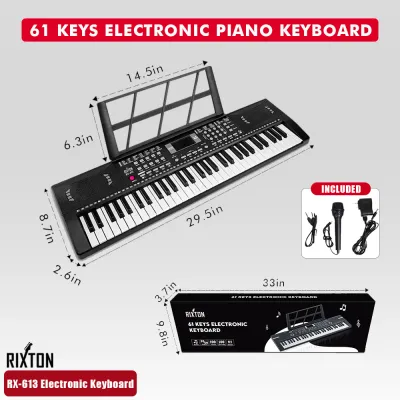
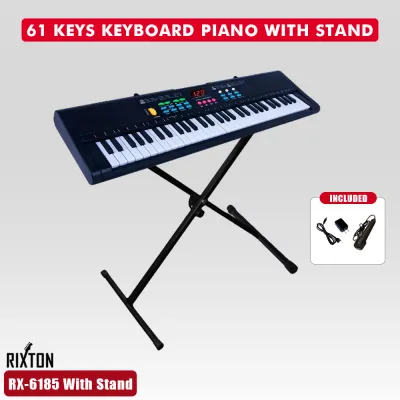
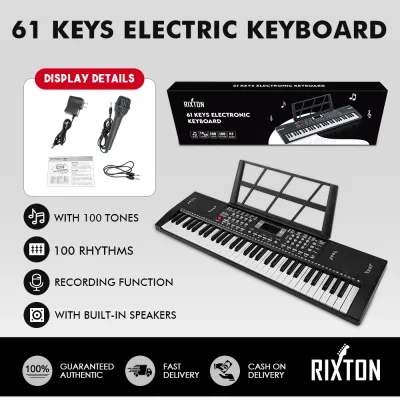
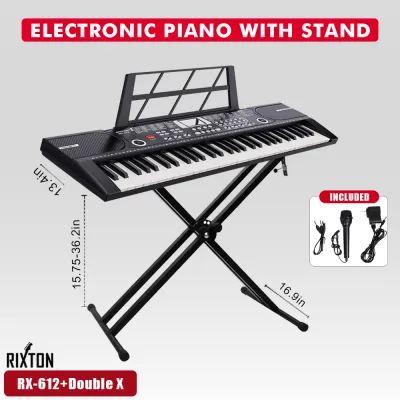
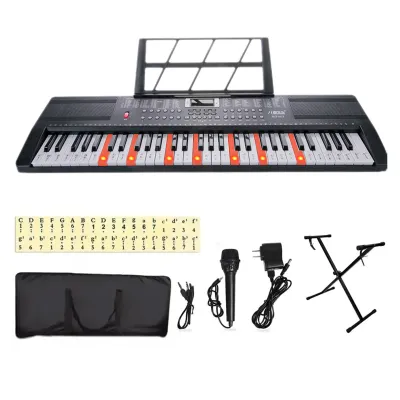
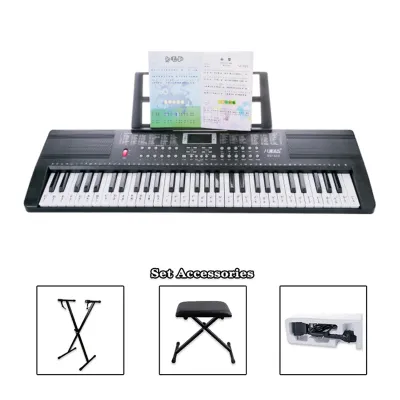
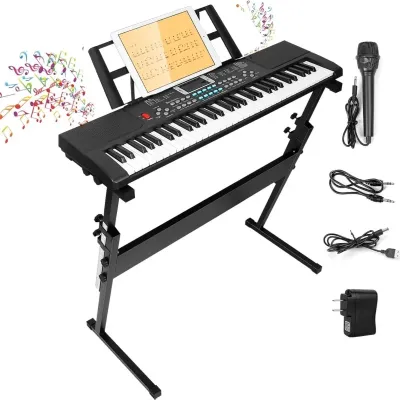
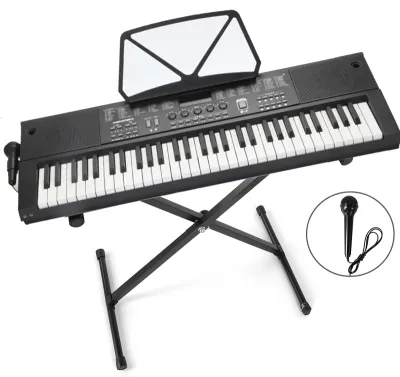
Prices are valid at publication and may change. Please refer to the product page for the latest price.
It is also important to understand what actually comes inside the box. A standard retail package at this price tier generally includes the keyboard itself, a basic power adapter, and a detachable plastic music rest to hold your sheet music or tablet. Essential performance tools are rarely bundled in the base price. Accessories such as a sturdy keyboard stand, a sustain pedal, and headphones for silent practice are typically sold separately, meaning you must budget for these add-ons to complete your setup.
Essential Specs to Prioritize When Comparing Budget Keyboards
Navigating the technical specifications of budget keyboards can feel overwhelming, but focusing on a few non-negotiable features will help you separate capable instruments from simple toys. The absolute highest priority when comparing models is touch sensitivity, also referred to as velocity sensitivity. Without touch sensitivity, the keyboard will produce the exact same volume regardless of how softly or firmly you press a key.

Developing proper dynamic control is a foundational skill in piano playing. Touch-sensitive keys detect the speed and force of your keystroke, translating that physical energy into volume and tonal variation. If you practice on a non-touch-sensitive keyboard, you will struggle to transition to a real piano later, as you will not have trained your hands to play softly or loudly. For any serious learner, touch sensitivity is a critical requirement.
Next, look closely at the polyphony specification. Polyphony refers to the maximum number of individual notes or tones the keyboard’s sound engine can produce simultaneously. In this price range, you should aim for a minimum of 32-note polyphony, though 48-note or 64-note polyphony is highly preferred.
If a keyboard has low polyphony, you will experience frustrating note dropouts. This happens when you hold down a chord while using a sustain pedal; as you play new notes, the oldest notes are abruptly cut off because the sound engine has run out of available voices. A higher polyphony count ensures that complex chords, layered sounds, and sustained passages ring out naturally without artificial interruption.
Finally, evaluate the physical connectivity options on the back panel. A modern budget keyboard must feature a USB-to-Host port, commonly referred to as USB-MIDI. This connection allows you to link your keyboard directly to a computer, tablet, or smartphone using a standard USB cable.
Having USB-MIDI capability opens up a world of interactive learning software, MIDI controller functionality for home recording, and compatibility with popular music production apps. Additionally, ensure the keyboard has a standard headphone output. In busy households, the ability to plug in a pair of headphones is indispensable for practicing at any hour of the day or night without disturbing family members or neighbors.
Smart Trade-offs: Which Features You Can Safely Skip
Manufacturers of budget keyboards often pack their instruments with flashy, non-essential features to make them look more appealing on retail shelves. Knowing which of these features you can safely ignore will prevent you from paying a premium for gimmicks that do not contribute to your development as a musician.
One common area of over-engineering is the built-in speaker system. Many product descriptions highlight high-wattage, multi-directional speaker arrays designed to fill a room with sound. However, the physical limitations of budget plastic chassis mean these built-in speakers will rarely deliver studio-quality audio. Instead of paying extra for slightly louder integrated speakers, prioritize the core sound engine quality, knowing you can easily connect the keyboard to external home speakers, studio monitors, or high-quality headphones for a vastly superior audio experience.
Another feature to view with skepticism is an excessive library of built-in rhythms, auto-accompaniment styles, and digital effects. While having hundreds of backing tracks and sound effects can be entertaining for casual play, these arranger functions do not help you learn fundamental piano techniques. A student focusing on proper finger placement, timing, and reading music only needs a handful of high-quality core sounds—such as a realistic grand piano, an electric piano, and perhaps an organ—alongside a basic, reliable metronome.
You can also save money by opting for simple, utilitarian user interfaces. High-end keyboards often boast large, full-color touchscreens or complex control panels. In the sub-₱10,000 category, a basic, monochrome LCD screen that displays your current patch number and tempo is more than sufficient. Avoid paying extra for elaborate visual interfaces, as your primary focus should remain on the keys and the sound, not a digital display.
Hidden Costs and Accessories to Check Before Checkout
When shopping for a keyboard piano in the Philippines, the sticker price of the instrument is rarely the final cost of getting fully set up. To avoid unexpected expenses, you must factor in several essential accessories that are crucial for proper posture, technique, and instrument protection.
First among these is a dedicated keyboard stand. Placing a keyboard on a dining table or a desk often forces your wrists and shoulders into unnatural, strained positions, which can lead to fatigue or repetitive strain injuries over time. A sturdy, height-adjustable X-stand or Z-stand is highly recommended to position the keys at the correct height. Along with a stand, a dedicated sustain pedal is a vital purchase; without one, you will not be able to practice the legato phrasing and pedaling techniques required for intermediate piano pieces.
Given the tropical climate of the Philippines, protecting your investment from environmental factors is another hidden cost to consider. High humidity levels, salt air in coastal regions, and airborne dust can gradually degrade the internal electronic contacts of your keyboard. Investing in a simple, fitted dust cover or a padded gig bag is a cost-effective way to shield your instrument when it is not in use, especially if you plan to transport it between home, school, or church.
Before finalizing any online purchase, perform a thorough checkout verification. Carefully read the seller’s product listing to confirm that the package includes a compatible power adapter. Some gray-market imports or parallel-imported models may ship without an adapter, or with a plug type that is incompatible with standard Philippine wall outlets, forcing you to buy a separate power supply or adapter.
Furthermore, pay close attention to shipping fees. Because keyboards are bulky, heavy items, shipping costs from major logistics hubs in Metro Manila to provincial destinations in Luzon, Visayas, or Mindanao can add a significant surcharge to your total bill. Always calculate these shipping fees beforehand to ensure the final delivered price remains within your ₱10,000 budget.
Finally, check the warranty terms. Many online sellers offer cheap parallel imports that only come with a brief, short-term seller guarantee. For electronic musical instruments, it is far safer to buy from authorized dealers who offer official local distributor warranties, ensuring you have access to local service centers and replacement parts if the keyboard develops a technical fault.
How to Avoid "Toy" Keyboards and Online Shopping Pitfalls
The budget instrument market is flooded with low-cost electronic keyboards that are marketed as professional digital pianos but are, in reality, low-quality toys. Learning on a substandard instrument can be incredibly frustrating and may even discourage a beginner from continuing their musical education.
One of the biggest red flags to watch out for is the size of the keys. Genuine beginner keyboards feature standard, full-sized keys that match the width of acoustic piano keys. Avoid instruments that feature mini-keys or slim keys, as practicing on these will ruin your muscle memory, making it incredibly difficult to play on any standard-sized piano in the future. Additionally, steer clear of keyboards that use proprietary, non-standard headphone or power connections, as finding replacements for these parts can be nearly impossible.
To protect yourself from counterfeit or defective units, always verify the credentials of the online merchant. Stick to official flagship brand stores or highly rated, established local music retailers on e-commerce platforms. Look for sellers that have a long history of positive customer feedback, clear return policies, and a high chat response rate, which indicates active, reliable customer support.
When comparing models, train yourself to rely strictly on the manufacturer’s official specification sheets rather than the seller’s promotional graphics or vague marketing claims. Vague phrases like “concert grand sound” or “professional feel” are often used to mask a lack of touch sensitivity or a poor sound engine. Look for explicit, technical terms such as “touch-sensitive keys,” “USB-MIDI support,” and “32-note polyphony” to ensure you are buying a genuine musical instrument.
Frequently Asked Questions (FAQ)
Is a 61-key keyboard enough for a beginner learning piano?
Yes, a 61-key keyboard is generally sufficient for the first one to two years of learning. It provides five full octaves, which is plenty of range for practicing basic music theory, scales, chords, and simple classical or contemporary melodies. However, as you progress to advanced classical repertoire or pieces that utilize the extreme upper and lower registers, you will eventually need to upgrade to a full 88-key instrument.
Can I use a budget 61-key keyboard for music production?
Absolutely. As long as your budget keyboard features a USB-MIDI or traditional MIDI port, it can serve as a highly functional MIDI controller for your computer or mobile device. When connected to a Digital Audio Workstation (DAW), the keyboard’s internal sound quality becomes irrelevant, as it simply sends digital performance data to trigger high-quality software instruments on your computer.

Community discussion
Share your experience or ask a question. Comments are reviewed before publication.