
To know if a keyboard bag will actually fit your 61-key instrument, you must compare the exact physical measurements of your keyboard—length, depth, and height—against the bag’s internal compartment dimensions, rather than relying on the “61-key” label. Because there is no universal standard size for a 61-key keyboard, a bag designed for a slim synthesizer will not fit a bulky arranger workstation with built-in speakers. Taking precise measurements and accounting for a small padding buffer is the only way to guarantee a secure fit.
Why "61-Key" Is Not a Standard Physical Size
A “61-key” designation refers only to the number of keys on the keybed, not the physical footprint of the instrument chassis. Keyboards are built for different musical purposes, which dictates their overall shape and size. For instance, a basic unweighted MIDI controller features thin plastic keys and a minimal frame, while a professional synthesizer or digital workstation often uses semi-weighted or fully weighted key mechanisms that require a deeper, heavier base.
The layout of the control panel also varies dramatically across different models. Arranger keyboards designed for home use frequently include built-in stereo speakers, wide control panels, and music stands, which expand the depth and height of the unit. On the other hand, performance synthesizers might place pitch bend wheels, modulation joysticks, or touch strips to the left of the keys, significantly increasing the overall length of the chassis.
Products mentioned in this guide
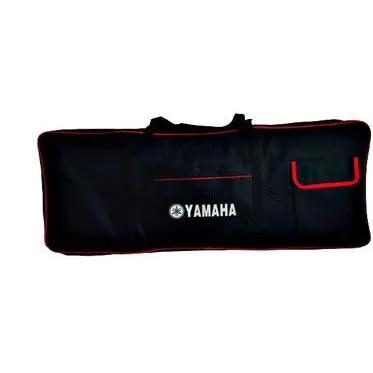
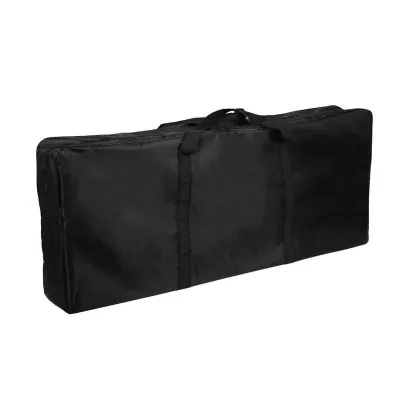
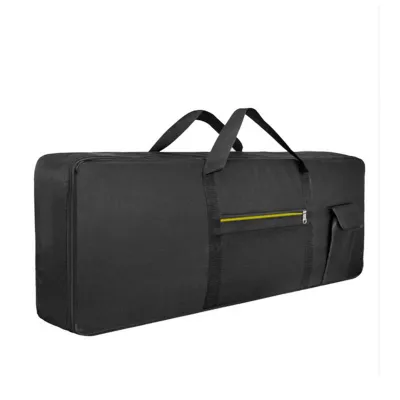
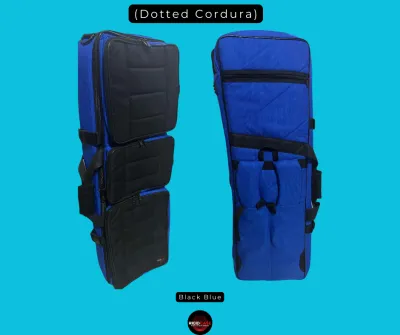
Prices are valid at publication and may change. Please refer to the product page for the latest price.
Environmental factors in tropical climates like the Philippines also play a role in how you should view these physical differences. High humidity can cause materials to swell slightly or make tight fits even more difficult to manage when fabrics cling. Assuming that any generic 61-key bag will accommodate your specific model often leads to a bag that is either impossible to zip closed or so loose that the instrument slides around inside.
How to Measure Your Keyboard for a Bag
To find a bag that fits, you must measure your instrument yourself using a standard tape measure. Do not rely on the dimensions listed in the user manual, as these sometimes omit protruding parts or optional attachments. Place your keyboard on a flat surface and measure the absolute maximum length from the outer edge of the left side panel to the outer edge of the right side panel.

Next, measure the maximum depth from the front edge of the keys to the very back of the chassis. Be sure to include any protruding knobs, sliders, joysticks, or rear-panel jacks that stick out. If your keyboard has a detachable music rest, remove it before measuring, unless you plan to store it in the main compartment with the keyboard, which is generally not recommended due to scratch risks.
Finally, measure the maximum height from the bottom rubber feet to the highest point on the control panel. This highest point is often a raised volume knob, an encoder, or the top of a display screen. Record all three measurements in both centimeters and inches, as different bag manufacturers use different units of measurement on their spec sheets.
Decoding Keyboard Bag Dimensions and Specs
When shopping on an online marketplace, you will see product listings with various measurements. It is critical to distinguish between exterior dimensions and interior dimensions. Exterior dimensions tell you how much space the bag occupies in a car trunk or storage closet, while interior dimensions tell you the actual space available for your instrument.
Internal padding thickness directly reduces the usable space inside the bag. A bag advertised with external dimensions of 105 centimeters may have thick 20mm foam padding on all sides, reducing the actual internal length to 101 centimeters. Always look specifically for the “interior dimensions” or “internal compartment size” in the product specifications.
You must also understand manufacturer tolerance margins and marketing claims. A label that says “fits most 61-key keyboards” is a general guideline, not a guarantee. Manufacturers often design bags to fit a wide range of models, which means the bag might be slightly oversized for a compact controller but too tight for a workstation.
Step-by-Step Fit Verification Checklist
To verify the fit before making a purchase, follow this systematic checklist to compare your keyboard’s measurements against the bag’s internal specifications:
- Calculate the clearance buffer: Add a small buffer of about 1 to 2 centimeters to your keyboard's length, depth, and height. The bag's interior dimensions should be equal to or slightly larger than these buffered measurements to allow you to insert and remove the instrument easily without straining the zippers.
- Evaluate the accessory pockets: Check if the external pockets share wall space with the main compartment. When you pack heavy power adapters, sustain pedals, and cables into the pockets, they can push inward and compress the space inside, making a tight fit even tighter.
- Verify the weight capacity: Compare the weight of your keyboard against the bag's rated carrying capacity. Heavy workstations require reinforced handles and metal strap clasps to prevent sudden failures during transit.
- Check for internal straps: Look for adjustable interior tie-down straps. If the bag is slightly larger than your keyboard, these straps will secure the instrument in place and prevent it from shifting while you walk.
Frequently Asked Questions (FAQ)
Can I use a 76-key bag for a 61-key keyboard?
Using a 76-key bag for a smaller 61-key keyboard is generally not recommended unless you take extra precautions. The excess space allows the instrument to slide back and forth during transport, which can damage the keys, knobs, and delicate internal electronics from repeated impacts. If you must use a larger bag, you should fill the empty space with high-density foam blocks or use built-in internal tie-down straps to keep the keyboard completely stationary.
Do I need a hard case instead of a padded bag for my 61-key synth?
The choice between a soft padded bag and a hard flight case depends on how you transport your instrument. A soft padded bag with backpack straps is ideal for local travel, public transport, or carrying your gear to rehearsals in personal vehicles. However, if you are traveling by air, loading gear into a shared truck with heavy amplifiers, or exposing your equipment to rough handling, a hard case with a rigid exterior shell is necessary to prevent crushing and impact damage.

Community discussion
Share your experience or ask a question. Comments are reviewed before publication.