
Starting your musical journey as a guitarist in the Philippines brings unique challenges, from mastering basic chords to dealing with the tropical climate’s effect on your instrument. A guitar capo is one of the first accessories you will need, allowing you to change the pitch of your strings instantly so you can play along with your favorite songs in different keys. However, many entry-level accessories struggle to cope with daily practice sessions, leading to broken springs, cracked frames, and frustrating tuning issues.
Investing in a heavy-duty guitar capo ensures that your accessory can withstand constant tension and environmental wear. For beginners, a reliable capo does more than just clamp down on the strings; it maintains even pressure across the fretboard, prevents annoying string buzz, and protects the delicate finish of your guitar’s neck. By understanding what makes a capo durable and how different designs interact with your instrument, you can make an informed purchase that supports your learning process for years to come.
What Defines a "Heavy-Duty" Guitar Capo?
When shopping for guitar accessories, the term “heavy-duty” is often used as a marketing buzzword, but it refers to specific structural characteristics that directly impact performance. For a capo, heavy-duty construction means the tool can handle high mechanical tension repeatedly without bending, cracking, or losing its grip. This durability is especially important in the Philippines, where high humidity and ambient warmth can accelerate the degradation of low-quality materials.
Products mentioned in this guide
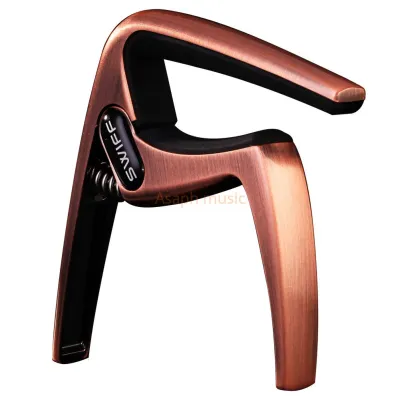
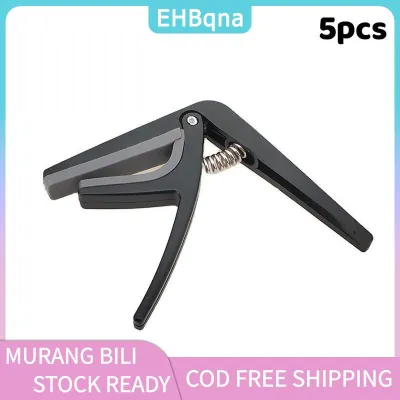

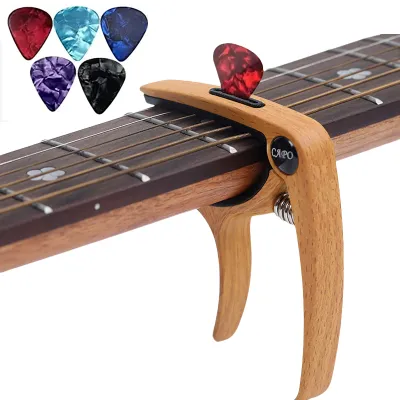

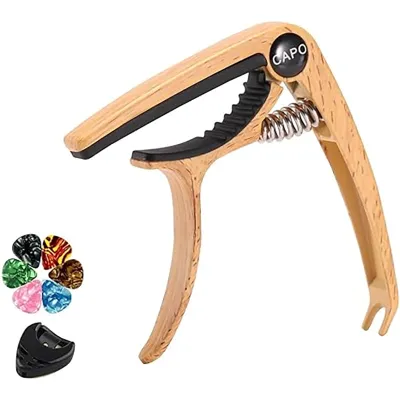
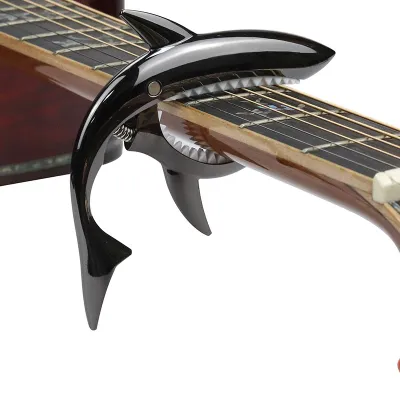
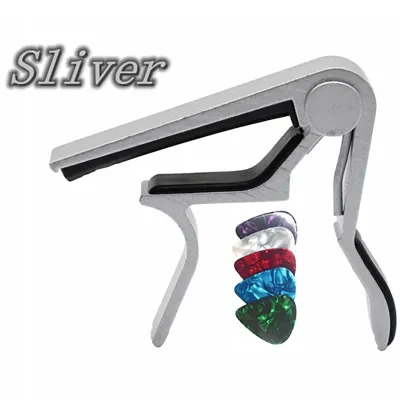
Prices are valid at publication and may change. Please refer to the product page for the latest price.
The primary indicator of a heavy-duty capo is its frame material. While budget-friendly capos are often made of lightweight plastics or thin, stamped sheet metal, heavy-duty models utilize robust metals such as zinc alloy, aircraft-grade aluminum, or solid brass. Machined aluminum offers an excellent balance of strength and low weight, ensuring the capo does not make the guitar neck feel unbalanced. Zinc alloy is heavier but highly resistant to corrosion and physical impacts, making it an incredibly durable option for daily home practice and travel.
Beyond the frame, the tension mechanism determines how effectively the capo performs its primary job. A heavy-duty mechanism uses high-tensile steel springs or precision-machined screw threads that apply consistent, predictable force. Cheap springs tend to weaken over time, leading to uneven pressure where some strings buzz while others are pulled sharp. A robust spring or screw system ensures that every string is held down with the exact amount of pressure required for a clean, clear tone.
Finally, the quality of the protective padding is a critical component of any heavy-duty design. Premium capos feature thick, high-grade silicone or vulcanized rubber pads rather than cheap foam. These resilient materials resist tearing and do not compress permanently under pressure, ensuring the capo continues to cushion your guitar’s neck and fretboard safely. High-quality padding also prevents metal-on-wood contact, protecting your guitar’s lacquer or polyurethane finish from scratches and dents.
Essential Selection Criteria for Beginners
For a beginner, selecting the right heavy-duty capo involves balancing ease of use with tuning stability. While a professional musician might prioritize micro-adjustments for studio recording, a beginner needs a tool that is intuitive to operate during practice sessions. Understanding how different features affect your daily routine will help you choose a capo that encourages you to practice rather than causing frustration.

One of the first decisions you must make is choosing between operation speed and tension precision. One-handed trigger capos offer unmatched convenience, allowing you to quickly clamp and release the tool with a single squeeze. This speed is highly beneficial when you are transitioning between songs during a practice session. However, trigger capos apply a fixed amount of tension, which can sometimes pull your strings slightly out of tune if your guitar has high action. In contrast, screw-adjustable capos require two hands to install but allow you to fine-tune the pressure, preserving your guitar’s intonation.
Another critical factor is matching the capo to your guitar’s neck profile and fretboard radius. Fretboards are rarely completely flat; steel-string acoustic and electric guitars feature a subtle curve or radius across the width of the neck. If you use a flat capo on a curved fretboard, the middle strings will not receive enough pressure, resulting in a dull, buzzing sound. Conversely, using a curved capo on a flat classical guitar neck can damage the nylon strings and apply uneven force. Always check the product specifications to ensure the capo’s pad matches your instrument’s specific curvature.
The physical weight of the capo also plays a subtle role in your playing experience. A very heavy metal capo can alter the balance of a lightweight acoustic guitar, causing the neck to dip downward when you let go of the instrument. Additionally, excessive mass on the headstock or neck can slightly damp the natural resonance and sustain of your guitar. Opting for a lightweight but structurally strong material, like high-grade aluminum, provides the durability of a heavy-duty tool without negatively affecting the physical balance of your guitar.
Comparing Heavy-Duty Capo Mechanisms
To find the right capo for your workflow, it is helpful to compare the three primary mechanical designs available on the market. Each mechanism offers a distinct approach to applying tension, and understanding these differences will help you select the style that best matches your playing habits and physical comfort.
Screw-type and adjustable-tension capos are highly favored by players who prioritize tuning accuracy. These designs feature a small knob or screw that allows you to manually tighten the clamp until the strings are held down cleanly. Because you control the exact amount of force, you can apply the absolute minimum pressure required to stop string buzz, which prevents the strings from being stretched sharp. While these capos are slower to reposition and generally require two hands to adjust, their ability to maintain perfect intonation makes them an excellent choice for meticulous practice and recording.
Trigger-style or spring-loaded capos are the most common choice for beginners due to their sheer simplicity. These capos utilize a strong internal coil spring to clamp the arms together. To use it, you simply squeeze the handles, place the capo over the desired fret, and release. The primary advantage is speed; you can move the capo to a new fret in a matter of seconds using only your fretting hand. When choosing a heavy-duty trigger capo, look for models with reinforced steel springs, as weaker springs will quickly lose their tension and cause persistent string buzzing.
Toggle and yoke-style capos, often referred to as cradle capos, represent a more traditional design. These capos wrap completely around the neck of the guitar, applying pressure from the exact center of the back of the neck. This centralized pressure distribution provides incredibly even tension across all six strings, virtually eliminating tuning issues. Additionally, when not in use, a yoke-style capo can be slid behind the nut and left on the guitar, ensuring you never misplace it. However, they are more complex to install initially and are typically more expensive than standard spring or screw designs.
Verifying Quality and Compatibility Before Purchase
With numerous guitar accessories available on online marketplaces and in local music shops in the Philippines, distinguishing a genuine heavy-duty capo from a low-quality imitation can be challenging. Taking a systematic approach to verifying product specifications and user feedback will protect your investment and keep your guitar safe from accidental damage.
When browsing online listings, look for detailed material specifications rather than relying on generic titles or highly edited promotional photos. A reliable manufacturer will explicitly state the type of metal used, such as “die-cast zinc alloy” or “6061 aluminum,” and describe the padding material as “high-density silicone” or “vulcanized rubber.” If a listing simply describes the product as “metal” without further details, it may be made of cheap, brittle pot metal that can snap under the high tension required for acoustic guitars.
Always verify the neck radius compatibility before finalizing your purchase. Most heavy-duty capos are designed specifically for curved steel-string acoustic and electric guitars, but some models are engineered for flat classical fretboards or specific vintage neck shapes. Using a capo with the wrong radius can lead to uneven string pressure and force you to over-tighten the clamp, which puts unnecessary stress on both the capo’s frame and your guitar’s neck.
User reviews can provide invaluable insights into how a capo performs over months of regular use. When reading feedback on ecommerce platforms, look past the initial “out of the box” impressions and search for reviews that mention long-term durability. Pay close attention to comments regarding spring fatigue, rubber pads peeling off, or the metal frame leaving marks on the guitar’s neck. If multiple users report that the spring lost its tension within a few weeks, it is a clear sign that the capo is not truly heavy-duty.
Finally, consider your budget realistically. While you can find basic metal capos for under ₱100, these models often compromise on spring quality and pad durability. A reliable, heavy-duty capo typically ranges from ₱250 to ₱800, offering a significant upgrade in material quality, spring longevity, and instrument protection. Investing a bit more upfront saves you from having to replace a broken capo every few months, providing better value and a much more enjoyable playing experience as you build your guitar skills.
Frequently Asked Questions (FAQ)
Can I use a heavy-duty steel-string capo on a classical guitar?
It is highly discouraged to use a standard steel-string capo on a classical guitar due to the fundamental differences in fretboard design. Steel-string guitars have curved fretboards, so their corresponding capos feature a matching curved pad. Classical guitars, however, have completely flat and significantly wider fretboards. If you clamp a curved capo onto a flat classical neck, the capo will press down too hard on the outer strings while failing to make proper contact with the middle strings, causing severe buzzing. Furthermore, the high tension of a steel-string capo can easily damage delicate nylon strings and bruise the softer wood of a classical guitar neck. Always look for a capo specifically labeled for classical or flat-fretboard use.
How do I clean and maintain the rubber pads on my capo?
Maintaining the protective pads on your heavy-duty capo is essential for preserving its grip and protecting your guitar’s neck. Over time, the silicone or rubber pads can accumulate sweat, finger oils, dust, and microscopic wood fibers, which can make the surface slippery and degrade the material. To clean the pads, simply wipe them down with a slightly damp, lint-free microfiber cloth after your practice sessions. Avoid using harsh chemical solvents, rubbing alcohol, or abrasive scrubbers, as these can dry out, crack, or tear the rubber. Additionally, store your capo in an un-clamped position when not in use to prevent the strings from leaving permanent, deep indentations in the padding.

Community discussion
Share your experience or ask a question. Comments are reviewed before publication.