
Starting your musical journey with an acoustic guitar is an exciting milestone, but many beginners are quickly confronted by the physical challenge of steel strings. The initial discomfort of pressing down on metal wires can be discouraging, often leading new players to cut their practice sessions short. Choosing the right acoustic guitar string can dramatically ease this transition, reducing finger soreness while helping you produce a clear, motivating tone from your very first chord.
The strings that come pre-installed on a new guitar are not always the best fit for a beginner. Manufacturers often ship instruments with medium-gauge strings designed to project maximum volume in a showroom, but these require significant finger strength to fret cleanly. By understanding how different string characteristics affect playability, you can select a set that supports your learning process and keeps you motivated to practice every day.
What Makes an Acoustic Guitar String Beginner-Friendly?
For someone just starting out, the primary obstacle to consistent practice is finger pain. Before your fingertips develop protective calluses, pressing steel strings against metal frets can feel harsh and abrasive. A beginner-friendly string is designed to minimize this physical strain by reducing the amount of force required to press the string down to the fretboard.
Products mentioned in this guide
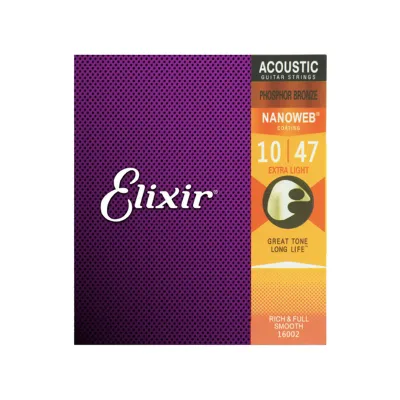

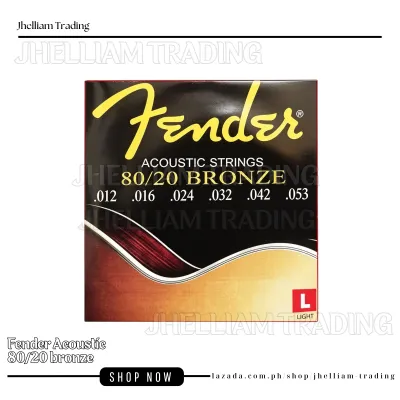




Prices are valid at publication and may change. Please refer to the product page for the latest price.
String gauge, which refers to the physical thickness of the string, is the most critical factor in playability. Thinner strings are more flexible and require less downward pressure to fret cleanly, making them much gentler on unaccustomed fingertips. Choosing a lighter gauge allows you to focus on learning proper chord shapes and finger placement without fighting excessive physical resistance.
The overall tension of the strings also plays a major role in comfort. String tension is determined by a combination of the string’s thickness, its core material, and the scale length of your guitar. High-tension strings pull tightly across the instrument, requiring more effort to press down and bend. Lower-tension strings feel softer and more forgiving, which helps prevent hand fatigue during long practice sessions.
Additionally, the texture of the string surface affects both comfort and sound. Standard steel strings can feel rough under the fingers, and sliding between chords often produces a loud, distracting squeaking noise. Strings with a smooth outer surface or a specialized micro-coating reduce this friction, allowing your fingers to glide more easily along the fretboard while minimizing unwanted finger noise.
Key Specifications to Evaluate Before Purchasing
When browsing for acoustic guitar strings, the packaging can be overwhelming with technical terms, numbers, and material descriptions. Understanding these key specifications will help you decode the labels and choose a set that matches your physical needs and tonal preferences.

The most prominent number on any string package is the gauge, usually represented by the thickness of the thinnest high-E string and the thickest low-E string. Acoustic guitar strings are generally categorized into several standard gauge brackets:
- Extra Light (.010 – .047): Extremely easy to press down, making them excellent for absolute beginners, players with smaller hands, or those transitioning from electric guitar.
- Custom Light (.011 – .052): A balanced middle ground that offers slightly more volume and bass response than extra light strings while remaining highly playable.
- Light (.012 – .053): The standard gauge for most acoustic guitars, providing a robust, full-bodied tone with moderate tension that beginners can comfortably work up to.
- Medium (.013 – .056): Designed for heavy strumming and maximum projection, but generally too stiff and painful for beginners to use comfortably.
The metal alloy used to wrap the inner steel core of the string determines both the tone and the durability of the set. The three most common materials you will encounter are:
- 80/20 Bronze: Composed of 80% copper and 20% zinc, these strings deliver a very bright, crisp, and sparkling tone. However, they tend to oxidize quickly, losing their brightness and turning dull after a few weeks of exposure to air and finger oils.
- Phosphor Bronze: Made of copper with tin and a small amount of phosphorus, these strings produce a warmer, richer, and more balanced tone. The addition of phosphorus makes them more resistant to corrosion, allowing them to retain their fresh sound longer than 80/20 bronze.
- Silk and Steel: These unique strings feature a steel core wrapped with silk fibers under a silver-plated copper winding. They have significantly lower tension and a highly flexible, soft feel that mimics classical nylon strings while fitting standard acoustic guitars. They produce a very mellow, sweet tone but lack the volume and projection of pure bronze strings.
The winding method also influences the tactile feel of the string. Most acoustic strings are roundwound, meaning a round wrap wire is wound around a hex or round core, creating a textured surface. While roundwounds are the industry standard for brightness and sustain, some players prefer flatwound or semi-flatwound strings, which have a flattened outer surface for a smoother feel and reduced finger squeak.
Recommended String Profiles and Reliable Brands for Beginners
To simplify your search, it is helpful to focus on specific string profiles that combine playability, balanced tone, and durability. For most beginners, a set of Custom Light (.011) or Light (.012) Phosphor Bronze strings represents the ideal starting point. This profile provides enough tension to vibrate the guitar’s top wood effectively for a rich sound, without being so stiff that it causes excessive finger pain.
If you find standard steel strings too painful even in lighter gauges, a Silk and Steel set is an excellent alternative. This profile is highly recommended for younger players, fingerstyle learners, or anyone struggling with hand fatigue. The silk padding cushions the steel core, resulting in a highly pliable string that is incredibly gentle on developing calluses.
For beginners who want to minimize maintenance and string changes, coated strings are highly recommended. These strings feature an ultra-thin polymer coating that shields the metal wrap wire from sweat, skin acidity, and environmental moisture. While they carry a higher initial cost, coated strings can maintain their bright tone and smooth feel up to three to five times longer than uncoated strings.
When shopping, look for established brands known for consistent manufacturing quality and reliable performance. Brands like D’Addario (particularly their EJ16 Light Phosphor Bronze or EJ26 Custom Light sets), Ernie Ball (such as the Earthwood series), and Elixir (known for their Nanoweb and Polyweb coated strings) are widely trusted by guitarists of all levels. Always verify the exact gauge numbers and material specifications on the product label before purchasing, as different formulations within the same brand can feel completely different under your fingers.
Where to Buy Authentic Guitar Strings in the Philippines
Finding genuine guitar strings is crucial, as the local market has a significant influx of counterfeit products. Counterfeit strings are made from inferior metals that rust rapidly, have inconsistent tension that can warp your guitar’s neck, and are highly prone to snapping unexpectedly during tuning. Purchasing from verified, reputable sources ensures you get a safe, high-quality product that performs as intended.
To guarantee authenticity, visit established physical music stores and authorized local distributors. Major shopping malls across the Philippines house well-known music retail chains such as JB Music, Lazer Music, Yupangco Music, and Lyric. Buying from these physical stores allows you to inspect the packaging directly, speak with knowledgeable staff, and even have them install the strings for you if you are not yet comfortable doing it yourself.
If you prefer the convenience of online shopping, navigate major e-commerce platforms with caution. Always filter your searches to show official brand flagship stores or highly rated local instrument shops with verified buyer reviews. Avoid listings that use generic stock photos, have poorly translated descriptions, or lack detailed customer feedback.
Price is one of the most reliable indicators of authenticity. In the Philippines, a standard, authentic set of uncoated acoustic guitar strings typically retails between ₱300 and ₱500. Premium coated strings, which utilize advanced polymer technology, generally cost between ₱700 and ₱1,200 per pack. If you encounter an online listing offering premium coated strings for ₱100 or ₱150, it is almost certainly a counterfeit product that will degrade quickly and potentially damage your instrument.
Essential Maintenance to Extend String Life
The tropical climate of the Philippines presents a unique challenge for maintaining acoustic guitar strings. High relative humidity and warm temperatures accelerate the chemical process of oxidation, causing copper-based alloys to rust and lose their resonance much faster than they would in drier climates. Implementing a simple, consistent maintenance routine will protect your investment and keep your strings sounding fresh.
The most effective habit you can develop is wiping down your strings after every single practice session. Keep a clean, dry microfiber cloth inside your guitar case or gig bag. After you finish playing, wrap the cloth around each individual string and slide it up and down the fretboard to remove sweat, skin oils, and environmental moisture that accumulated during your session.
Before you even pick up your guitar, make it a rule to wash and thoroughly dry your hands. The natural oils, dirt, and acidic sweat on your fingers are the primary causes of string corrosion. By playing with clean hands, you significantly reduce the amount of debris that gets trapped in the microscopic gaps of the roundwound wrap wire.
Proper storage is also vital in a humid environment. Avoid leaving your guitar on an open stand or wall hanger for extended periods, as this exposes the strings to constant ambient humidity. Instead, store your guitar inside a padded gig bag or a hard-shell case when you are not playing. Placing a few rechargeable silica gel packets or a specialized guitar dehumidifier pouch inside the case will help absorb excess moisture, creating a stable microclimate that dramatically extends the lifespan of your strings.
Frequently Asked Questions (FAQ)
How often should a beginner change their acoustic guitar strings?
There is no single calendar schedule for changing strings, as replacement frequency depends on how often you play and how well you maintain your instrument. For a beginner practicing 30 to 60 minutes a day, standard uncoated strings typically need to be replaced every 1 to 2 months. If you use coated strings and wipe them down diligently after each session, they can easily last 3 to 6 months before showing signs of degradation.
Instead of relying on dates, learn to recognize the physical and auditory signs that your strings are worn out. Visually, old strings will lose their metallic shine, turning dark grey, brown, or showing visible spots of rust and grime. Auditorially, you will notice your guitar sounds dull, muddy, and lacks sustain, or you may find it increasingly difficult to get the guitar in tune and keep it there due to compromised string elasticity.
Can I use classical nylon strings on a standard steel-string acoustic guitar?
No, you should never install classical nylon strings on a standard steel-string acoustic guitar. The two types of instruments are structurally designed for completely different physical forces and hardware configurations. Steel-string guitars use bridge pins to wedge the ball-end of a steel string into the bridge plate, whereas classical guitars feature a tie-block bridge where nylon strings must be physically knotted. Nylon strings lack the ball-ends required to stay secure under standard bridge pins.
Furthermore, nylon strings require significantly less tension to reach standard pitch than steel strings. If you attempt to put nylon strings on a steel-string guitar, the low tension will fail to vibrate the guitar’s thick wooden top, resulting in an extremely quiet, thin, and buzzy sound. Additionally, the wider nut slots and different tuning peg designs of a steel-string guitar are incompatible with the thicker diameters of nylon strings, leading to tuning instability and potential damage to the nut slots. Conversely, you must never put steel strings on a classical guitar, as the immense tension can easily warp the neck or rip the bridge completely off the body.
Community discussion
Share your experience or ask a question. Comments are reviewed before publication.